
Improving How Attendees Discover and Source at Events with More Context
Jublia AI’s upgraded semantics capabilities enable a more contextual discovery and sourcing experience
October 23, 2026

Discovery and sourcing are the attendees’ gateway to their event experience — through which they determine what matters and decide where to invest their time. They are not merely a mechanism for looking up information, but a means of how attendees experience an event.
With the sheer volume of opportunities at events, exploration shouldn't simply narrow choices to what an attendee already knows to look for. A valuable experience requires surfacing relevant people, sessions, and products that align with their goals, even if those items weren't on their radar.
This is why context is essential: it expands exploration beyond keywords and helps attendees quickly assess mutual fit, allowing attendees to find more of what matters at events.
Exploring information at events typically involves matching identical terms. With this approach, for example, information tagged with the word “LLM” will show up when attendees use that exact keyword.
While this works, it has a limitation when the terms don’t match. For example, entities tagged with “Machine Learning” may not appear in the search results because they are described differently, although they’re related to those with an “LLM” tag.
This disconnect causes attendees to miss valuable sessions and potential partners because they didn't anticipate the specific vocabulary used in an exhibitor's profile or an agenda's description.
This challenge makes us think about how we should approach event data to improve the discovery and sourcing experience — moving away from exact-string matching toward mapping event content through semantic relationships.
In our latest releases, we upgraded our Data Mesh with deep semantic capabilities that connect event data through relationships in meaning and context. By recognizing when different words describe related things, this helps identify relevant people, products, agendas, and speakers across the event.
This creates a stronger foundation for conversational search across our event platforms, helping attendees find relevant people and content based on what they mean, not just the keywords they use.
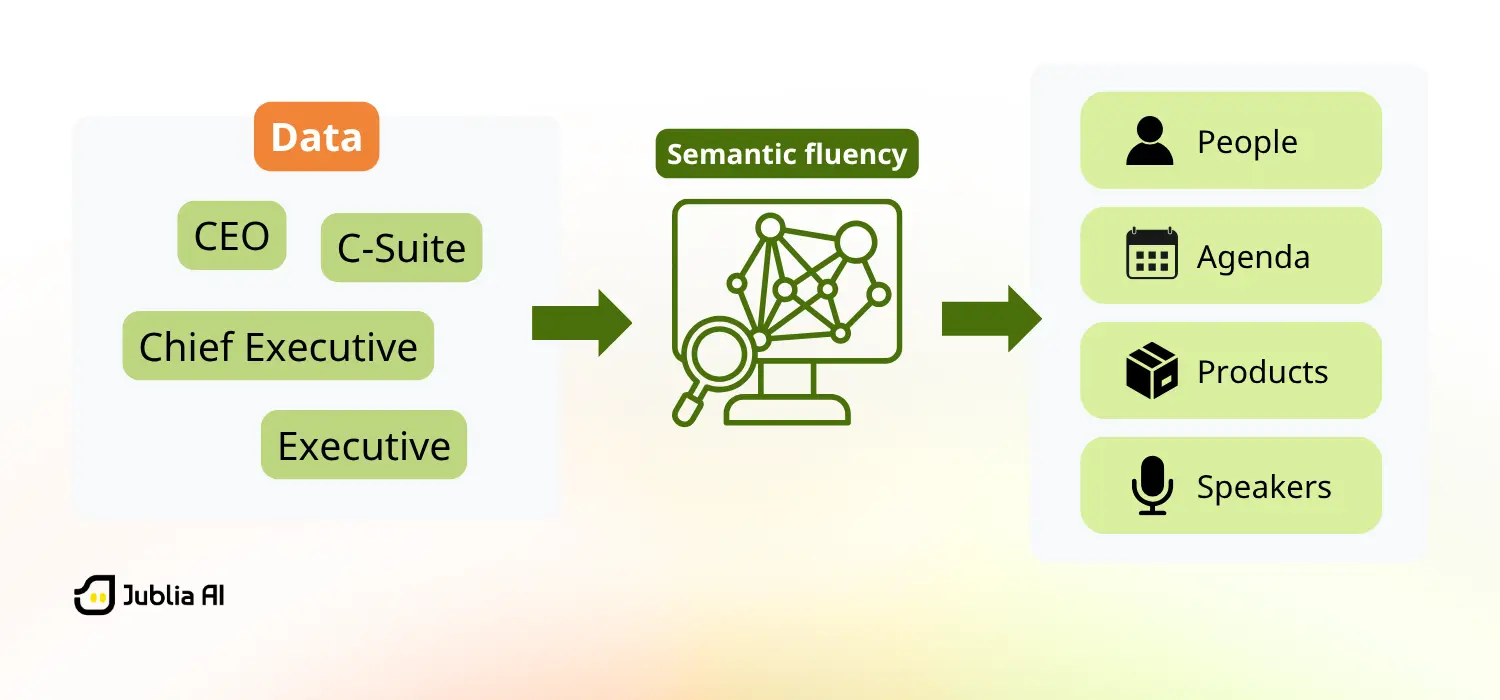
As a result, attendees can uncover connections across people, sessions, and products that they might otherwise overlook, broadening their discovery beyond what they already know to search for.
For exhibitors and organizers, contextual discovery gives sessions, products, and other content more opportunities to be discovered, especially when they use niche keywords.
When attendees can explore more opportunities, they will have more options to choose from and take more time to filter through the results. Therefore, context shouldn’t only help with discovery and sourcing, but also make them more actionable.
Our Semantic Annotations provide visual cues for search results with attributes that attendees may not intentionally search for but turn out to be relevant and worth exploring.
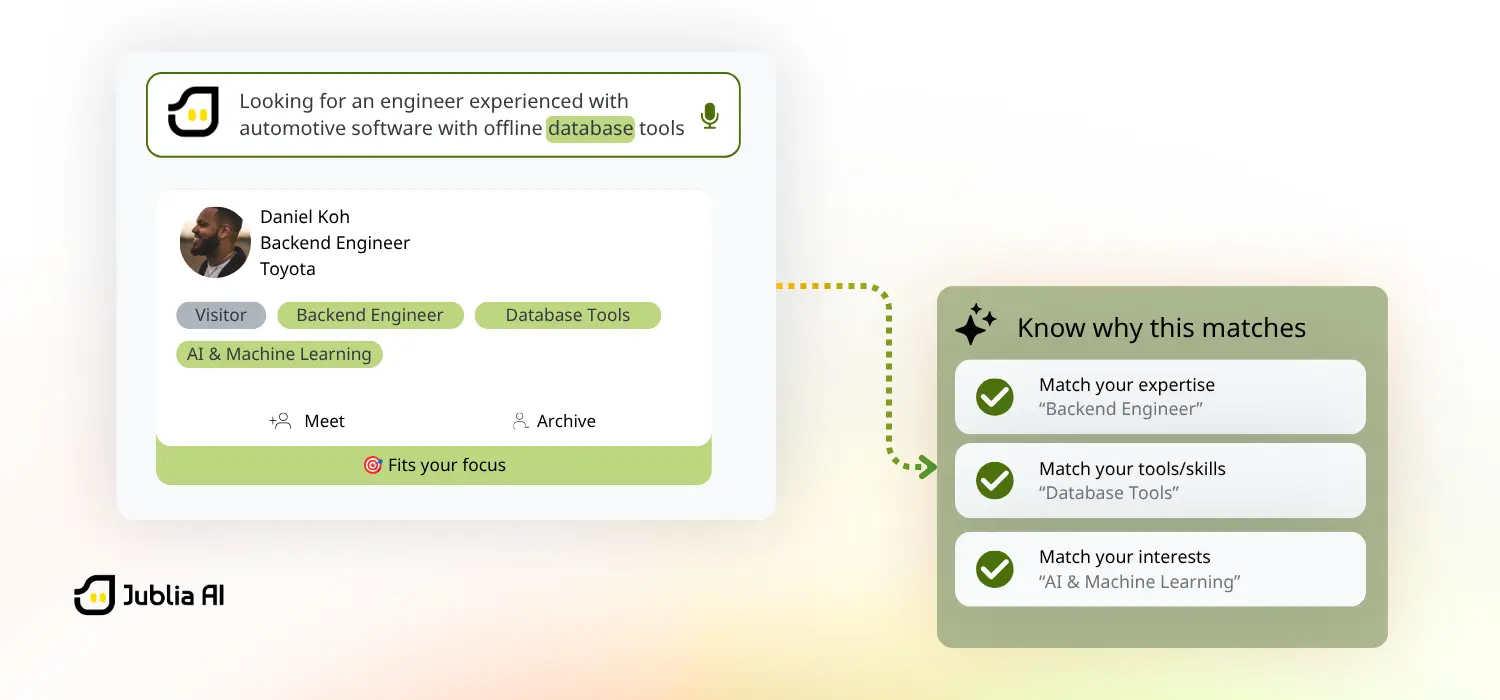
With relevant details easier to spot, attendees can spend less time assessing each result and make more informed decisions about which people, companies, or products to explore further.
Finding the right opportunities at an event shouldn't depend entirely on knowing what to search for. Attendees need ways to find relevant information through search and discover opportunities they might not have thought to seek out.
Semantic Data Upgrade and Semantic Annotations make search results more helpful and easier to evaluate. The Semantic Data Upgrade helps identify relevant event information based on meaning and context, while Semantic Annotations highlight the profile attributes that explain why a result matches. Together, they allow attendees to find and assess relevant people, companies, products, and sessions, even when the wording differs from their search.

The Recommendation Engine introduces another way to discover opportunities. Instead of waiting for attendees to search, it proactively suggests people, companies, products, or sessions based on its recommendation logic and available engagement patterns.
Together, these capabilities help attendees explore event information more flexibly, understand why results are relevant, and discover opportunities they might otherwise overlook.
At Jublia AI, we continue to explore new ways to connect people with the opportunities that matter most to them, by bringing greater context and intelligence to how they discover and engage at events.
By expanding what people can find and understand, we’re working toward event experiences that open up new possibilities for connection, collaboration, and business growth.
Ready to redefine event discovery at your event? Book a demo with us.


 Why Relevant Matches Get Overlooked When Recommendations Become Too Narrow
Recommendations help curate options at events, but what happens when they get too narrow and repetitive
 How to Drive Engagement at Business Events with Fireside Chats
A great fireside chat isn't just interactive, it responds to attendees’ burning questions about what matters most to them
 How Personalization Can Reintroduce Friction Instead of Curating Options
Why the data behind your recommendations decides whether they curate the event for attendees, or just relabel the same choice problem.


