
How Personalization Can Reintroduce Friction Instead of Curating Options
Why the data behind your recommendations decides whether they curate the event for attendees, or just relabel the same choice problem.
July 7, 2026
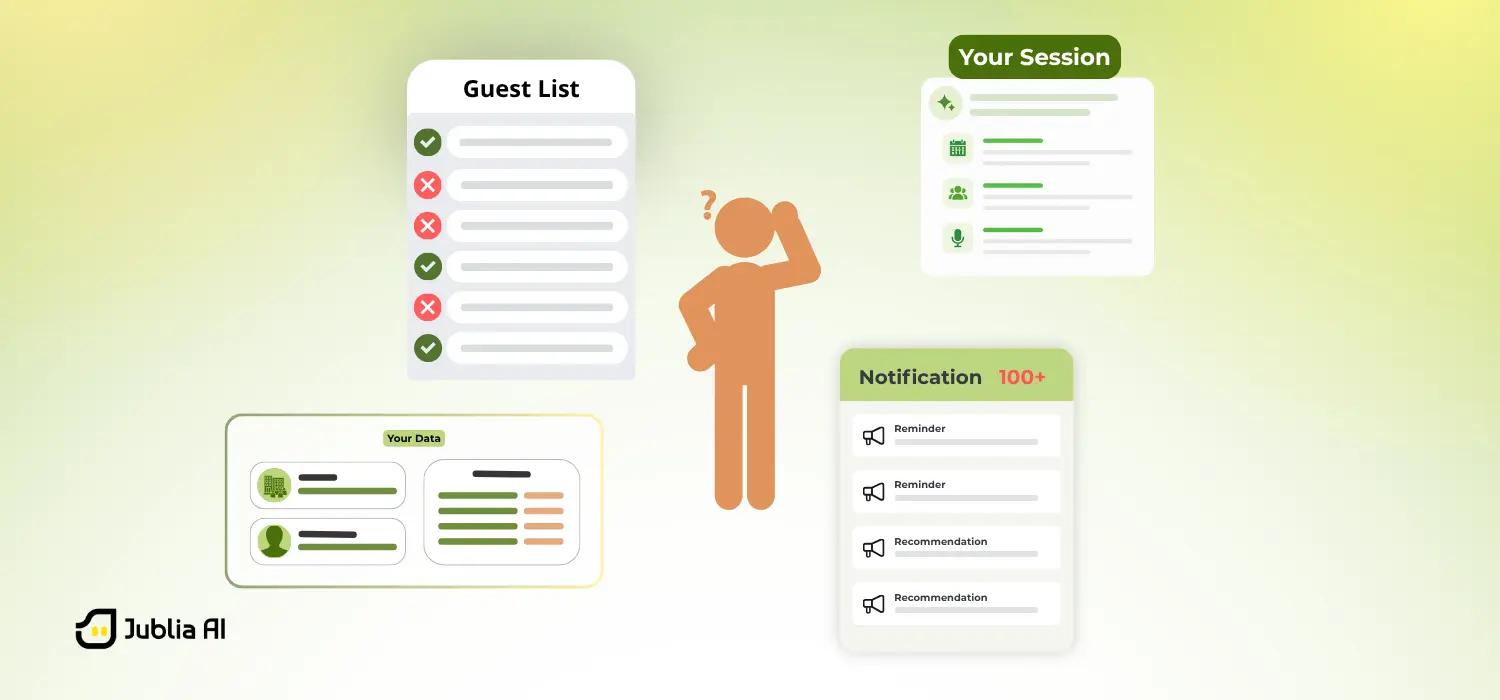
More and more organizers want personalization at their events, and most modern platforms now offer it. But the real question is not whether you have personalization. It is whether the personalization is doing the work it claims to do.
A 200-item agenda does not become navigable because the system stamps “for you” on 30 of them. If the attendee opens the recommendation and still has to filter, the system simply relabels the choice problem.
At large events, attendees face hundreds of people to meet and dozens of sessions to choose from in a limited window of time. Personalization is what helps them decide where to spend their attention. Without it, the event turns into a lot of options and not much direction.
Most platforms deliver personalization built on pre-determined filters: profile data captured at registration. Title, industry, declared interests. That data lets the system group attendees into types, surface content that matches the type, and stop.
This works up to a point. Two attendees who share the same title, industry, and declared interests receive very similar recommendations, even though one is at the event to raise a Series B and the other is there to hire senior engineers. Profile data answers who someone is on paper. It does not answer what they are trying to do right now. The recommendations end up technically accurate but not actually useful.
It doesn’t stop there. Every missed recommendation makes attendees trust the next one less. After two or three misses, attendees stop opening the recommendation surface at all.
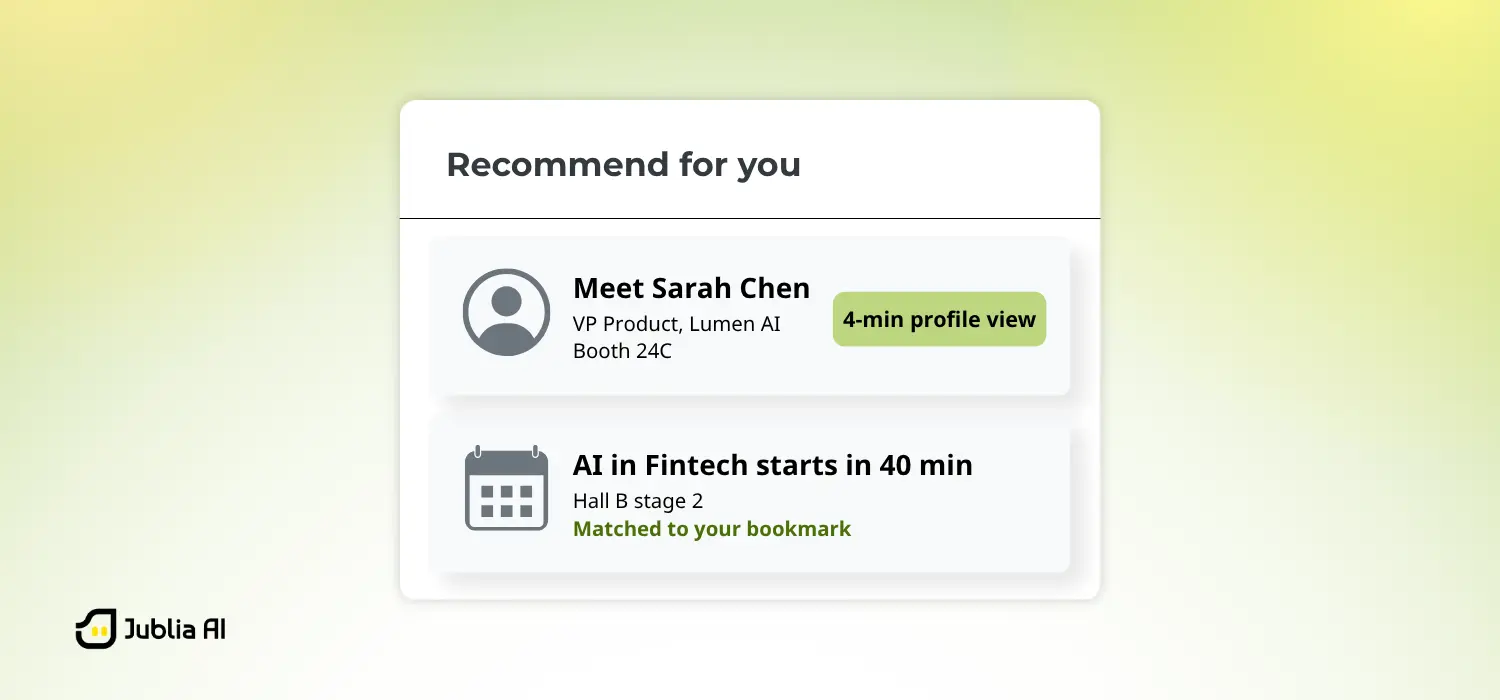
The improvement is personalization tuned by what attendees are actually doing during the event, on top of what they declared at registration.
These signals are digital footprints attendees leave by using the platform normally: whose profile they view twice, which sessions they bookmark versus which they walk into, what they ask the venue’s natural-language search, the paths they take through the floor in the first hour.
What changes is how the system makes decisions. A profile-based system makes a prediction at registration and sticks to it. A behavior-based system starts with that same prediction and keeps refining it.
There is a name for the underlying dynamic: intent decay. What an attendee said at registration six weeks ago is stale by show day. Registration captures intent, what people planned to do. Behavior captures reality, what they actually do. Their company’s strategy has shifted, their priorities have moved, and the deals they are chasing have changed. Profile data captured then is a snapshot competing against a person who has moved on. Behavior data reads the attendees current state during the event.
One objection worth naming. For first-time attendees with no behavior history yet, the system starts with profile data and picks up behavioral signals within hours. Cold start is real, but does not last long at the pace of an actual event.
When personalization reads live behavior, the recommendation surface starts doing the work the label promises.
Lists get shorter and sharper. Instead of thirty items that all technically match, the attendee sees three that fit what they are doing at the event right now. They can act on the list instead of filtering it.
Here is what that looks like in practice: A behavior-tuned system knows an attendee spent four minutes on one exhibitor’s profile and three seconds on another. It surfaces the first one next, not the second. The next step gets inferred from the last step, not from a six-week-old declaration.
The recommendation surface stops being scrollable noise. It navigates attendees directly to the next best step. Less scrolling. More selecting who and what to engage next.
And the event starts feeling like it worked. Attendees do not feel like they have to hunt for the right people. They feel like the right people, sessions, and exhibitors found them, which is what the platform is supposed to make possible in the first place.
The standard for personalization is not whether your platform has it. It is whether the personalization is doing the work of curation, or just relabeling the same choice problem. The question to ask any vendor, including the one you already use, is direct: does the recommendation still leave the choosing to the attendee?
Curation does not come from a better algorithm. It comes from reading attendees as they are during the event, not as they described themselves before it started.
If any of this resonates with how you approach your event, let's get in touch.


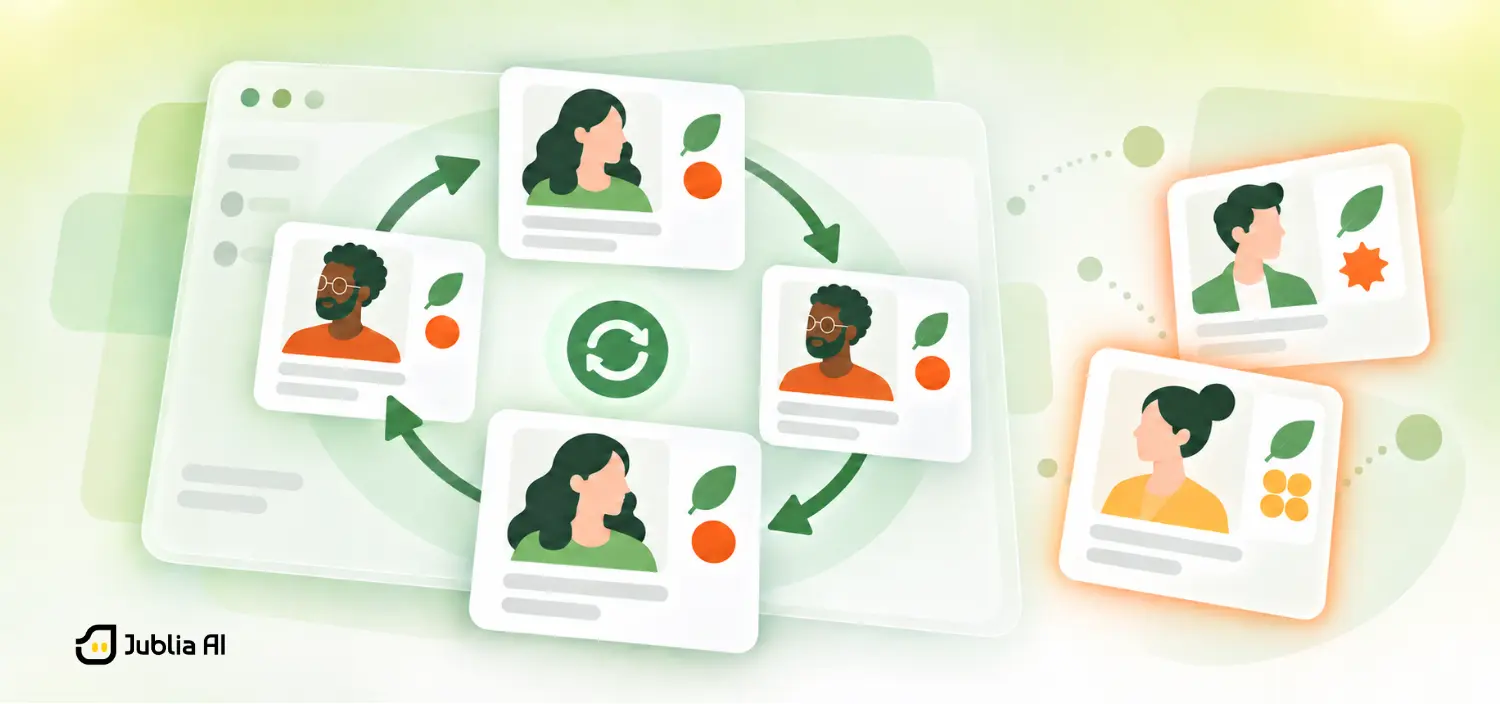 Why Relevant Matches Get Overlooked When Recommendations Become Too Narrow
Recommendations help curate options at events, but what happens when they get too narrow and repetitive
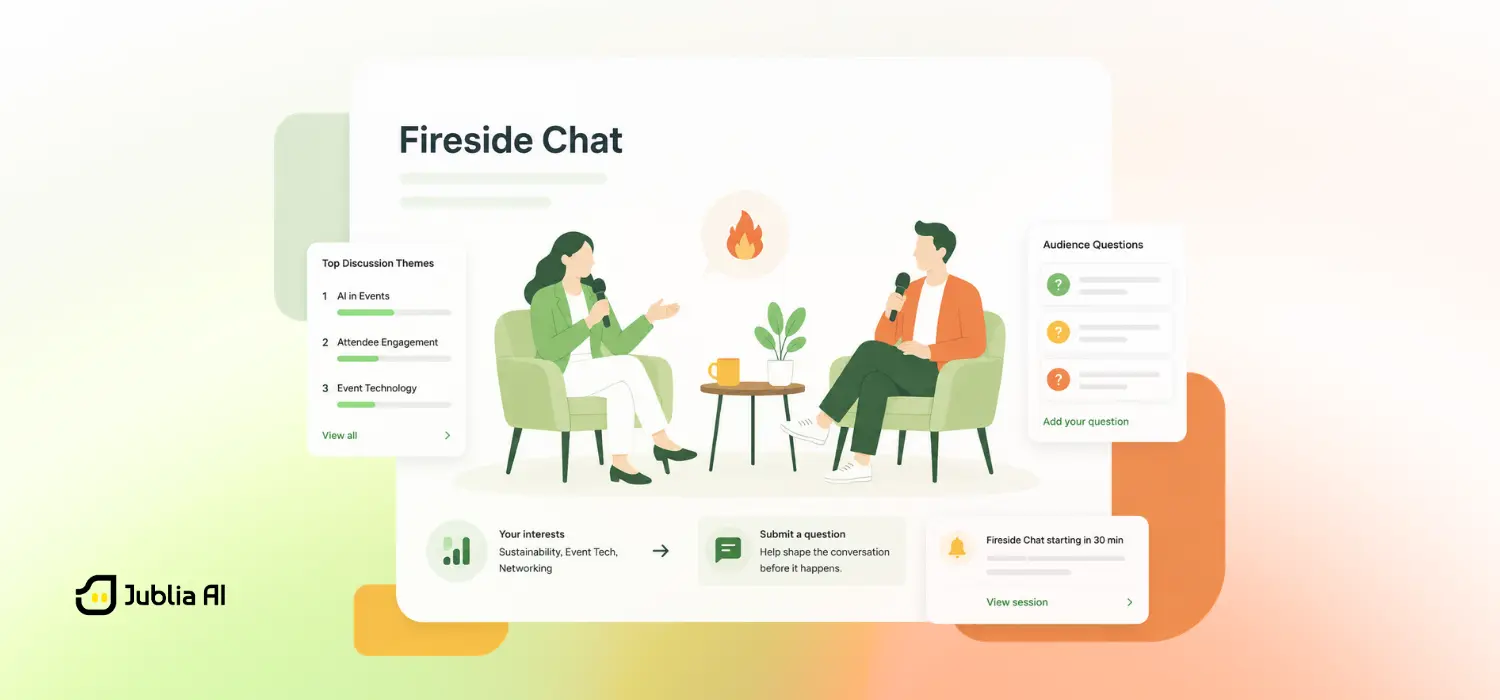 How to Drive Engagement at Business Events with Fireside Chats
A great fireside chat isn't just interactive, it responds to attendees’ burning questions about what matters most to them
 Why Interests and Intent Matter in Event Lead Capture
Because lead capture at B2B events needs more than a badge scan


.gif)
%201.png)
%201.png)
%201.png)
--p-2000.webp)
%20Black-Black%20Eyes.gif)


.png)