
The Effort Trap: Why Attendees Engage More When the Platform Does the Finding
What event data reveals about attendee effort and engagement
May 26, 2026
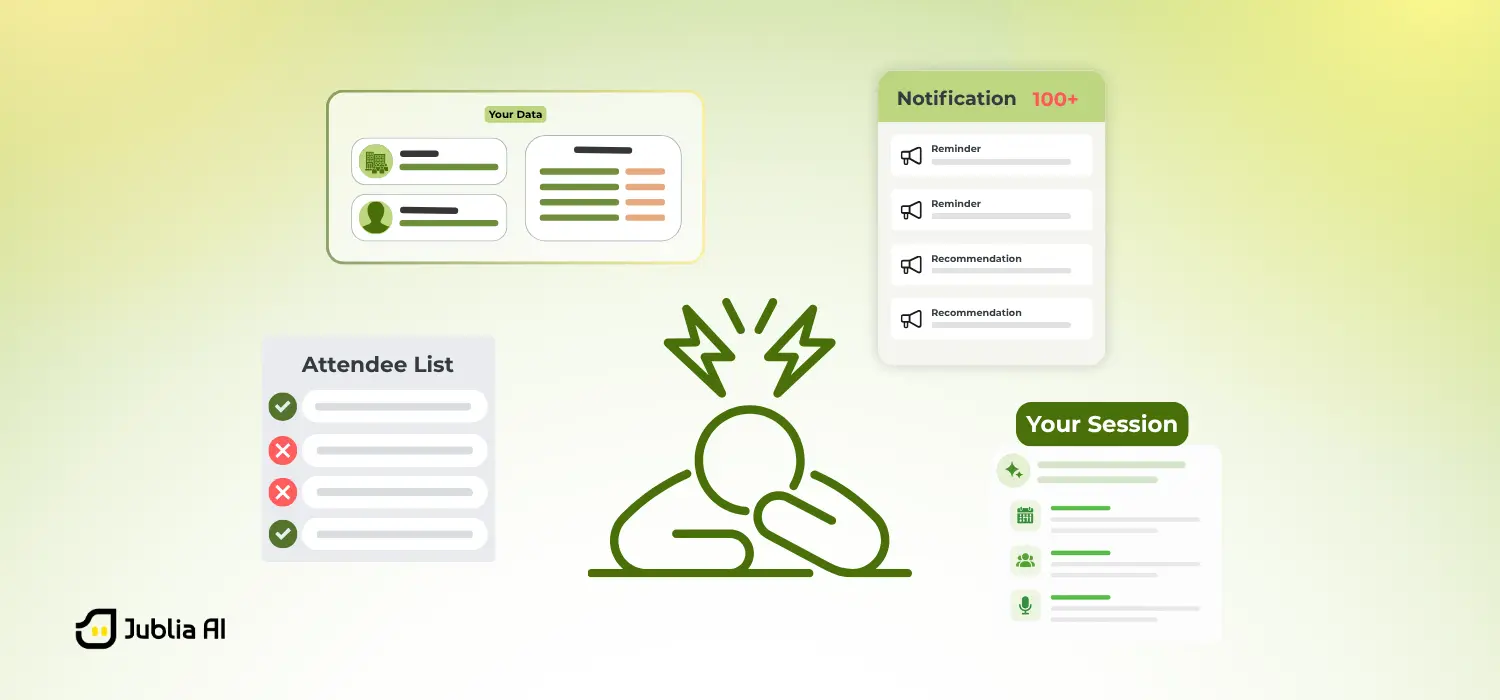
People come to a B2B event to meet the right people. That is the main draw — Freeman's 2025 trends report found networking has overtaken education and product discovery as the top reason people attend in-person business events.
The technology is how that promise gets kept — it shows attendees who to meet, which sessions and booths matter. What matters is how much of that work it handles, and how much it leaves to the attendee. An attendee's time is limited, and every minute spent working out who to meet is a minute not spent meeting them. When effort that should go into meeting people goes into finding them instead, that is the effort trap.
The trap is easy to miss because the numbers most organizers watch do not capture it. Engagement usually gets measured with activity data: logins, clicks, profiles opened, messages sent. Those numbers are real and useful. But they describe the surface.
A high login count tells you an attendee opened the app — not whether they found the few people who made the trip worthwhile, or scrolled through lists and left without meeting anyone who mattered.
Two attendees can post identical activity numbers and have completely different events. Activity tells you an attendee was busy, not that they were engaged — and engagement is what an event is for. The real measure sits below the activity data: the meetings that happened and the conversations that mattered.
Engagement is the meetings and conversations that actually happen, and the job is to get attendees to the right ones. Recommendations are how the technology does that — and they are not new.
Most event platforms already offer them. So the fix is not adding more recommendations; it is making the ones attendees already get good enough to act on — and that comes down to two things. Accuracy: when the suggestions are consistently right, attendees trust them and stop checking by hand. Ease: when booking takes one short step, attendees do it on the spot.
In practice, this is what our capabilities like AI Overview and Deep Dive do. AI Overview returns a direct, summarized answer instead of a page of profiles to scan. Deep Dive surfaces the related people and sessions worth an attendee's time when a query is broad. Either way, the attendee reaches the right meeting without doing the sorting.
When recommendations are both accurate and easy to act on, the attendee's time shifts — less of it spent working out who to meet, more of it in the meetings and conversations that are the point of the event.
From real events, it’s evident that when the platform handles the browsing, attendees reach the right meeting faster, so more meetings happen. The figures below come from post-event reports of 2026 events, anonymized by type and region.
When the right people are easy to find, attendees go after more of them. At International Healthcare Week 2025, Southeast Asia's largest healthcare gathering, total meetings rose 47% over the previous edition, and more than half of all pre-scheduled meetings were fulfilled. At ReThink HK 2025, Hong Kong's flagship sustainability event, more than 60% of scheduled meetings were fulfilled, with 80% of attendees reporting a favorable experience on the platform.
The same pattern runs through anonymized post-event data. A meeting worth booking is one attendees show up for — at a food and beverage expo, 65% of scheduled meetings actually took place. Exhibitors gain too: when attendees are guided to the booths that fit them, more of the right people walk up. At a food and hospitality trade show, exhibitors captured 5,000 lead scans on the first day alone, against 8,000 across the whole previous edition
These numbers trace one shape. Across four very different events, a large share of booked meetings actually happened — and where editions can be compared, the totals rose. No single number isolates the cause. But the pattern is consistent, and it is the one the argument predicts: when recommendations do more of the work, attendee effort goes into meeting people instead of finding them.
A platform that makes an event easier to navigate raises engagement — not because attendees do more, but because they spend less time finding the right people and more time meeting them.
When you weigh the technology, the test is not how much attendees will use it — it is how much of the finding it does for them, and how easily it turns a recommendation into a real meeting. See our solution in action, and discover how it drives more valuable event outcomes.


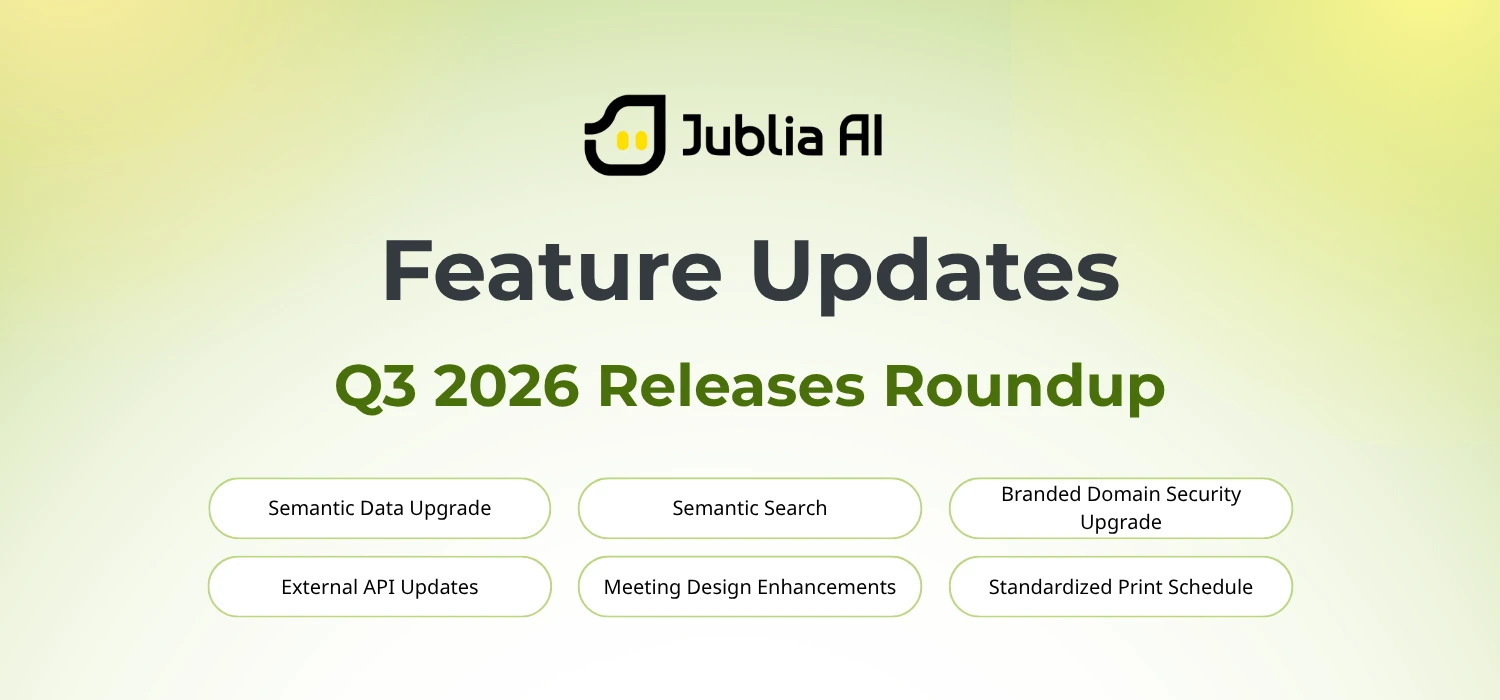 What’s new in Jublia AI: Q3 2026 Releases Roundup
All updates that are designed to give event teams more control, better discovery, and a stronger operational foundation.
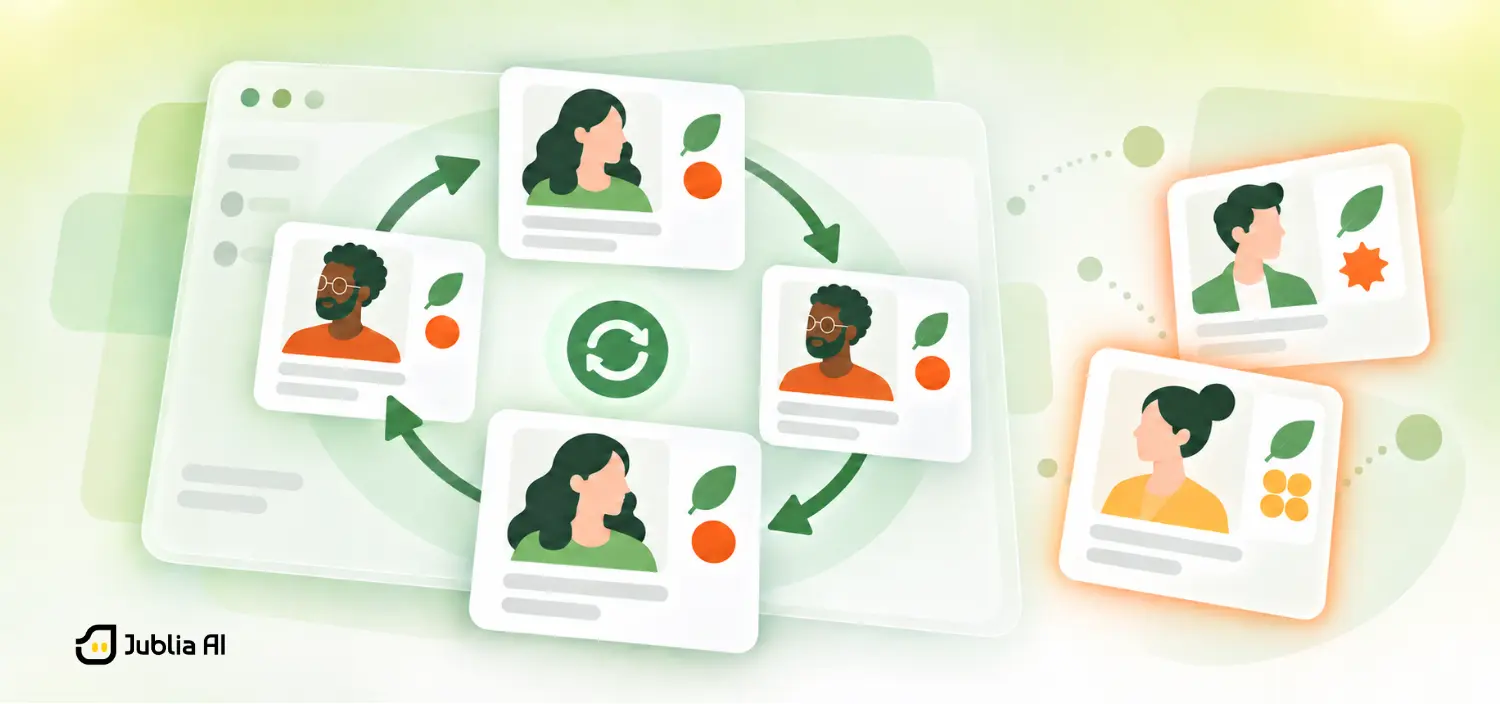 Why Relevant Matches Get Overlooked When Recommendations Become Too Narrow
Recommendations help curate options at events, but what happens when they get too narrow and repetitive


.gif)
%201.png)
%201.png)
%201.png)
--p-2000.webp)
%20Black-Black%20Eyes.gif)




.png)