
Why Interests and Intent Matter in Event Lead Capture
Because lead capture at B2B events needs more than a badge scan
June 18, 2026
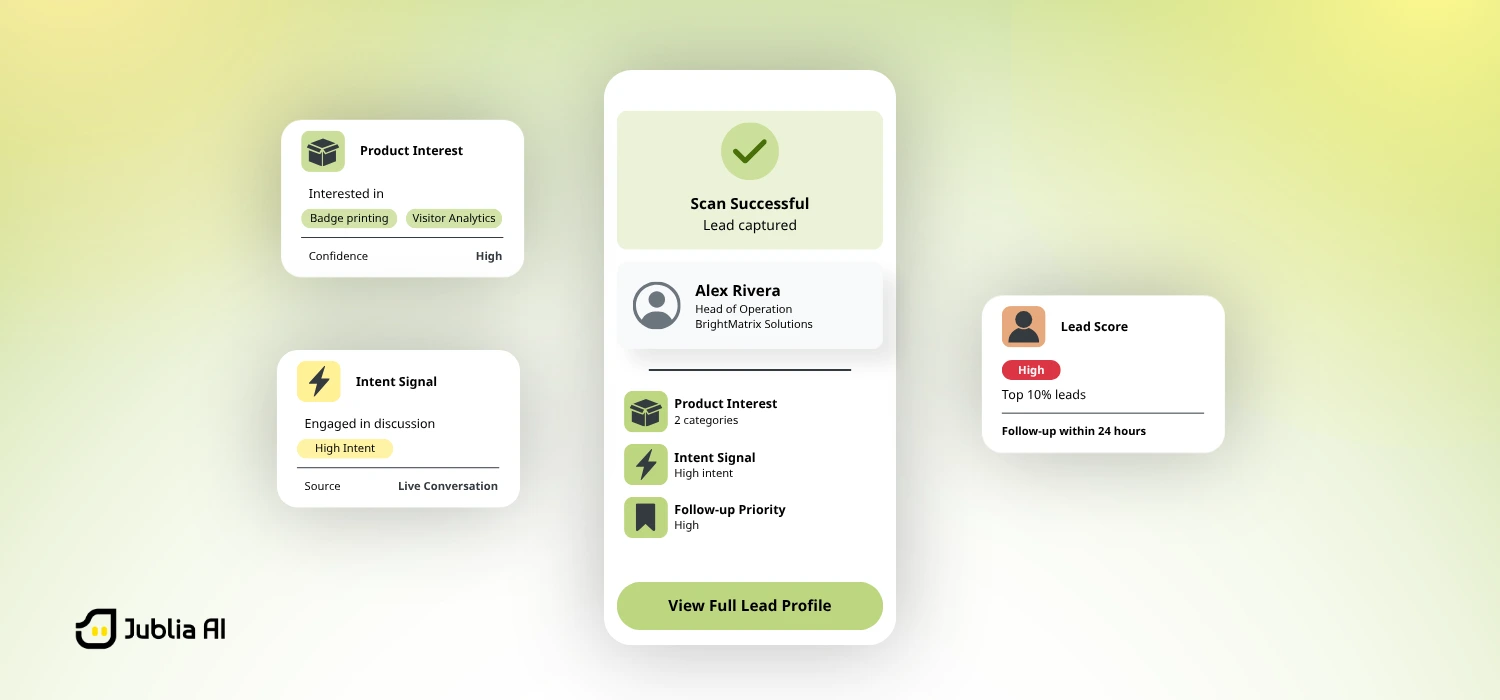
At B2B events, a booth interaction can happen in seconds.
An attendee walks up, asks a question, scans a badge, collects a brochure, and moves on. For exhibitors, that moment may look like a lead captured. But what it really means depends on the context behind the interaction.
Did the attendee show interest in a specific product? Were they casually exploring, or did they have a clear business need? Did they match the exhibitor’s target audience?
These signals determine whether a lead is worth prioritizing. Yet in many events, this context is either captured manually, remembered vaguely, or lost once the booth gets busy.
This is why lead capture needs to move beyond collecting contact details. For exhibitors, the real value lies in understanding interest and intent while the interaction is still fresh.
Interest does not always begin at the booth. It may start earlier in the attendee journey.
An attendee might favorite a product in the event app, browse an exhibitor’s company profile, or revisit the same booth more than once. These actions may not confirm buying readiness, but they show a level of attention that exhibitors should not ignore.
The booth interaction then becomes the moment where those signals can be confirmed.
For example, an attendee who previously viewed a product profile may visit the booth to ask about pricing, availability, or technical fit. Another attendee may scan their badge after a short conversation but show no specific product interest. Both interactions are valid, but they should not be treated the same.
This is where many exhibitors face a gap.
A badge scan can record who the person is, but it does not always explain what they cared about, how engaged they were, or what should happen next. Without that context, follow-up becomes harder to prioritize and easier to generalize.
To make lead capture more useful, exhibitors need to capture context at the point of conversation.
This does not have to be complicated. The most useful information is often practical: which product the attendee showed interest in, whether the conversation was exploratory or high-intent, how relevant the attendee is to the exhibitor’s target market, and what follow-up action should happen after the event.
This turns lead capture into more than a record of attendance. It becomes a record of relevance.
When exhibitors can tag product interest, score leads, or add notes during the interaction, they leave the event with more than a list of names — but with a clearer view of which conversations are worth continuing and how those conversations should be approached.
The quality of captured leads does not only depend on exhibitors. Organizers play an important role in making each scan more valuable by defining the right attendee profile fields.
Adding details such as country, business nature, job function, company type, or industry segment can help exhibitors understand whether a contact fits their target audience.
This makes each scan more meaningful than a name card. Instead of collecting more data for the sake of it, the goal is to capture the right data that helps exhibitors qualify leads, personalize follow-ups, and understand why each interaction matters.
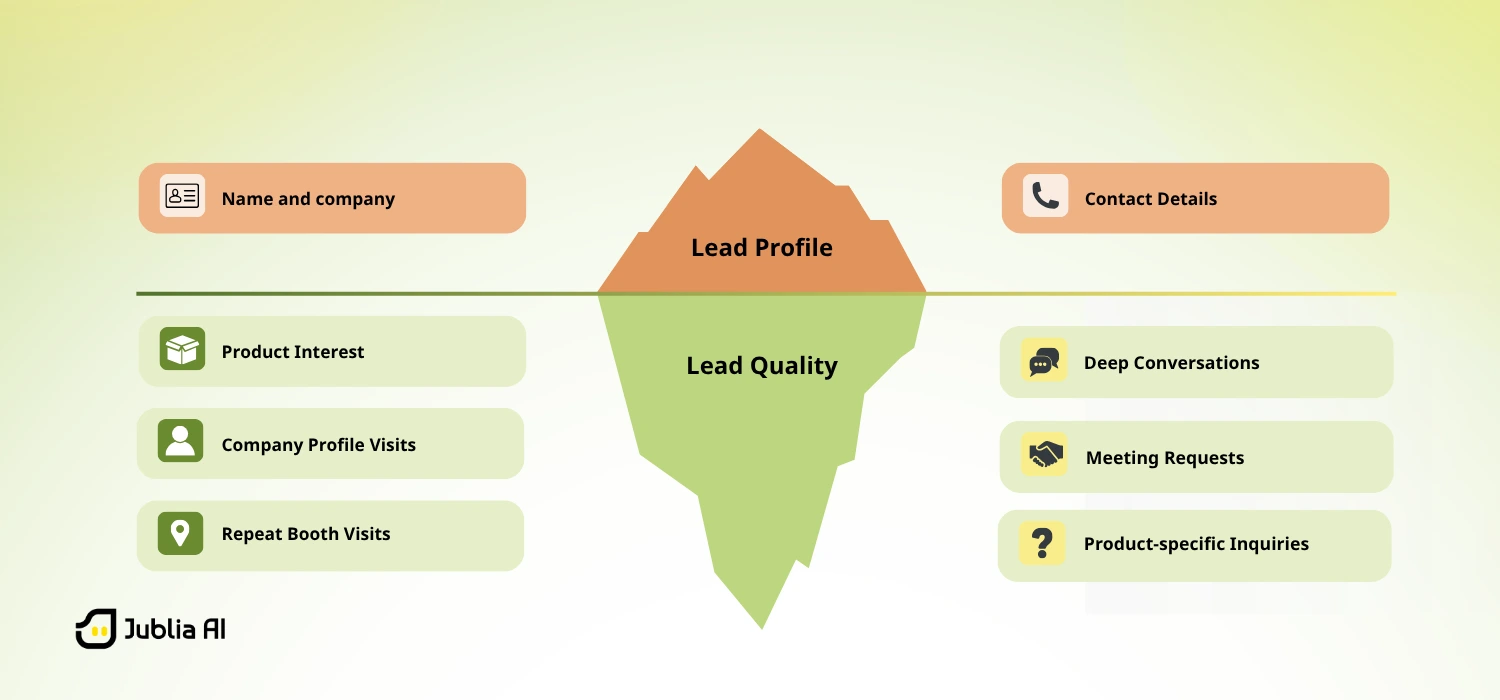
A useful way to assess lead quality is through the 4 I’s: Interest, Influence, Intent, and Investment.
For booth-level lead capture, Interest and Intent are the most visible signals.
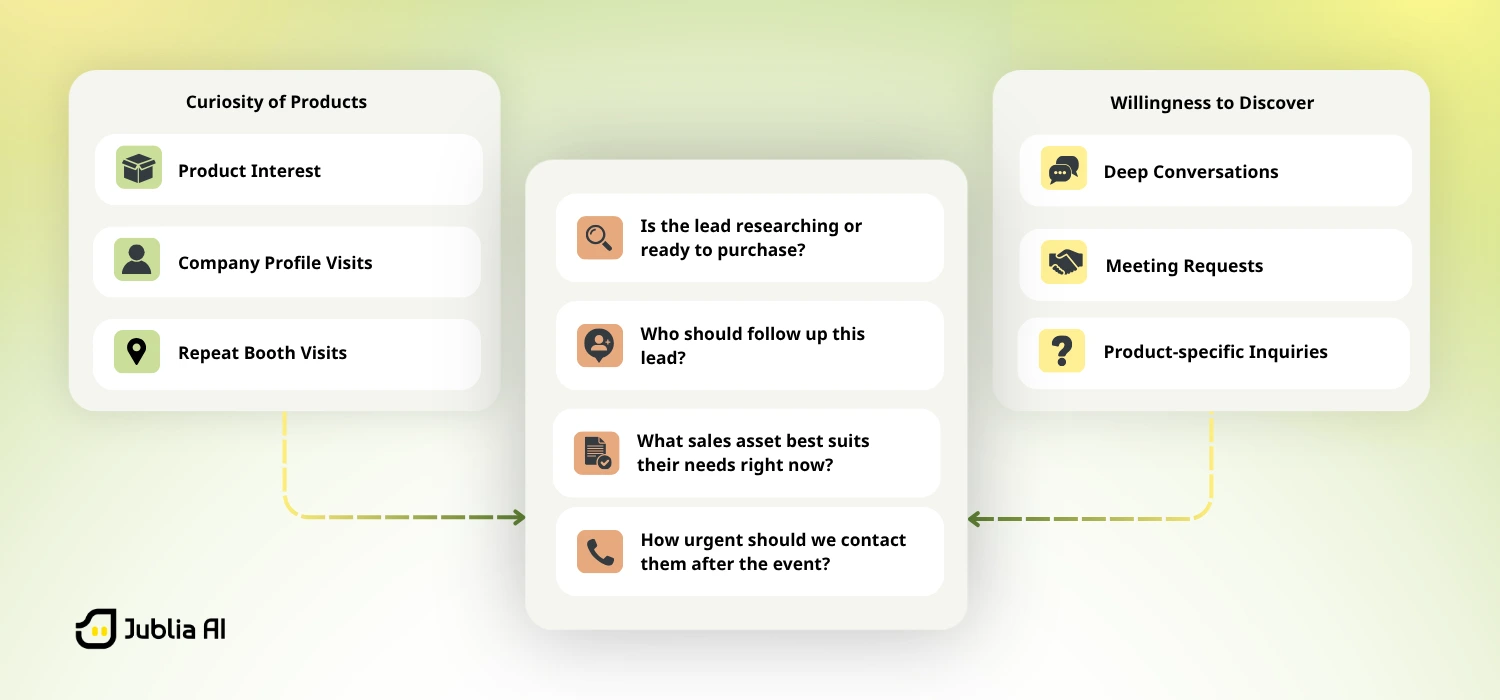
Interest shows what attendees paid attention to, such as product favorites, company profile views, repeat booth visits, or direct questions about a solution. Intent shows whether they are likely to take the next step, such as through deeper conversations, meeting requests, product-specific inquiries, or clear follow-up needs.
While Influence and Investment still matter for sales qualification, Interest and Intent help exhibitors decide whether a lead should be prioritized, nurtured, or segmented into a specific follow-up path.
Influence and Investment surface later in the sales-qualification cycle. Interest and Intent are what exhibitors can read and act on the booth itself.
Jublia Scan supports this shift by helping exhibitors capture more than basic contact information.
When an attendee’s badge or QR code is scanned, exhibitors can enrich the lead record with business profile details, behavioral signals, live tags, and lead scoring. This helps exhibitors connect the scan with the attendee’s actual interests and interaction history.
Instead of relying on memory after the event, exhibitors can capture context while the conversation is happening.
They can identify which product the attendee cared about, add relevant tags, score the lead based on priority, and use that information to support more personalized follow-up after the event.
This makes lead capture more actionable for exhibitors. It also helps organizers strengthen the value of their event by giving exhibitors a clearer way to understand and act on the leads they collect.
The value of lead capture becomes clearer after the event.
When exhibitors know what each lead showed interest in, they can segment follow-ups by product interest, engagement level, business profile, or priority score. Sales teams can focus first on stronger opportunities, while other contacts can enter a more suitable nurture flow.
A scan confirms that an interaction happened. But interest and intent explain what that interaction means.
As events become more outcome-driven, lead capture should help exhibitors do more than collect contacts. It should help them understand interest, identify intent, and continue the right conversations after the event.
Because a lead is only useful when exhibitors know what to do with it.
Make every scan more meaningful. Discover how Jublia Scan helps exhibitors capture interest, intent, and lead context in real time.


 How to Drive Engagement at Business Events with Fireside Chats
A great fireside chat isn't just interactive, it responds to attendees’ burning questions about what matters most to them
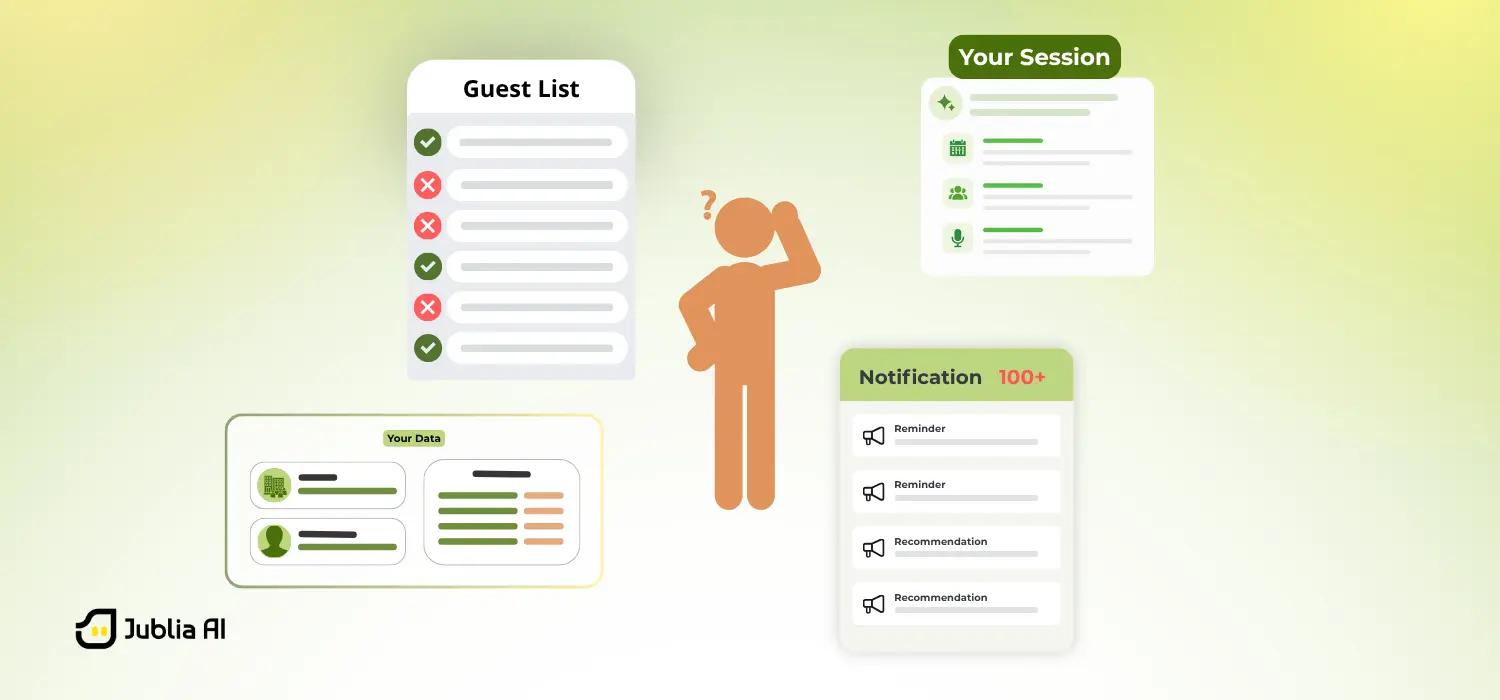 How Personalization Can Reintroduce Friction Instead of Curating Options
Why the data behind your recommendations decides whether they curate the event for attendees, or just relabel the same choice problem.
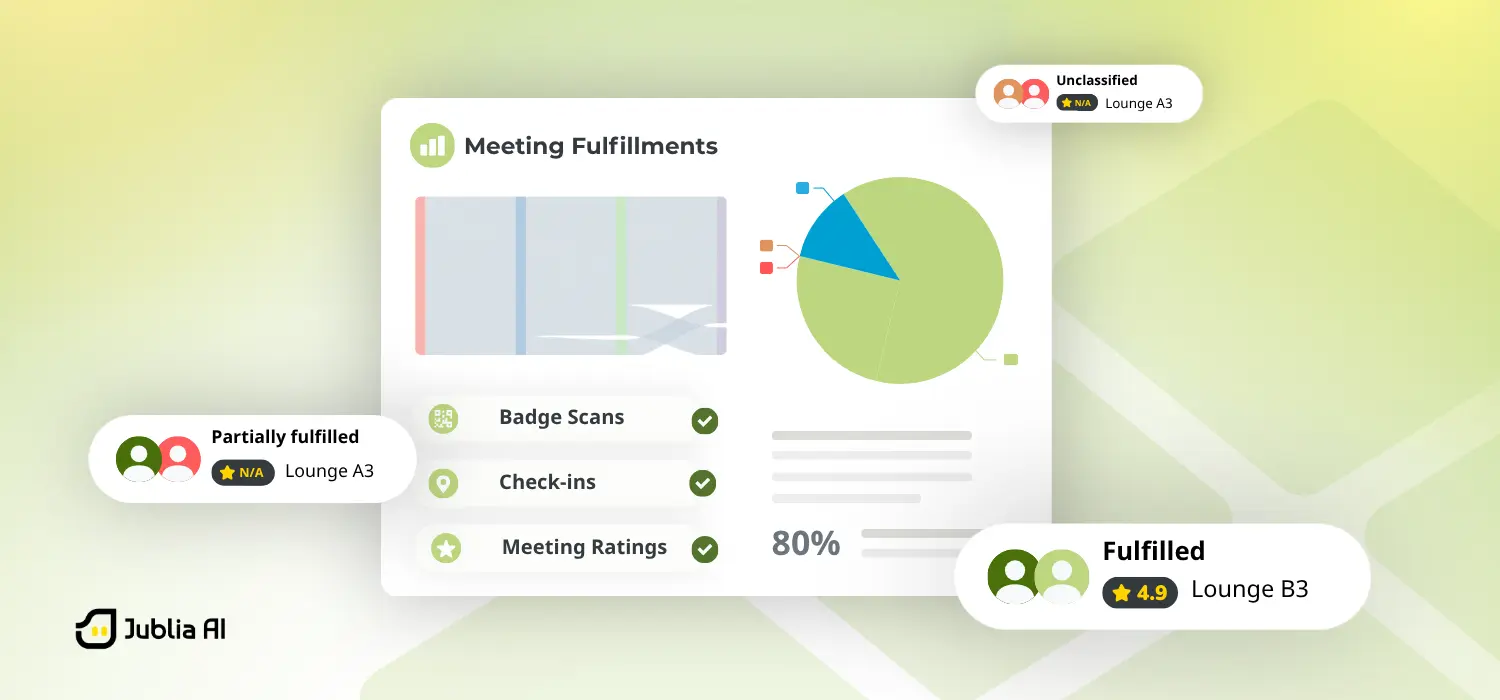 Why Meeting 'Fulfillment' is the Metric That Actually Matters From Your B2B Event
 Schedules tell whether meetings are planned; fulfillments show if they took place


.gif)
%201.png)
%201.png)
%201.png)
--p-2000.webp)
%20Black-Black%20Eyes.gif)


.png)