
Anticipation, Immersion, Reflection: The Three Acts of Attendee Engagement
Why engagement should be built across the full event lifecycle — not just on the show floor.
June 4, 2026

If we ask most organizers how they designed last year’s event, the answer is almost always about the show floor: sessions, layout, programming, and networking. Most of the planning, budget, and attention go into what happens during the event itself. Everything on either side of it tends to be treated as logistics rather than engagement. Pre-event engagement gets reduced to registration, and post-event engagement to surveys and follow-up emails.
But the attendee experience doesn’t start at badge pickup and it doesn’t end when they leave the venue. It begins weeks or months earlier, from the moment they first hear about the event. And what lingers is the impression of the event: what they would tell a colleague, the follow-up they respond to, and the decision to come back next year.
Seen this way, engagement spans three acts: anticipation before the event, immersion during it, and reflection after. Designed together, they compound. Treated as disconnected efforts, the value leaks away between them.
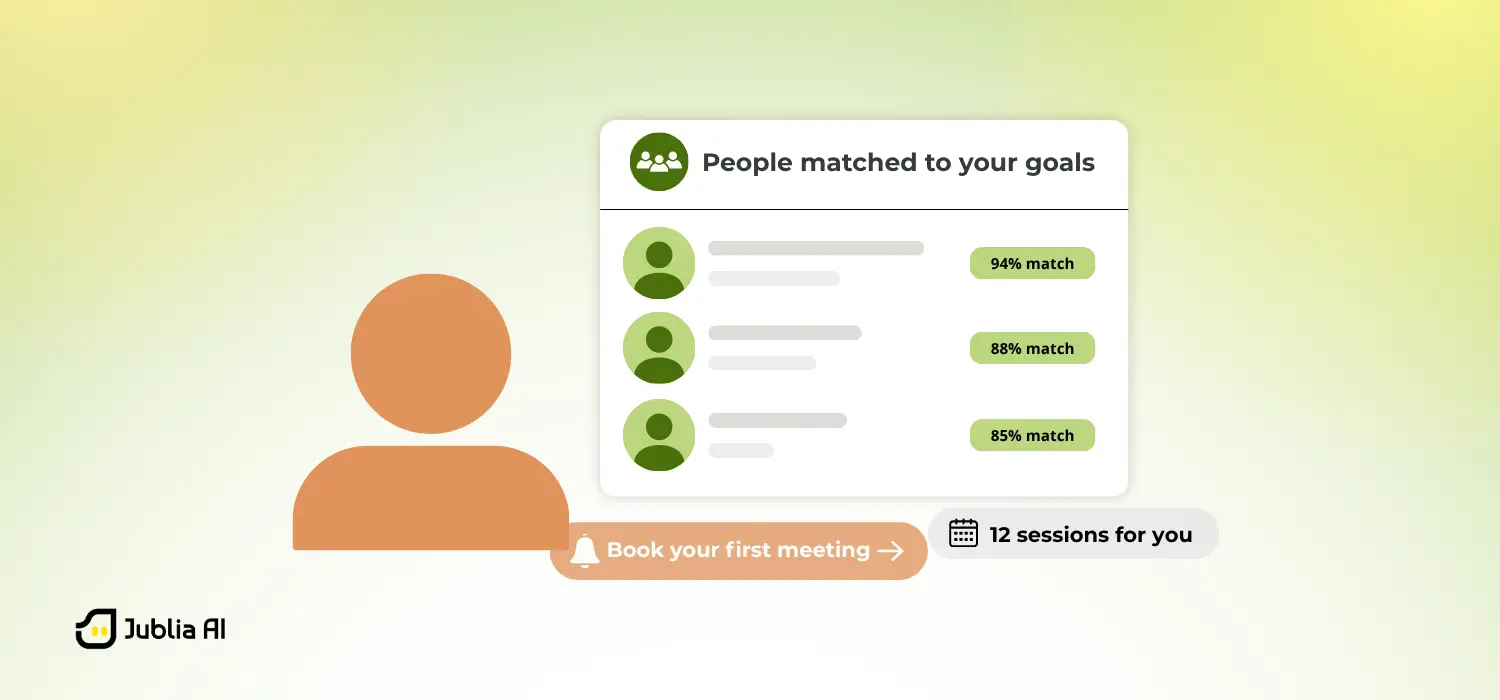
Before the event, attendees are already deciding whether it’s worth their time. They’re thinking about who they might meet, what they could learn, and what opportunities they might find. The goal isn’t simply to give them more information. It’s to help them see what’s relevant to them. When attendees can quickly identify the right people, sessions, and exhibitors, they arrive with a plan — and are more likely to engage once the event begins.
Good anticipation produces attendees who book meetings in advance, reach out to exhibitors before walking the floor, and brief colleagues on what they expect to bring back.
The challenge for organizers is that anticipation doesn’t happen on its own. Attendees need enough visibility into the event to start identifying relevant opportunities and planning their participation before they arrive. This is where event platforms play a critical role. By helping attendees discover the right people, sessions, and exhibitors early, they turn passive registrants into active participants.
Jublia AI builds this into the attendee journey. The Website Widget and Public Hub (Native guest mode and Web public access) let prospective attendees see who is coming, who matches their goals, and the agenda before they register. Email Engagement Campaign sends nudges based on behavior — to those who registered but haven’t picked sessions, or picked sessions but haven’t booked meetings.
Immersion is the act organizers plan hardest for: the event itself, the part attendees actually showed up for. Yet even a well-designed event can lose momentum when attendees spend their time figuring out what to do next instead of doing it.
But two patterns commonly lack quality despite the attention:
When attendees are searching for a contact, checking maps, or figuring out which booth to visit next, they're not fully participating in the event. They’re navigating it
The goal of this stage is actualization, to close the gap between what attendees expected and what they actually experienced. That means reducing the effort required to discover relevant people, sessions, and destinations once they’re onsite.
This is where AI can play a critical role to help attendees navigate the venue naturally and discover people and opportunities most relevant to their goals.
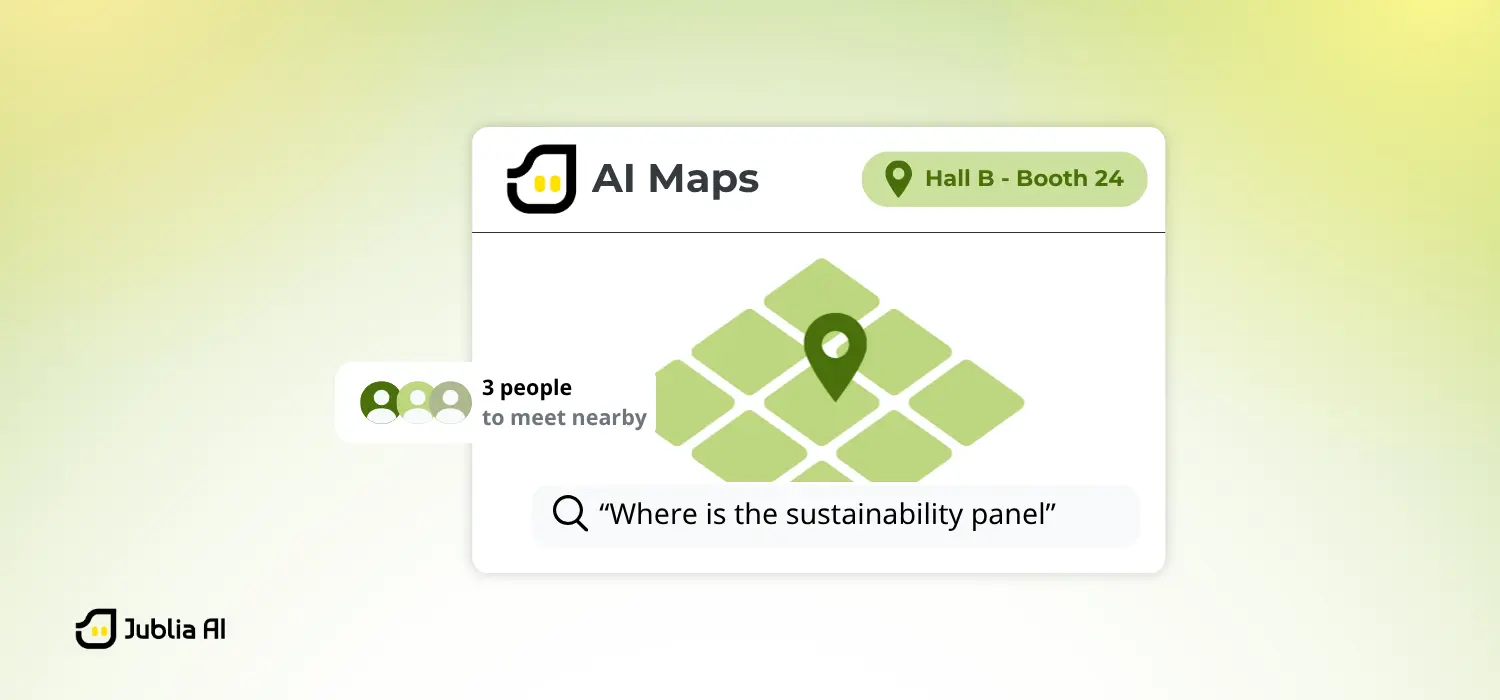
Jublia AI applies this principle to both discovery tasks. For place-finding, AI Maps gives attendees an interactive floor plan they can ask in natural language, so finding a booth or session room no longer means stopping to study a map. For people-finding, intelligent recommendations surface the most relevant connections, so attendees spend less effort searching and more time actually meeting the right people.
On the organizer side, AI Observability gives the team a quality control and transparency layer on the AI itself. It allows organizers to evaluate the relevance of match recommendations and the accuracy of Q&A responses — clear visibility to validate how well the AI is actually performing as the show runs. Those insights also feed back into the next training cycle, so the AI improves from one event to the next.
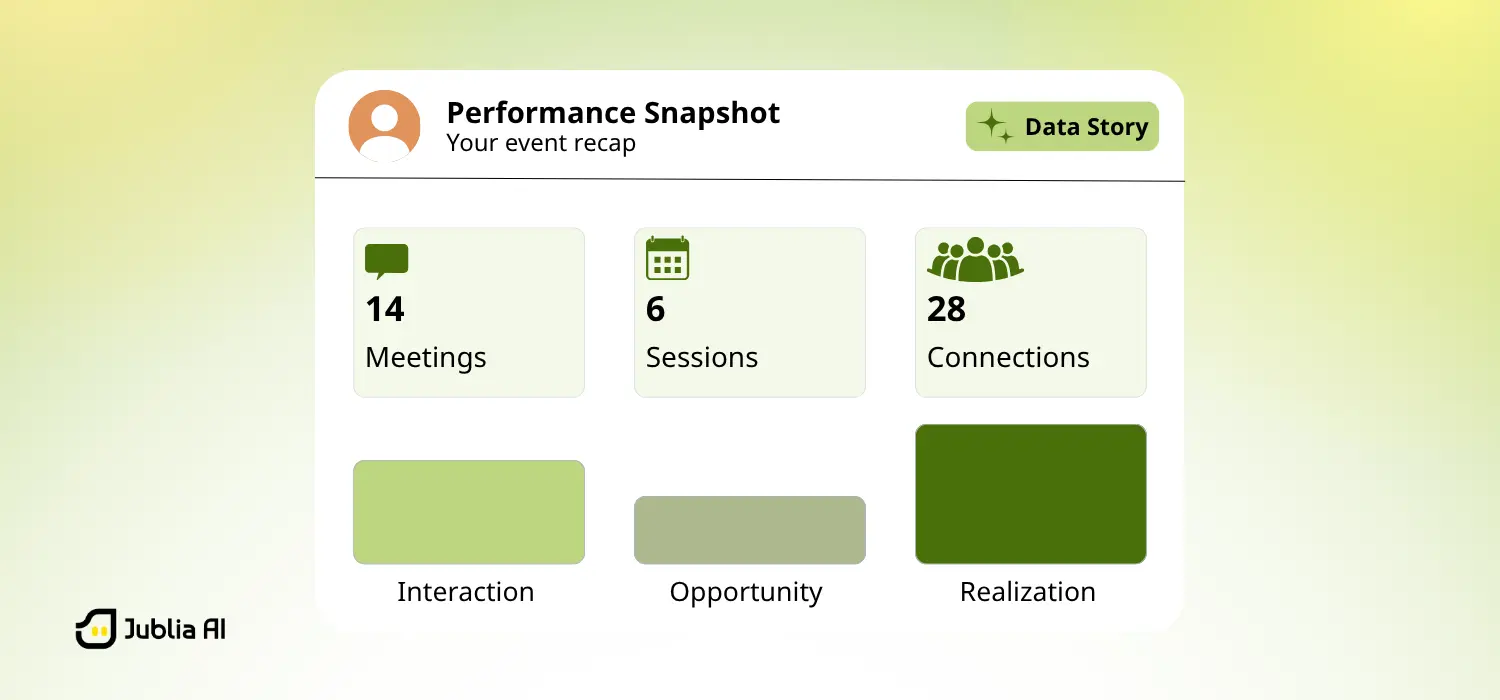
In the post-event, the experience has ended — but the impression remains for the attendees. What did they take from the event? What would they tell a colleague? Did it deliver what they came for? That impression is what travels into the follow-up they open, the recommendation they make, and the willingness to come back next year.
The real question is not simply “what follow-up should we send to attendees?” but “how do we help attendees recognize the value they gained?”
Good reflection benefits everyone involved:
The three acts are often treated as separate phases of an event: promotion before, experience during, follow-up after. In reality, they are connected.
What happens before the event shapes what happens onsite. Attendees who arrive with a clear idea of who they want to meet or what they want to learn engage more quickly. What happens onsite shapes what attendees remember afterward, and those memories influence whether they return, recommend the event to others, or come back next year.
In other words, the three acts feed one another.
Anticipation sets up immersion, immersion gives attendees something worth remembering, and that memory shapes how they anticipate the next event. You can see the payoff in who shows up: returning attendees arrive already engaged, and first-timers come because someone told them about it.
The challenge is that these stages are usually managed separately, which makes it hard to carry context and insight from one phase to the next.
Jublia AI is designed around this connected journey. Insights gathered before, during, and after the event can inform recommendations, discovery experiences, and post-event summaries across the full attendee lifecycle. On the organizer side, the same loop runs as Jublia AI’s Train → Deploy → Analyze lifecycle: behavior during the event and sentiment after it feeds back into pre-show recommendations, in-event discovery, and the post-show recap. Meanwhile, behavioral trends capture live signals as the show runs, so day-two recommendations are tuned by day-one behavior — and the experience keeps adapting as new signals emerge.
Designing All Three Acts: What Changes
When you assess your event’s engagement, the question is not “How active were attendees during the show?” It’s “How well did we design the journey around it?”
The show floor is only one among the three acts. Anticipation shapes expectations before attendees arrive, immersion determines what they experience onsite, and reflection influences what they remember after they leave. The strongest events are designed across all three. Curious how your event performs across these stages? Book a demo and we will walk you through what designing all three acts could look like for your event.


 Improving How Attendees Discover and Source at Events with More Context
Jublia AI’s upgraded semantics capabilities enable a more contextual discovery and sourcing experience
 Why Relevant Matches Get Overlooked When Recommendations Become Too Narrow
Recommendations help curate options at events, but what happens when they get too narrow and repetitive


.gif)
%201.png)
%201.png)
%201.png)
--p-2000.webp)
%20Black-Black%20Eyes.gif)




.png)