
Why Meeting 'Fulfillment' is the Metric That Actually Matters From Your B2B Event
Schedules tell whether meetings are planned; fulfillments show if they took place
June 10, 2026
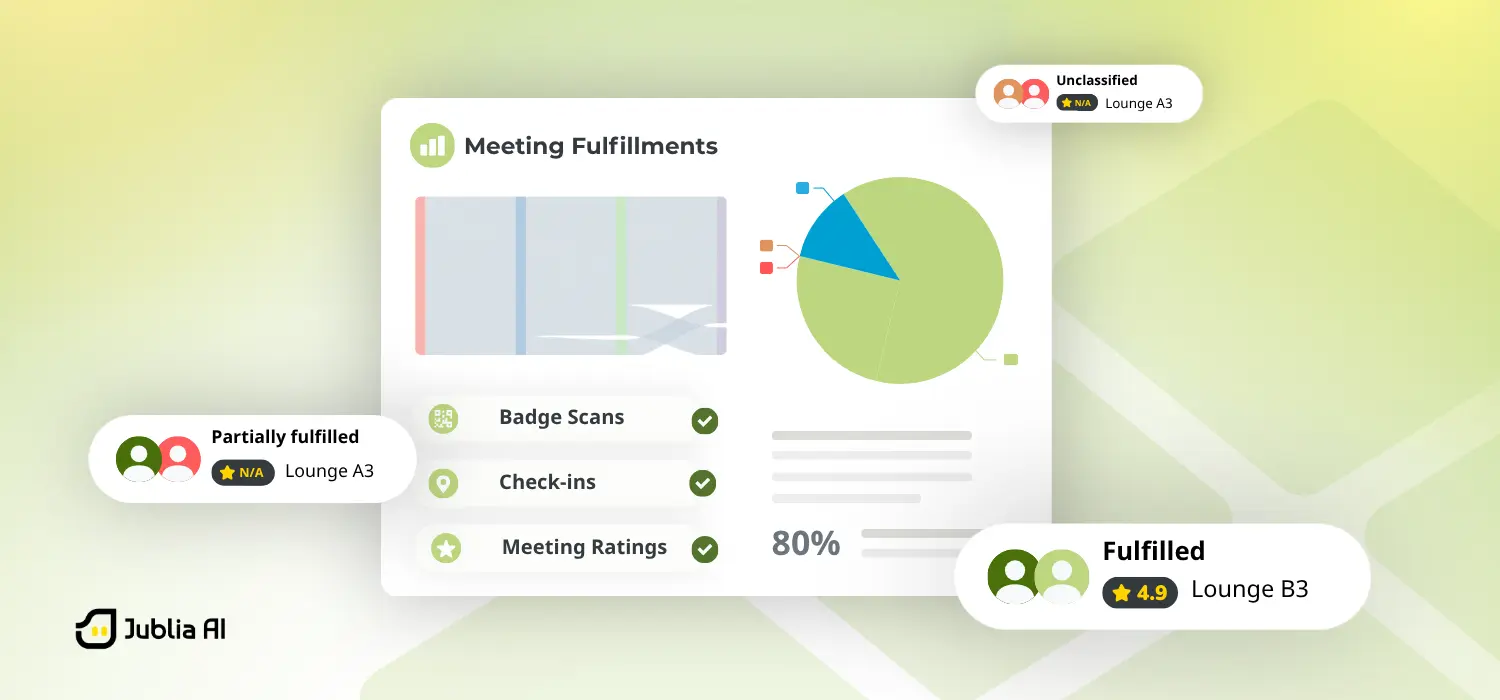
Most B2B events measure networking success by activity: meeting requests sent, meetings scheduled, or introductions made. But those numbers only tell part of the story.
A meeting request doesn’t guarantee a conversation. Even a scheduled meeting doesn’t guarantee that two people will actually sit down and talk. If the goal of networking is to create business opportunities, the metric that matters is whether those meetings ultimately happen.
This is where meeting fulfillment comes in. The distinction matters because meaningful event conversations have real business value. According to the CEIR report, closing a trade show lead requires fewer calls for cold leads — this is a value your B2B events can provide to attendees.
Many organizers use scheduled meetings as proof that networking at their event is working. But the reality is, many attendees in a hectic event environment often miss scheduled meetings or skip them entirely.
Based on our analysis across events, around 40% of pre-scheduled meetings fail to materialize when the floor is packed. This makes scheduled meetings an unreliable benchmark for meeting fulfillments — they cannot automatically account for real-world attendee behaviors, such as no-shows and last-minute cancellations.

This creates blind spots in what your meeting data shows, which risks damaging your event’s networking value and making it harder for attendees to justify their rebookings. With the Freeman report showing 51% of attendees citing successful networking as their reason for rebooking, the consequence is losing renewals and retentions.
One way to justify whether attendees’ networking was successful is to shift from tracking schedules to tracking meeting fulfillment. This is because it measures how many scheduled meetings are actually completed — giving organizers a clearer view of whether their networking program is delivering meaningful connections, not just activity.
That said, shifting from tracking schedules to fulfillments is more than simply changing metrics. This requires richer data and stricter analysis.
To be able to track whether the meetings really happen, organizers need an event platform that consolidates schedules with other networking data as a means of verification. Jublia AI makes this possible with Meeting Fulfillment Analytics, which leverages a Multifactor approach to verify the scheduled meetings against attendees’ digital footprints.

Jublia AI’s Multifactor approach combines multiple physical and digital metrics to prove the interaction actually occurred and verify fulfillment. Some of them are:
Based on these metrics, organizers can strictly validate fulfillment and demonstrate definitive meeting outcomes. Meetings are actually fulfilled when those digital footprints are present, while missing actions indicate no-shows or cancellations. And for meetings that actually take place, their values are visible through sentiment analysis and lead scoring.
Going beyond validation, meeting fulfillments at Jublia AI are visualized through intuitive dashboards, allowing organizers to show how meetings translate in an event.
Scheduled meetings show attendees’ interests in networking, not whether they actually engage. This is why meeting fulfillment is crucial: It proves that business relationships stemming from genuine interactions were made during your event.
In Jublia AI, tracking meeting fulfillment uses the Multifactor approach to verify that meetings took place, supported by digital footprints generated through on-floor activities. Beyond empowering organizers to verify meeting realization and its quality, our Meeting Fulfillment Analytics also helps them identify engagement bottlenecks through real-time visualization.
And this has a proven impact. At ARCH:ID 2025, 100% of the event meetings were fulfilled, with over a 4.62/5 meeting satisfaction score. To see how this can happen in your event, book a demo with us.


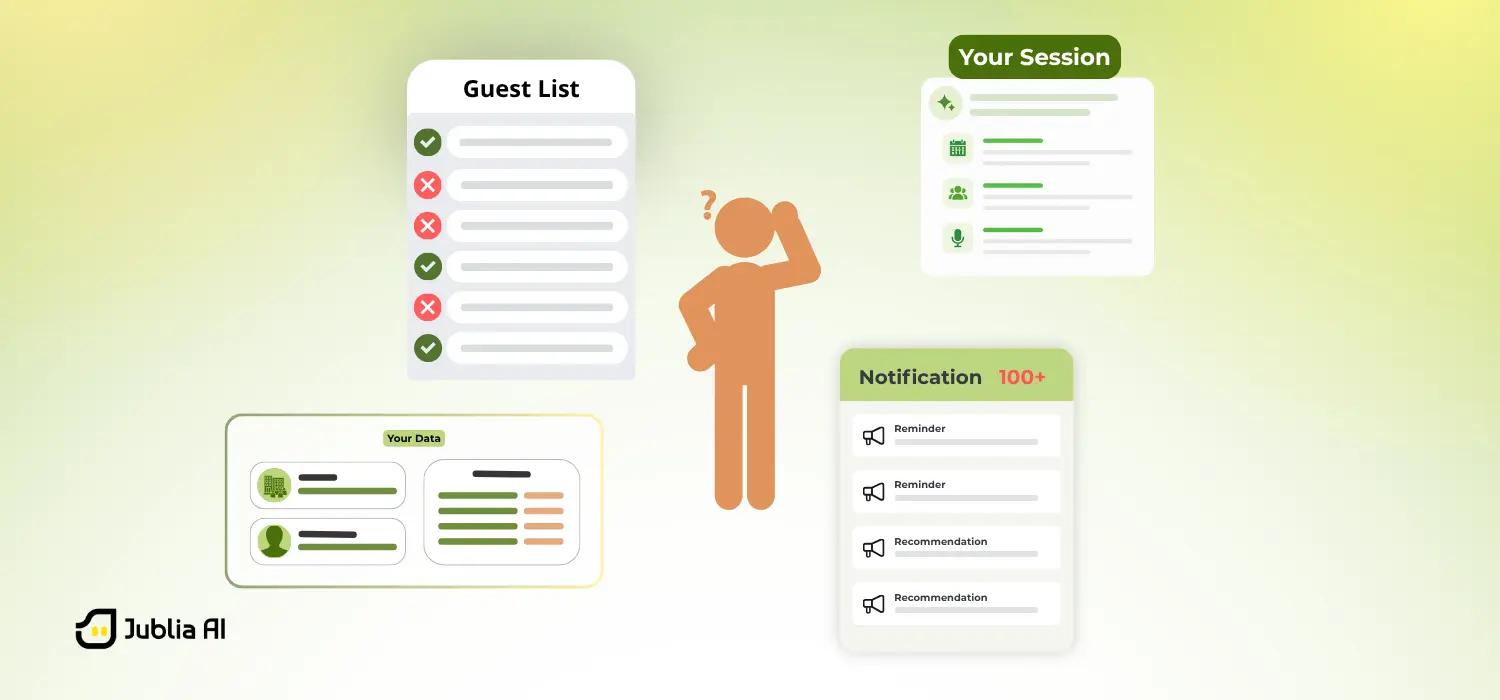 How Personalization Can Reintroduce Friction Instead of Curating Options
Why the data behind your recommendations decides whether they curate the event for attendees, or just relabel the same choice problem.
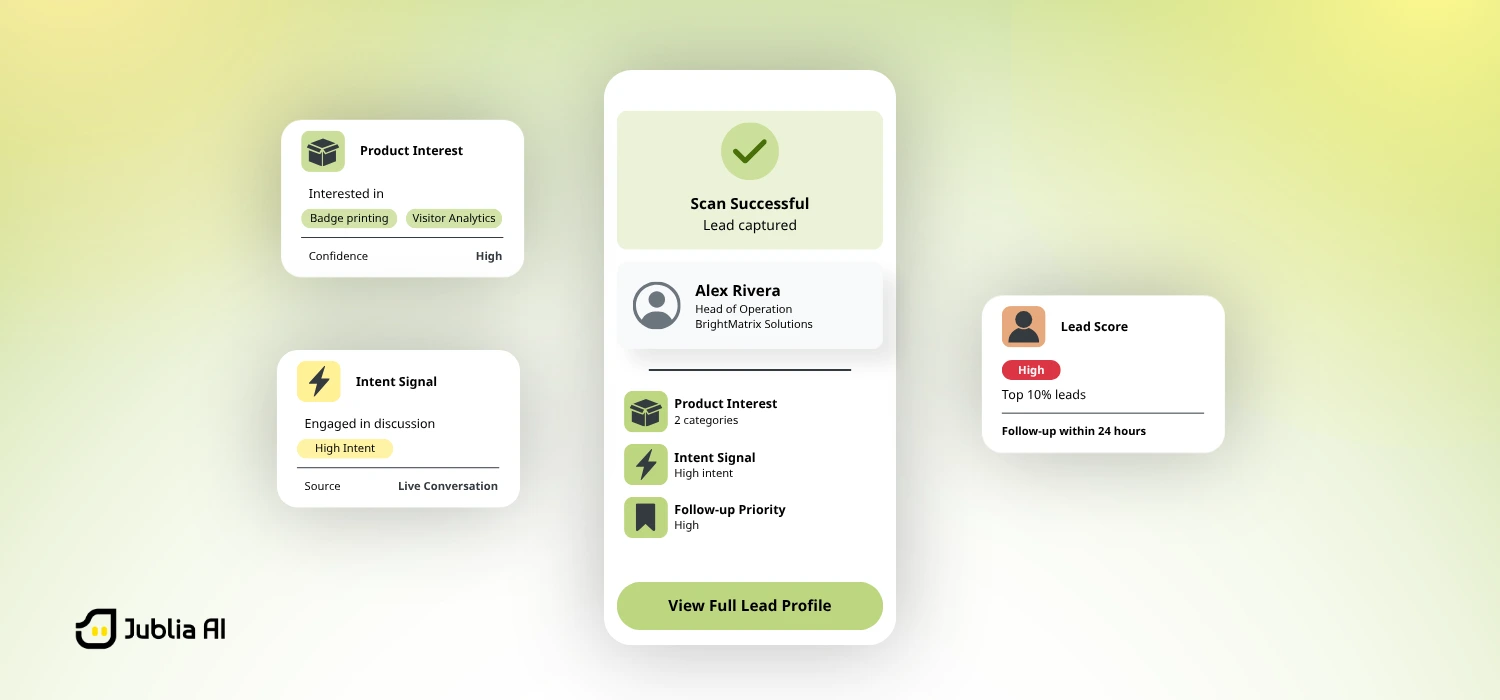 Why Interests and Intent Matter in Event Lead Capture
Because lead capture at B2B events needs more than a badge scan


.gif)
%201.png)
%201.png)
%201.png)
--p-2000.webp)
%20Black-Black%20Eyes.gif)




.png)