
Why Relevant Matches Get Overlooked When Recommendations Become Too Narrow
Recommendations help curate options at events, but what happens when they get too narrow and repetitive
September 25, 2026
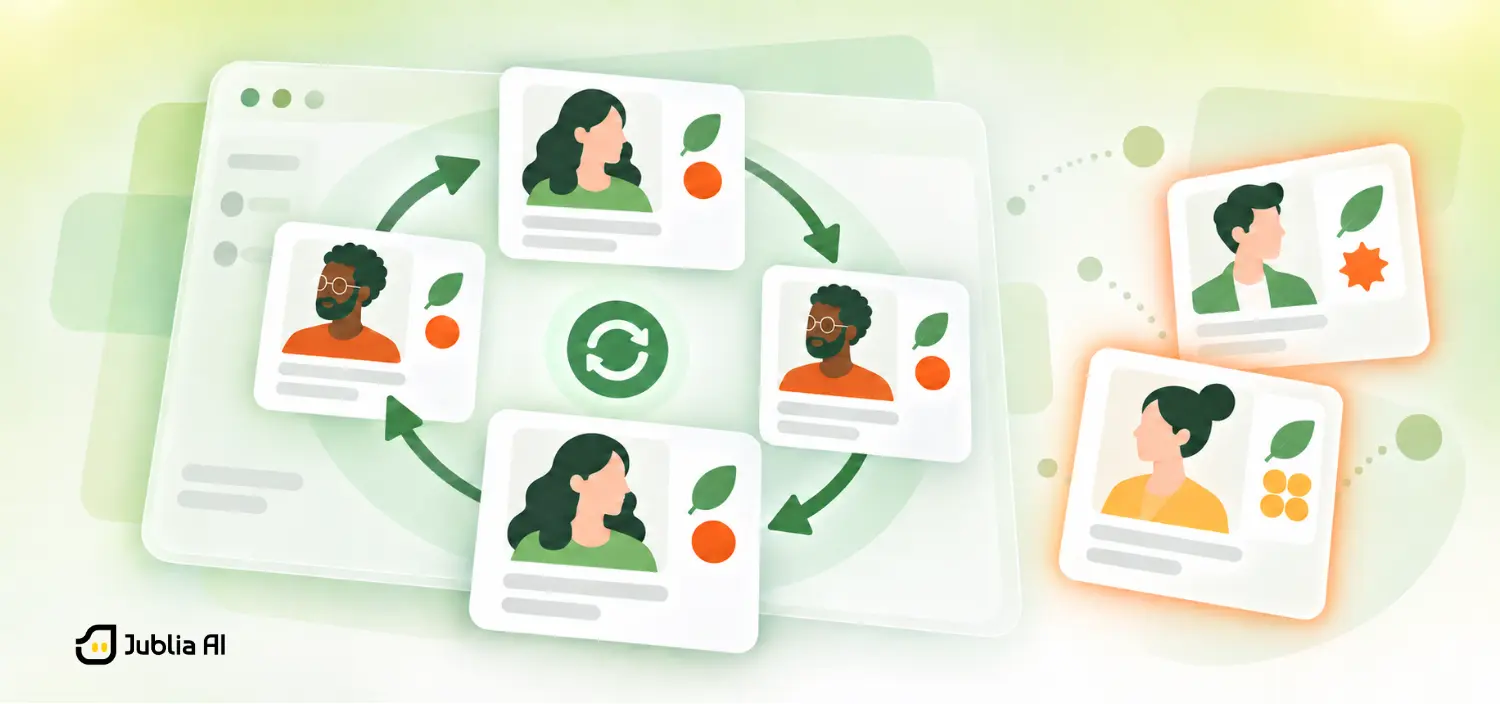
At events, recommendations typically mean the same thing: suggestions that help attendees find people, products, exhibitors, and content that match their interests. But recommendations differ in depth because the system decides what is relevant in different ways.
Recommendations can remain relevant while becoming repetitive or too narrow. When recommendations only repeat groups attendees have already engaged with, other relevant connections can be overlooked. This is why recommendations can be considered static even after showing different people or content.
Behavior-based systems refine recommendations as attendees explore an event, helping them curate options and find what to engage with more easily. This is helpful to some extent, but the recommendations can become repetitive if the system only considers interactions as evidence of interest and relevance.
This is because interactions alone don’t give a full picture of attendee intent. For example, an attendee receives recommendations for AI consultant roles and AI consulting companies, then bookmarks them.
If the system uses that interaction to narrow the recommendations, people, content, and exhibitors within the same niche may continue to dominate the suggestions. Without accounting for other context, learning from these interactions can reinforce the same recommendation patterns.
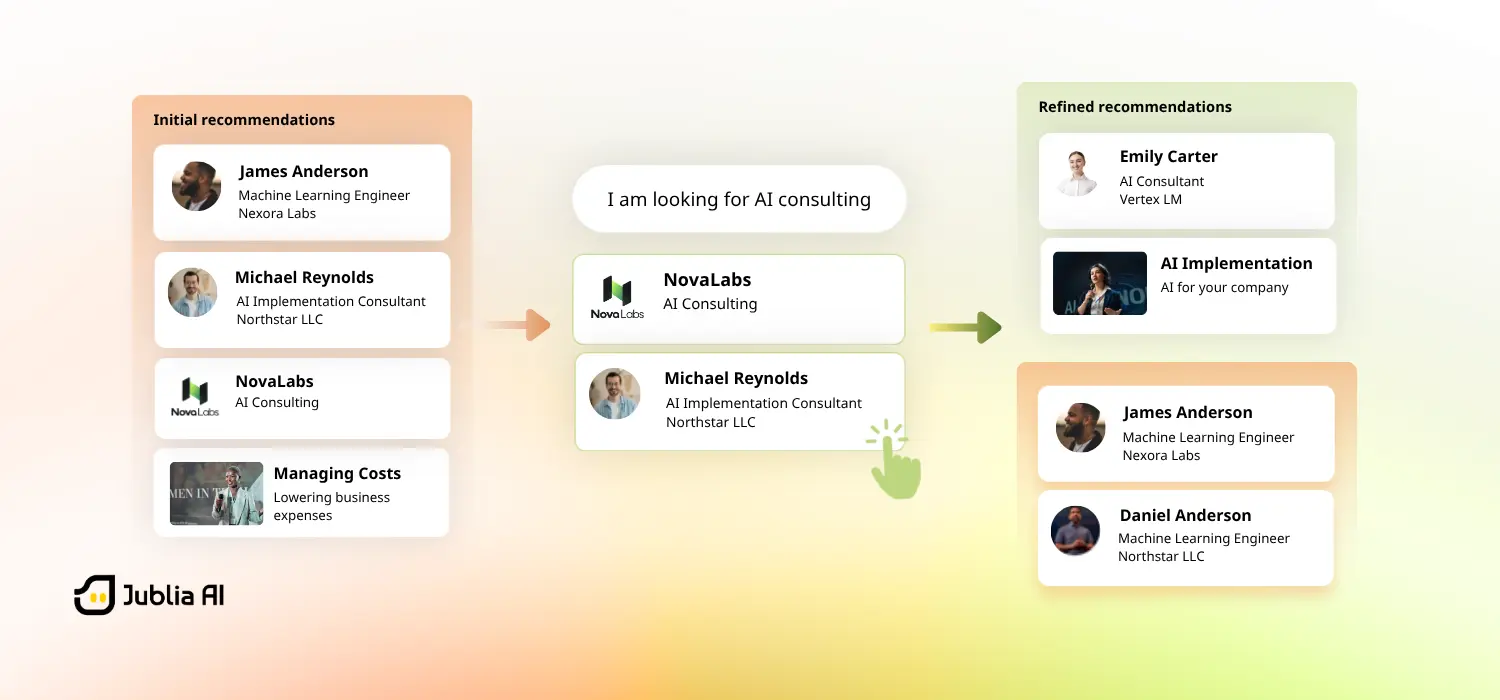
As a result, other relevant profiles and exhibitors may not show up as often, or at all. In reality, they also serve the attendee’s goals and complement the initial discovery, but the system doubles down on content similar to what the attendee has already engaged with. At some point, the recommendations become too narrow — in other words, repetitive.
When this happens, attendees can miss out on other valuable opportunities from different niches. For example, an attendee exploring AI adoption might find several software vendors but receive few suggestions for AI implementation companies or experts.
Repetition may also weaken the reason to keep exploring because people naturally get fatigued after repeatedly receiving similar suggestions. If they see no added value in the recommendations, engagement may also stall.
To keep all attendees moving towards their bigger goal, discovery at events should therefore incorporate multiple contexts to understand their intent as a whole — to surface deeper and more expansive recommendations.
Breaking this repetition starts with recognizing that attendees’ choices reflect what they were shown. Meeting requests, exhibitor profile visits, and session bookmarks reveal interest, but not other relevant things beyond what’s already been engaged.
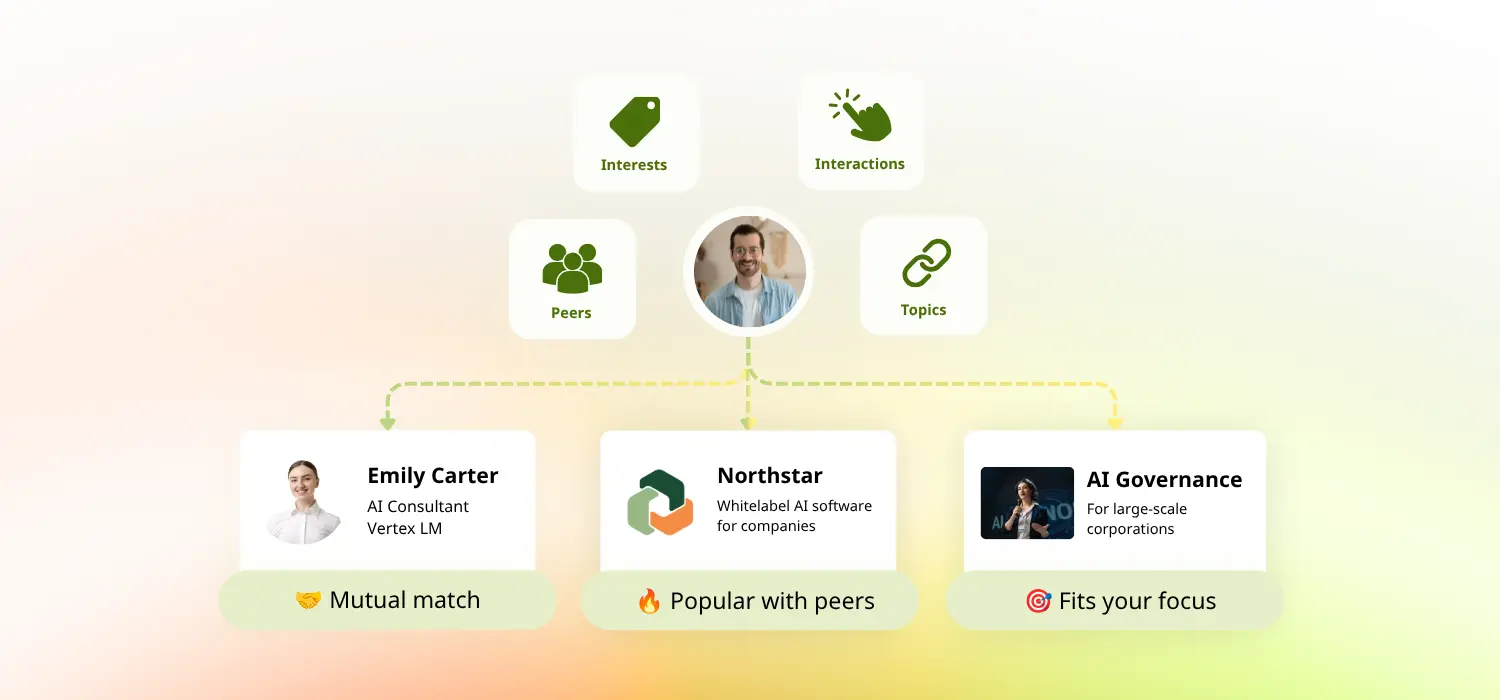
Interactions alone don’t tell what would complement initial discovery. A broader recommendation experience combines different signals rather than relying on interactions alone:
Together, these inputs help recommendations introduce different reasons to connect, rather than continually resurfacing the same type of match.
This is the approach behind our upgraded Recommendation Engine, which enables it to deliver a better discovery experience at events. Using a multi-context approach, the system can recommend people, products, and content with different relevancy — surfacing otherwise hidden opportunities.
Good recommendations don’t just confirm what attendees already know they want, but also help them discover opportunities they didn’t know they need or exist. Although recommendations help them find what’s relevant, bias can limit their exploration.
Therefore, recommendations in event tech should go beyond curating options and simultaneously surface hidden opportunities to expand their discovery experience.
Interested in seeing how better recommendations work at your event? Talk to us about how you want to deliver improved discovery experiences to your attendees.


 How to Drive Engagement at Business Events with Fireside Chats
A great fireside chat isn't just interactive, it responds to attendees’ burning questions about what matters most to them
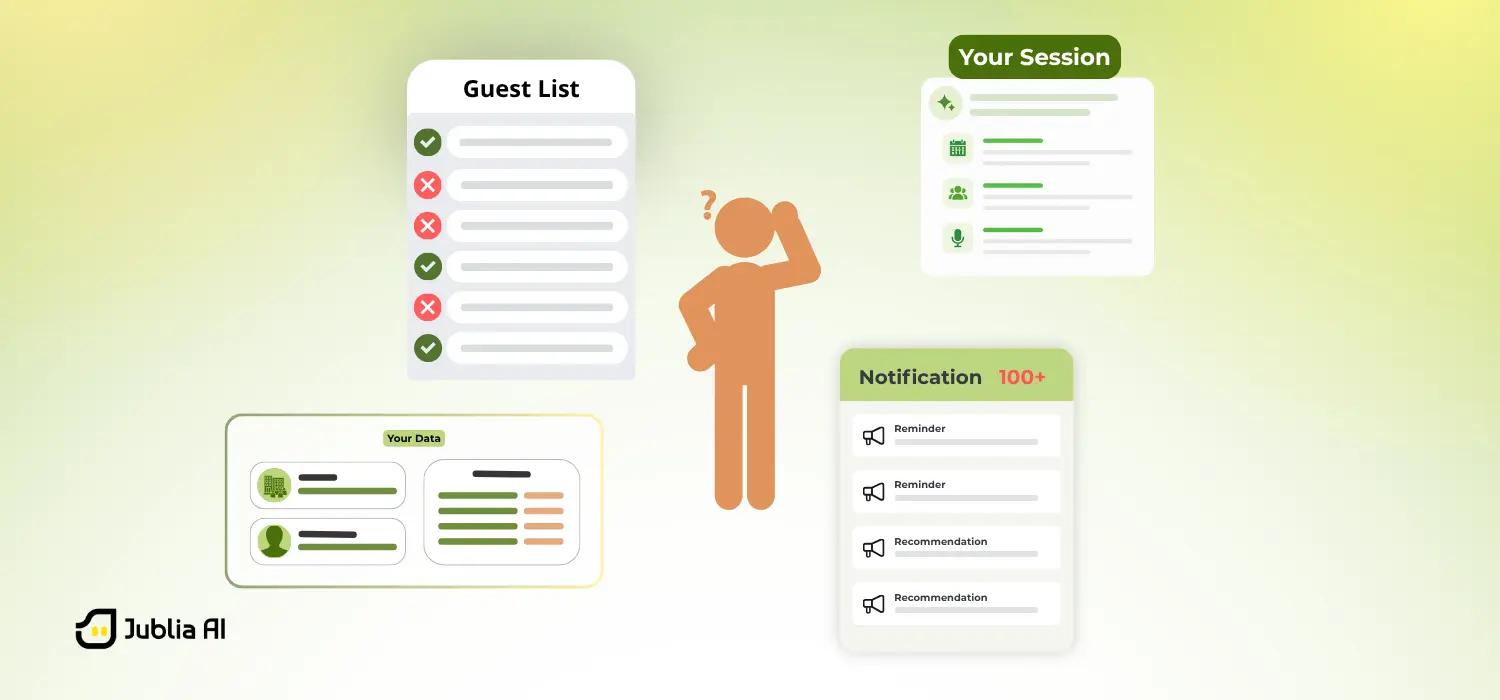 How Personalization Can Reintroduce Friction Instead of Curating Options
Why the data behind your recommendations decides whether they curate the event for attendees, or just relabel the same choice problem.
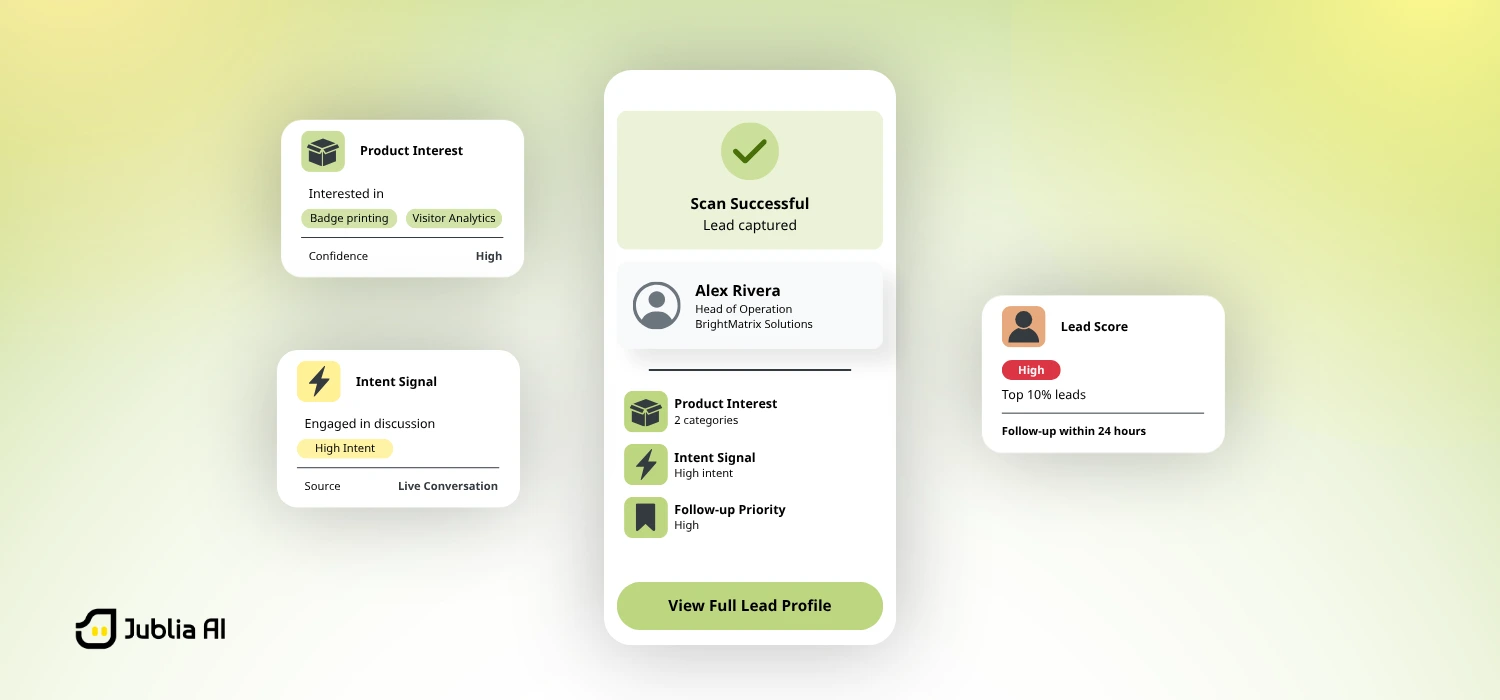 Why Interests and Intent Matter in Event Lead Capture
Because lead capture at B2B events needs more than a badge scan


.gif)
%201.png)
%201.png)
%201.png)
--p-2000.webp)
%20Black-Black%20Eyes.gif)


.png)