
How to Drive Engagement at Business Events with Fireside Chats
A great fireside chat isn't just interactive, it responds to attendees’ burning questions about what matters most to them
August 26, 2026
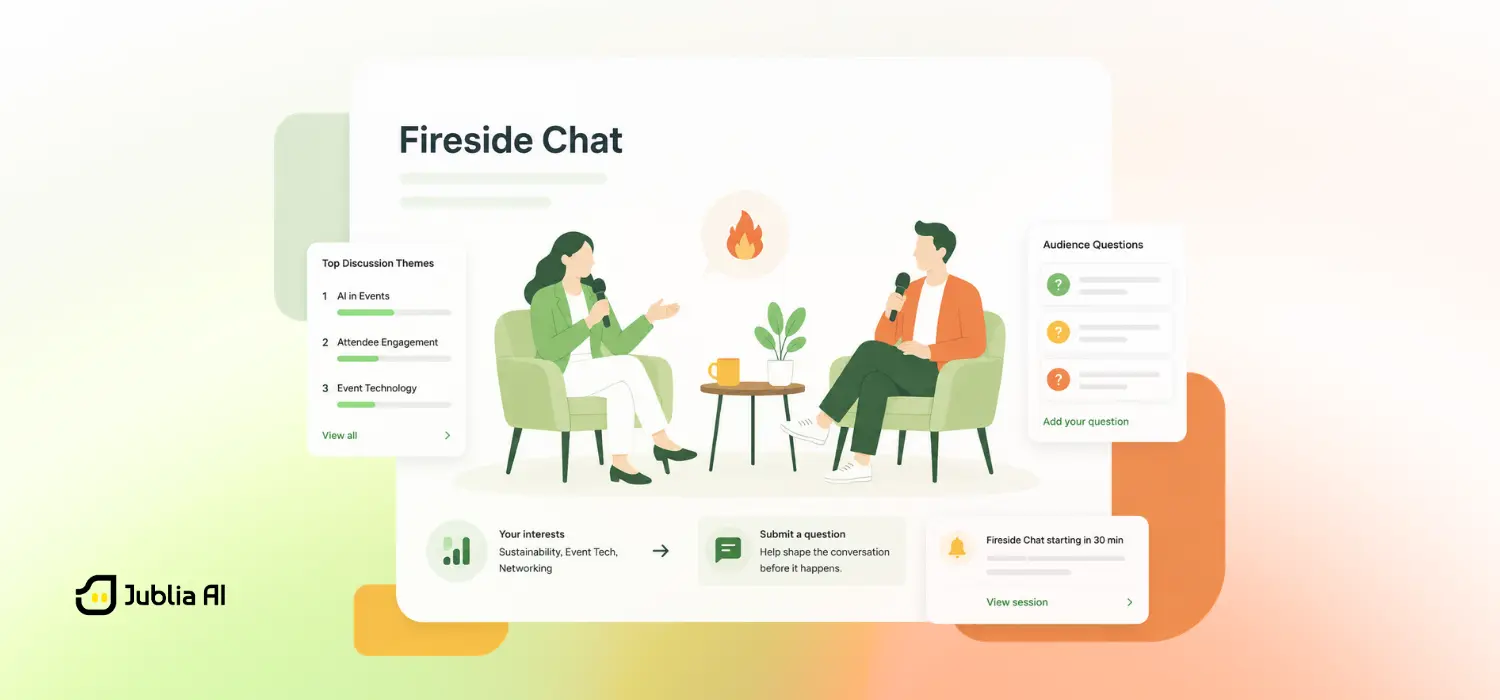
Fireside chats are often seen as a more engaging alternative to presentation-led sessions. However, shifting the session format won’t automatically improve engagement, as there’s no guarantee attendees will pay attention or participate.
The real challenge is to make the conversation matter to the audience: What are attendees actually trying to learn? What challenges are they facing? And how can the moderator use those insights to shape the discussion in a way most meaningful for the audience?
With this in mind, a successful fireside chat is less about the format itself and more about how well the conversation reflects what attendees care about. Here are three ways to design it around your audience.
A fireside chat can quickly lose its appeal when the conversation revolves around broad, generic industry topics rather than the issues relevant to attendees. The more closely the discussion reflects their current challenges and interests, the stronger the reason to stay engaged.
That requires more than deciding topics or discussion points before the session. The moderator needs to steer the conversation to ensure the topic is explored in a way that feels relevant, substantive, and worth staying for — without being locked in a rigid script that can make the session less authentic.
For example, moderators can follow up with speakers with specific examples, lessons learned, or practical implications that make the discussion more useful to attendees. This way, the discussion develops deeper and brings more value to the audience beyond the topic.
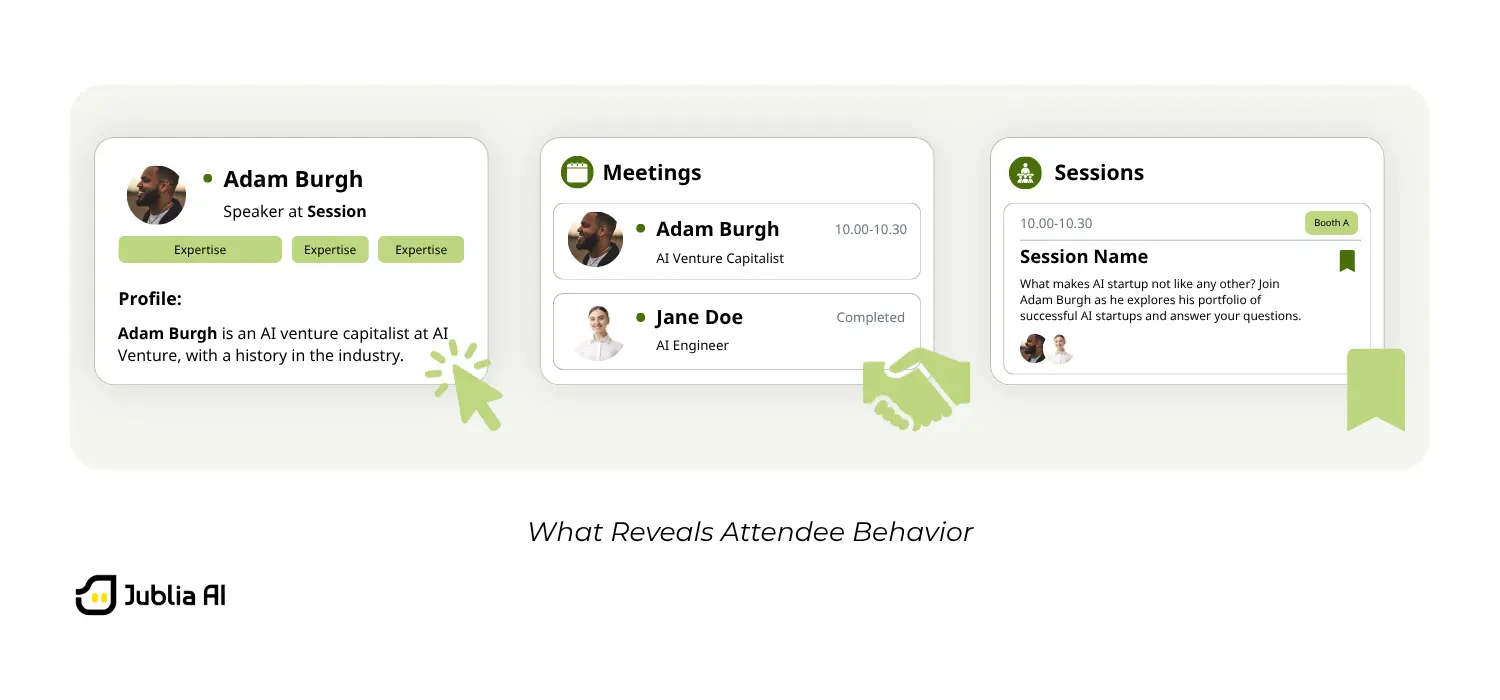
To see where the discussion should lead to, moderators can look at who attends the session, what their stated interests are, and what their profile is. Insights into attendees' behavior — which profile interests them, who they interact with, and which other sessions they attend — also give richer context into what matters for them.
A fireside chat shouldn't just give attendees a chance to ask questions at the end. When audience input is part of the conversation itself, attendees have a more active role in shaping the discussion around what matters to them — this makes them more engaged in the discussion.
Rather than reserving Q&A for the final five minutes, moderators can incorporate audience questions into the dialogue alongside their own. This keeps the conversation responsive to what attendees care about while still giving the moderator enough control to maintain its direction.
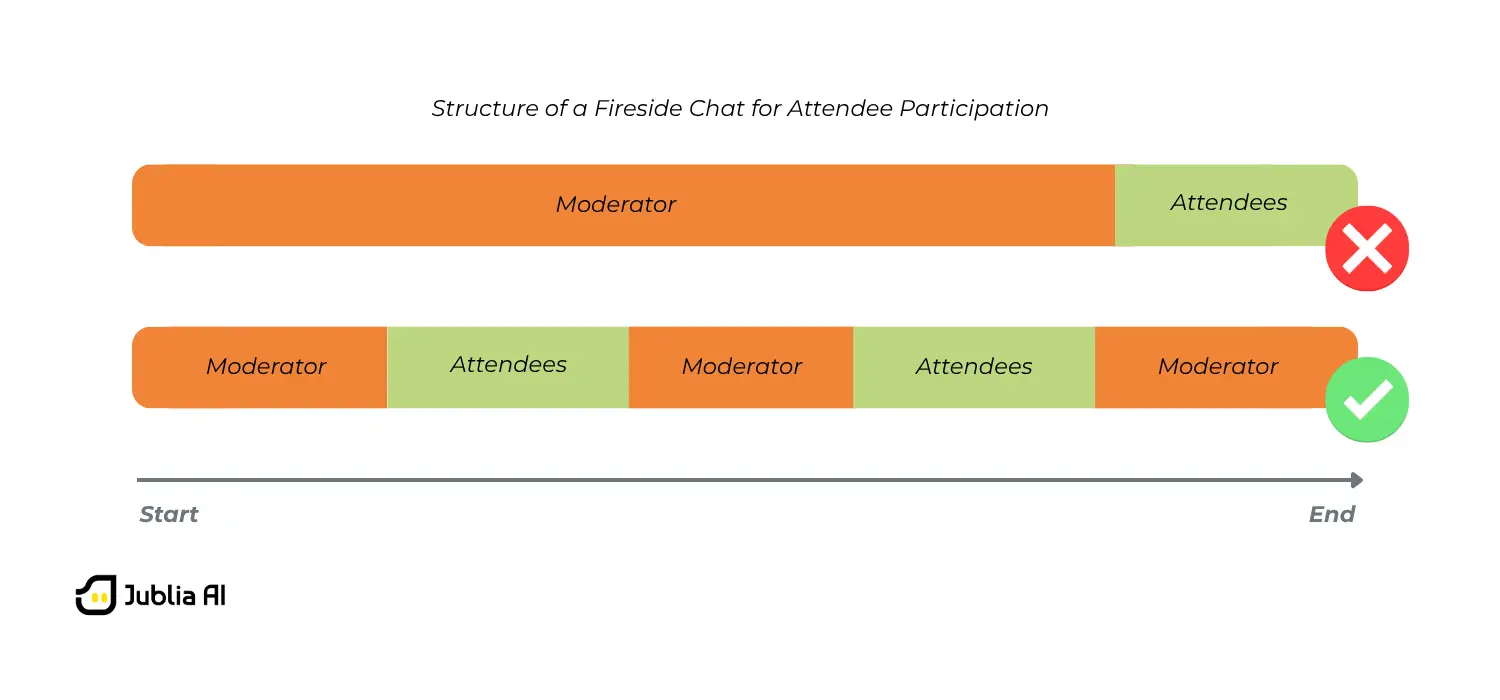
Making participation part of the discussion can also help sustain attention, particularly during longer sessions. Instead of passively listening from start to finish, attendees have opportunities to contribute, react, and steer the conversation toward the topics they care about.
For attendees to be encouraged to interact, however, they need a frictionless way to participate. Integrating a Q&A feature directly into the event platform that attendees already use to manage their schedule and meetings is a way to make contributing effortless.
A well-designed fireside needs more than a relevant topic to draw attendees in — it must generate enough interest and anticipation. Rather than simply promoting it as another item on the agenda, give attendees a clear sense of what they'll get from the conversation and how they can contribute.
Preview the questions, challenges, or topics the speakers will explore so attendees can see why the discussion is relevant to them. Organizers can also invite attendees to submit questions or respond to polls beforehand.
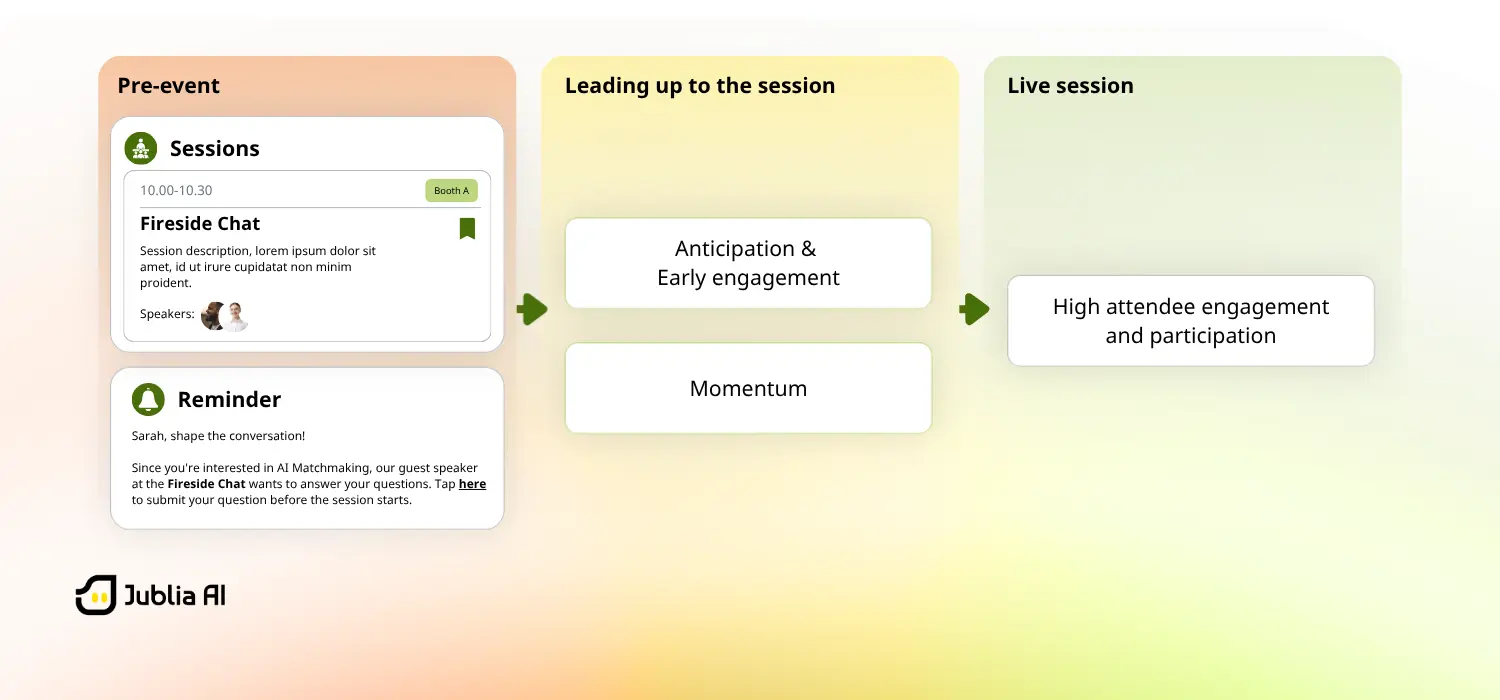
When attendees have already submitted a question or shared their perspective, they are more likely to commit to following the conversation and see how their input is addressed. This extends engagement before the session even begins — and builds momentum leading up to the session itself.
To encourage this participation, organizers can use personalized communication rather than a generic announcement for all attendees. Tailored nudges highlight specific session topics tied directly to an attendee’s interests, making the discussion feel explicitly relevant and compelling them to contribute before it even begins.
A successful fireside chat is more than a change of format. It requires understanding what attendees care about, giving them opportunities to shape the conversation, and getting them invested before the session begins.
When the conversation reflects their interests and attendees have a reason to participate, engagement naturally becomes part of the session. Achieving this consistently requires more than careful planning — it requires the right attendee insights and tools to turn those insights into action.
With an intelligent event platform like Jublia AI, organizers can understand attendee intent, surface what matters to them, and create more relevant opportunities for engagement before and during the event.
Check our success stories to explore the impact of our solution. To see it work at your event, book a demo with us.


 Why Relevant Matches Get Overlooked When Recommendations Become Too Narrow
Recommendations help curate options at events, but what happens when they get too narrow and repetitive
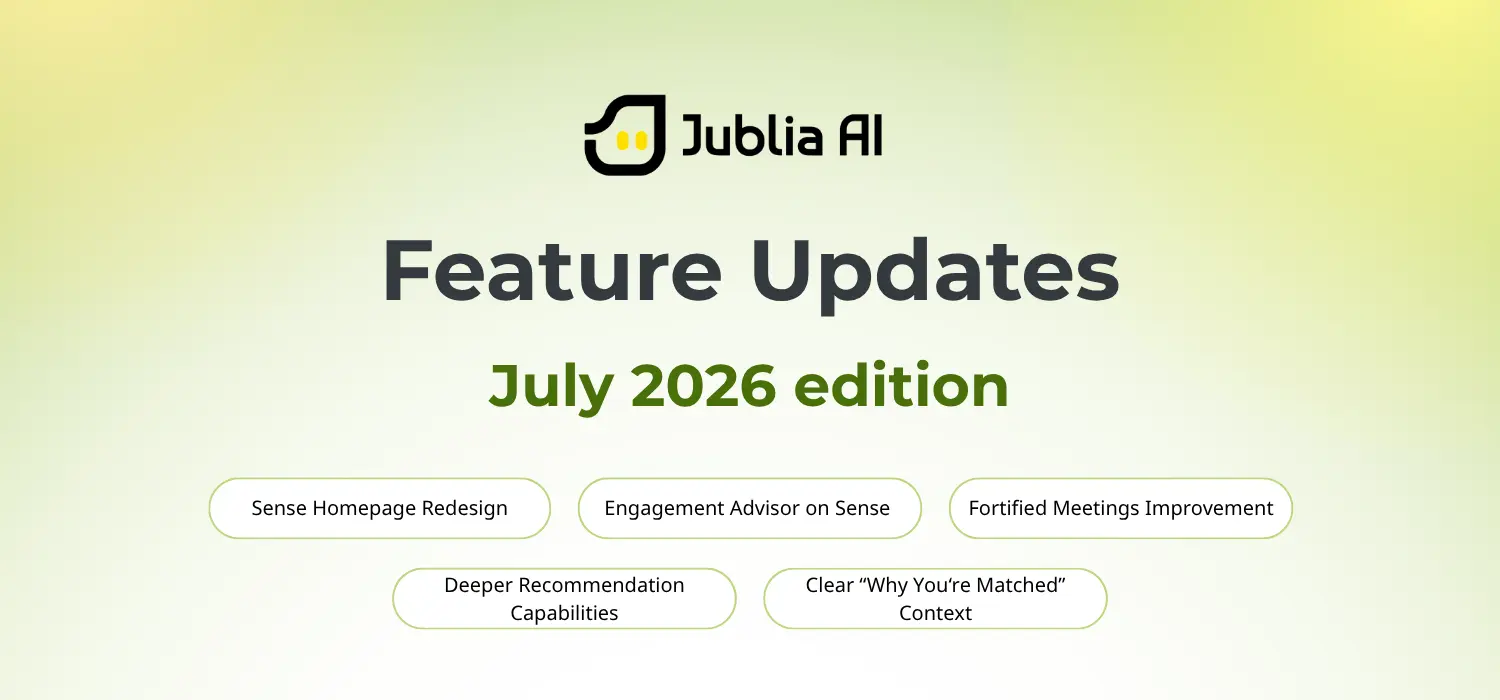 What’s new in Jublia AI: July 2026 Releases
Major improvements in delivering more streamlined event management for organizers and a better engagement experience for attendees
 Micro-Events: How They Can Be the Next Addition for Your Event Strategy
There’s a growing demand for more intimate networking, but does it fit into your event portfolio?


.gif)
%201.png)
%201.png)
%201.png)
--p-2000.webp)
%20Black-Black%20Eyes.gif)


.png)