
The Event Experience Gap: How to Design Events That Attendees Actually Want
Organizers expect events to give value. Attendees do too, but a different one.
May 7, 2026
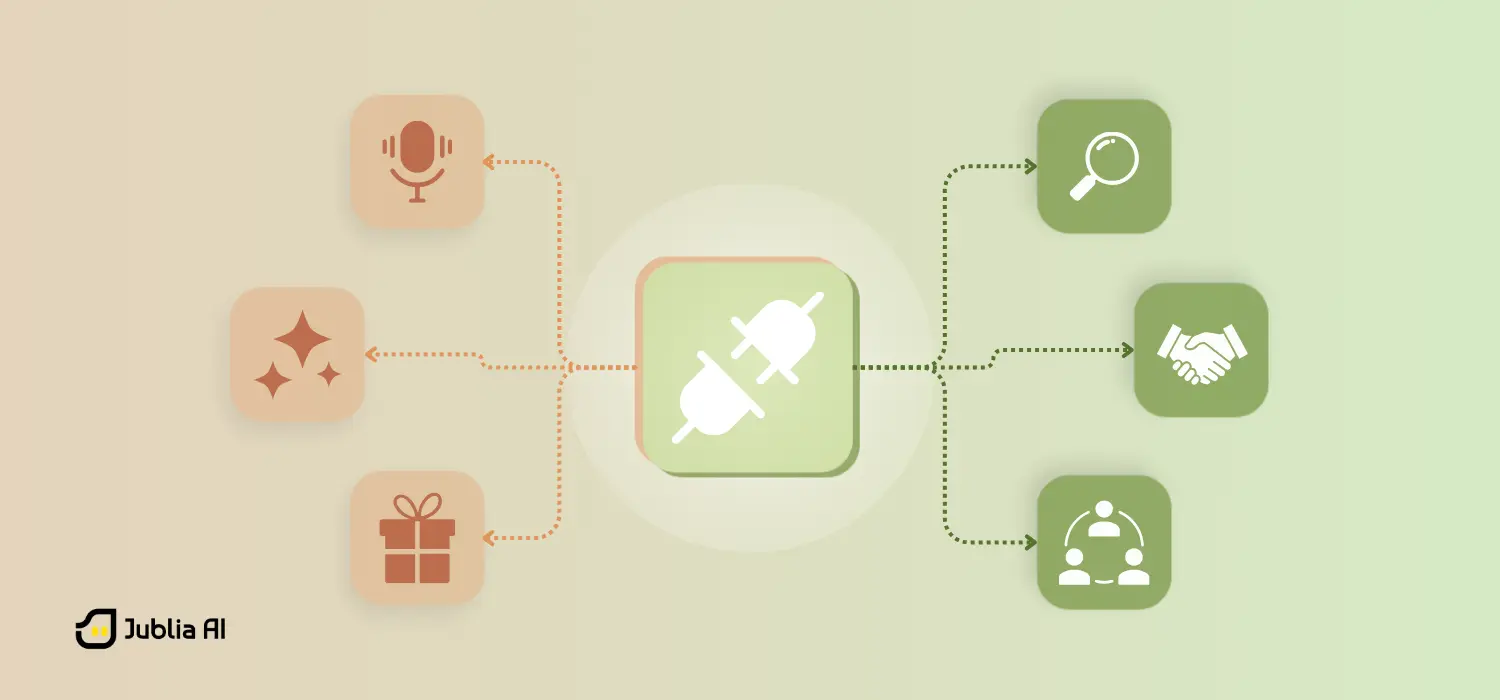
Organizers wonder why re-bookings are low despite their event going according to plan — sessions were packed, and the closing party was buzzing. Everything seems fine, but organizers haven’t realized that attendees define event value differently.
This misalignment can be costly. If overlooked, it not only results in poor return on investment but also snowballs into declining retention.
The solution appears to be simple: Provide what matters to attendees. In reality, however, it’s not a simple feat.
Organizers design an event with peak moments in mind as the highlight — standout experiences that are immediately memorable. However, the Freeman report shows that 60% of attendees believe that they don’t experience such moments.
But why do peak moments matter? According to the same report, 85% of attendees are more likely to return to future events upon experiencing such moments. In other words, organizers who fail to deliver peak moments that resonate with attendees are at risk of losing over half of re-bookings.
It’s not that peak moments don’t exist — organizers, in fact, invest a lot in them. The issue is that there’s a gap in understanding what peak moments are for attendees, and this is what causes the misalignment.
The majority of organizers associate peak moments with spectacles — inspirational keynote speakers, surprise elements, and signature parties. For them, events must turn heads.
In reality, peak moments for attendees are when they meet the right people, learn from sessions they attend, and connect with sponsors.

It’s not that organizers should ignore spectacles, but interactions, such as meetings, content discovery, and connecting with sponsors, are more important. They must reframe their focus to promoting what matters most for attendees — interacting with others.
Why has this misalignment become a problem? The reality is that organizers don’t just assume what attendees want; they have data. However, contextualizing it into meaningful insights and actions is a whole different challenge.
The current approach for designing events doesn’t meet attendees’ expectations because organizers are often overwhelmed by the sheer volume of information, making it difficult to extract timely insights — whether due to tool limitations, the abundance of data, or a combination of both.
Imagine you recorded thousands of attendees with different interests, and you need to personalize sessions to join, people to meet, and sponsors to connect to, for them to get the most out of your event.
This is only a part of the story. To deliver event experiences that attendees actually want, you need insights throughout the entire event lifecycle:
This requires the correct tool — a solution that can contextualize data instead of simply collecting, understand the intent behind trends, give real-time signals on top of reports, and actively adapt rather than being static.
With AI at its core, Jublia AI goes beyond calculation, but also contextualizes and understands data to provide smart analysis and real-time insights.
The entire intelligence-driven ecosystem of Jublia AI operates throughout the event lifecycle, where attendees are involved to ensure they get the most valuable experience:
Delivering a valuable event experience directly impacts retention. However, many organizers fail to do so because there’s a gap between them and attendees in identifying what makes an event valuable.
Delivering valuable event experiences requires more than analytics; it demands a smart solution that contextualizes data to personalize events according to attendees’ interests and minimize frictions that impede them from having the best experience.
Jublia AI has been proven in helping organizers design smarter events that foster networking and interaction for better experiences. See our solution in action, and learn how it makes your next events more valuable for attendees.


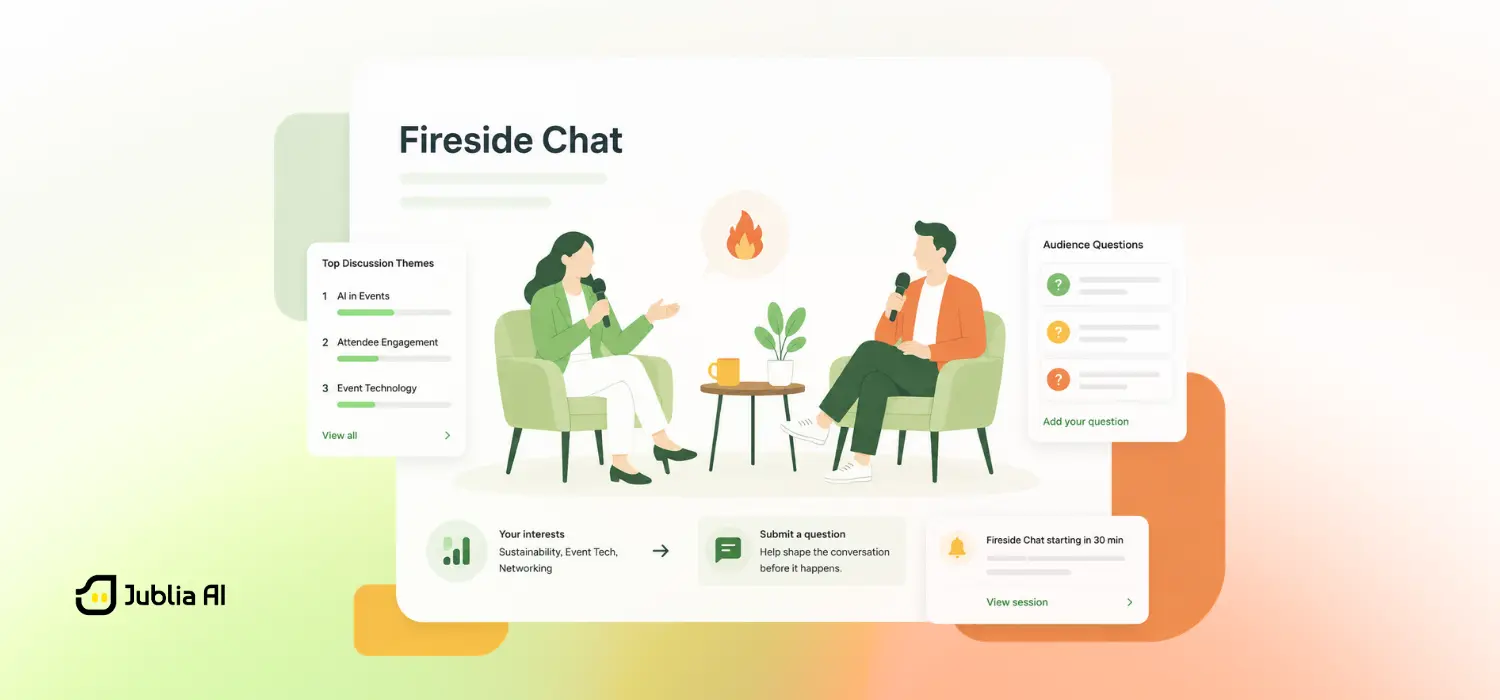 How to Drive Engagement at Business Events with Fireside Chats
A great fireside chat isn't just interactive, it responds to attendees’ burning questions about what matters most to them
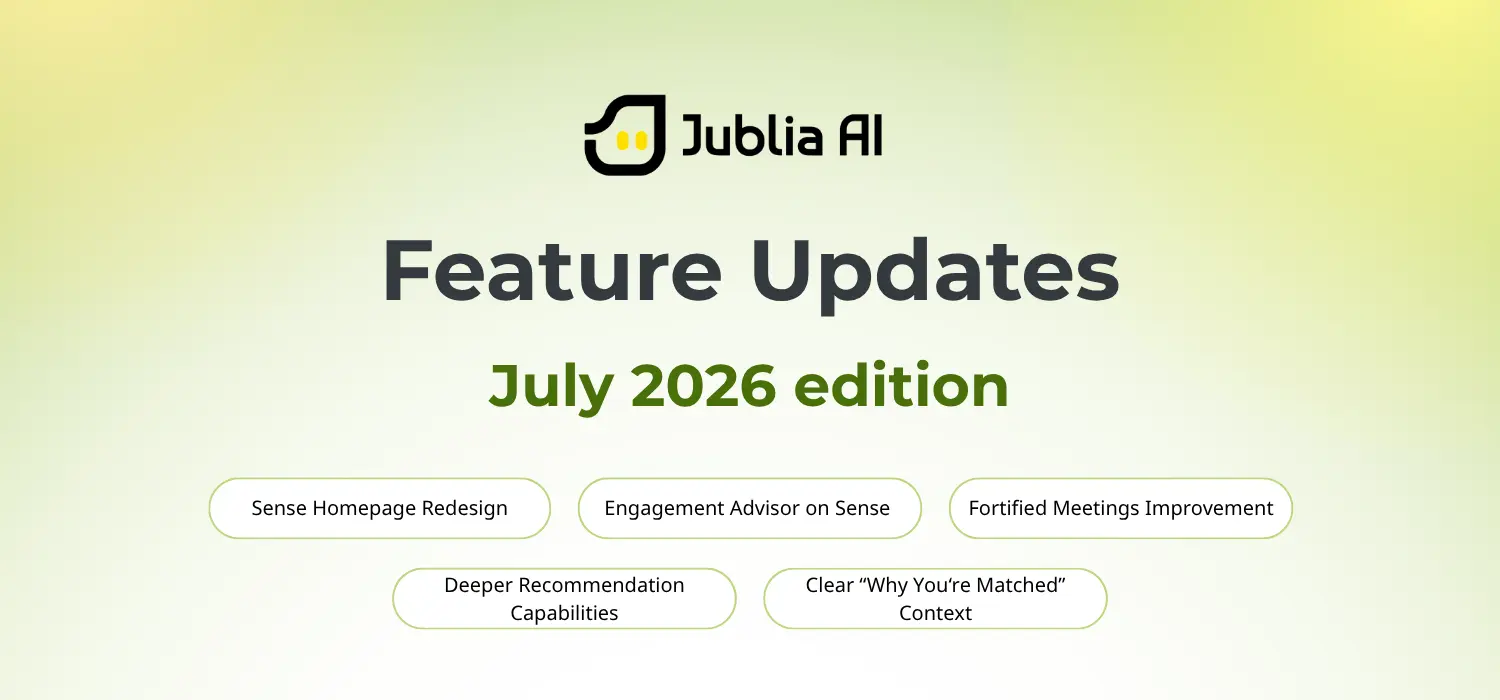 What’s new in Jublia AI: July 2026 Releases
Major improvements in delivering more streamlined event management for organizers and a better engagement experience for attendees
 Micro-Events: How They Can Be the Next Addition for Your Event Strategy
There’s a growing demand for more intimate networking, but does it fit into your event portfolio?


.gif)
%201.png)
%201.png)
%201.png)
--p-2000.webp)
%20Black-Black%20Eyes.gif)


.png)