
Micro-Events: How They Can Be the Next Addition for Your Event Strategy
There’s a growing demand for more intimate networking, but does it fit into your event portfolio?
July 16, 2026
Micro-events are making a buzz in the event industry, with 63% of organizers saying that there’s a growing demand for such small-scale, goal-focused gatherings, according to Booking.com.
What makes micro-events a popular conversation is their effectiveness in lowering cost overhead while promoting deeper networking. However, organizers shouldn’t regard them as a must-do or replacement for their large-scale events.
Micro-events may not be able to replicate what flagship events can deliver; but they could complement the latter to reinforce its value. This is the expectation about this event format that organizers should understand upfront.
Micro-events are more cost- and time-effective to arrange compared to larger-scale events. Despite this, they would still add more load to your event calendar — the exact reason why you should assess whether doing both is a feasible, worthwhile investment.
The small number of attendees and intimate nature of micro-events also mean they’re often private or closed. This is great for hyper-focused networking, but not for exposure, delivering messages that appeal to the masses, or general lead generation.
This is why organizers must see micro-events as complementary to existing, larger-scale events as opposed to a replacement. They should co-exist to achieve different event goals and create a cohesive, year-round portfolio of events.
There are different ways to fit micro-events into your strategy, alongside your flagship events
Large-scale events require more investment and longer preparation time, so they only happen once or a few times a year at best. During the downtime, attendees' interest in your event might drop, and you must win their attention again for the next edition.
Given how micro-events can be more frequent, they can act as touchpoints between your larger events. With their smaller scale and narrow focus, these events can also be tailored to specific attendee segments. This keeps attendees highly engaged, maintaining the momentum and interest until the next edition starts.
Keeping attendees engaged also benefits sponsors. These touchpoints help them maintain a stronger, deeper connection with buyers even after the flagship events end to speed up the sales cycles.
Beyond maintaining engagement, the continuity of your event series through micro-events also helps brands build a deeper relationship with leads, to accelerate them down the purchasing stages.
Here’s how it can look in practice: Your major event functions as the top funnel capture, leveraging the large number of participants, heavy on-floor traffic, and high level of exposure.

From there, you can then curate the highest-intent buyers to offer them a more intimate event that’s more focused on their next goals. Shortlisting these attendees involves gathering insights into their interactions — how many meetings they’ve completed, which sponsors they talked with, and what the sponsor’s evaluation of their purchasing intent is.
For instance, you can look at real-time behavior data and analytics on the Jublia AI platform to gather such insights. You can then group high-value leads and arrange micro-events specifically around their next objectives.
Since attendees arrive with a specific goal and mindset, it’s easier for brands to build deeper connections and trust to accelerate leads, especially in a more focused, intimate setting.
Given the smaller scale of micro-events, they offer organizers the opportunity to gather insights into a new strategy or approach with minimal risk and investment before deploying them at scale to the flagship event.
Organizers can also kickstart their event calendar with micro-events to gather early data on attendee interest and build momentum for the larger events. Then, they can implement what works and design the flagship event around what’s well-received by attendees.
Note that the attendee goals and profiles at flagship events will always be broader than your micro-events. With this in mind, micro-events should help you understand attendees' preferences and pain points, not testing aspects that will translate differently at scale, such as logistics.
With many attendees expecting deeper, more intimate networking, micro-events can be the format to complement your flagship event. However, it’s important to ensure they fit into your current strategy and work together towards a shared objective.
Otherwise, adding micro-events will just add more loads to your already busy calendar. More events not only translate to more effort in the preparation, but also in managing and syncing data across them.
At Jublia AI, we help organizers manage their multi-event portfolio on a single, centralized hub with our Multi-Event App. In our collaboration with Global Event Partners, this solution successfully helped organizers manage multiple events across the globe that took place at different times.
If you want to see how it works with your multi-event portfolio, schedule a demo with us.


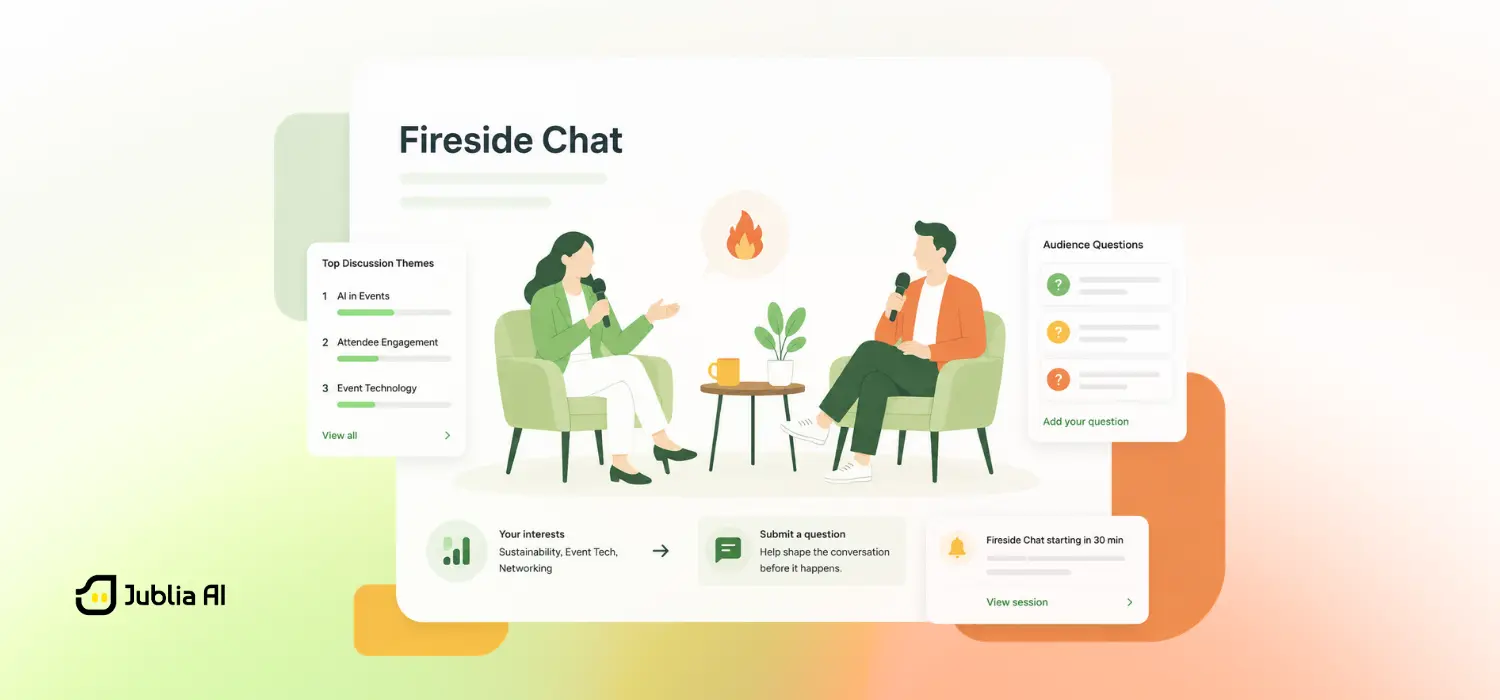 How to Drive Engagement at Business Events with Fireside Chats
A great fireside chat isn't just interactive, it responds to attendees’ burning questions about what matters most to them
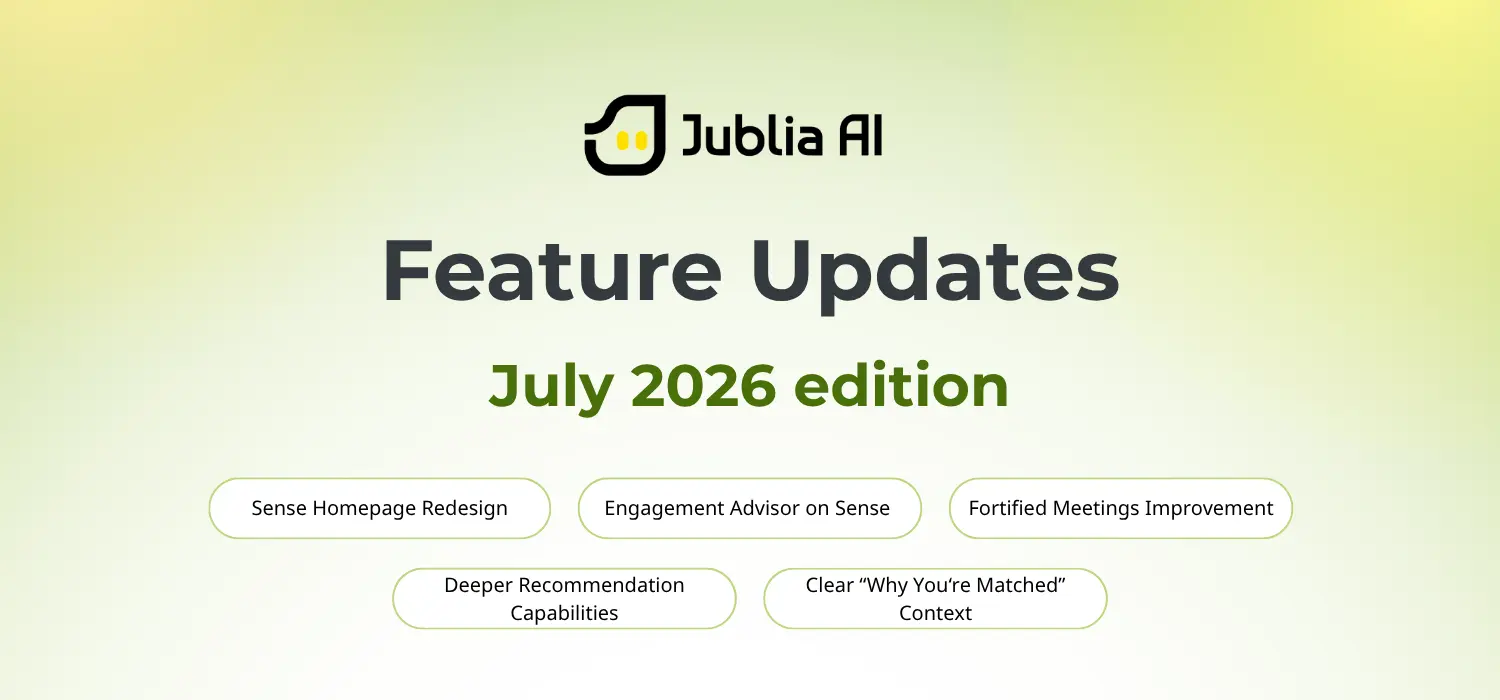 What’s new in Jublia AI: July 2026 Releases
Major improvements in delivering more streamlined event management for organizers and a better engagement experience for attendees
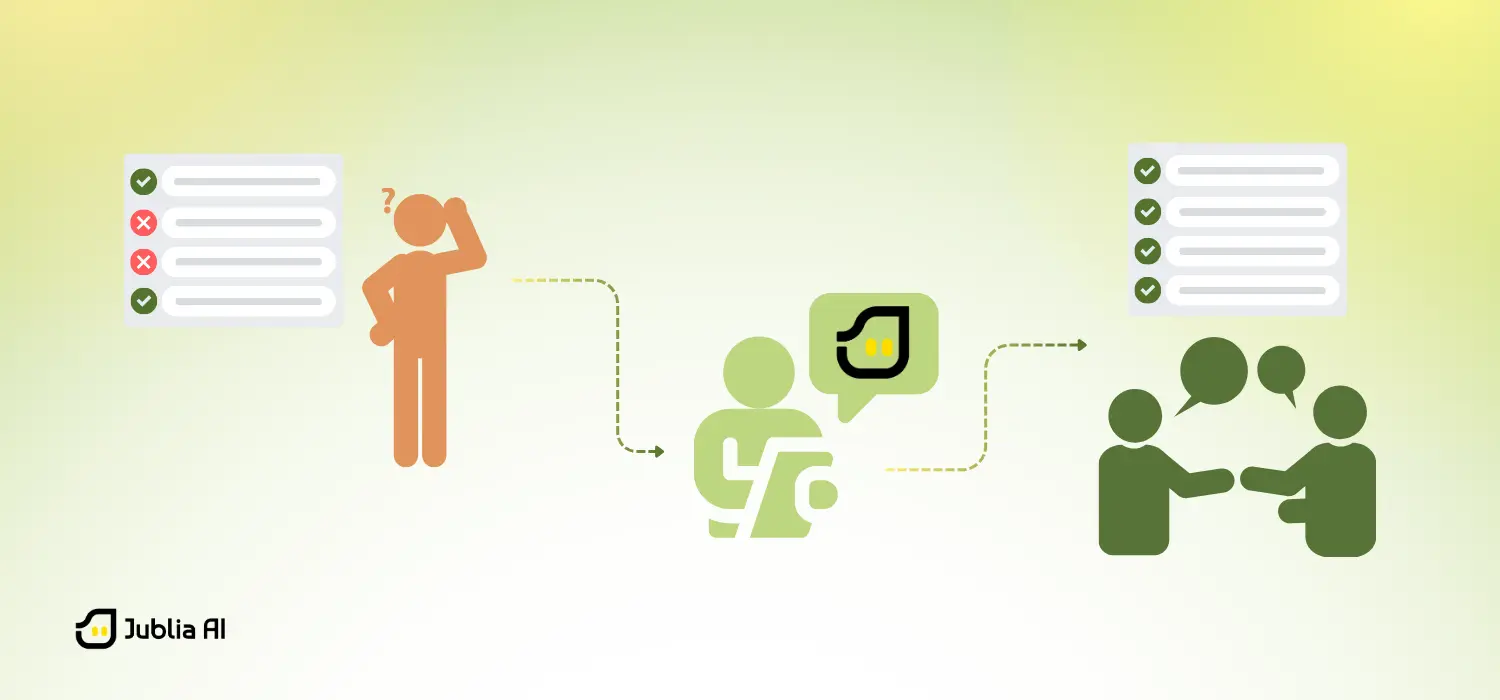 The Communication Engine: Orchestrating Event Engagement with Jublia AI’s Concierge Delivery
Engagement doesn’t happen on its own — it’s designed


.gif)
%201.png)
%201.png)
%201.png)
--p-2000.webp)
%20Black-Black%20Eyes.gif)


.png)