
Beyond the Search Bar: Why B2B Events Need Conversational Search
When attendees know what they need, they question is whether your platform does too
April 23, 2026
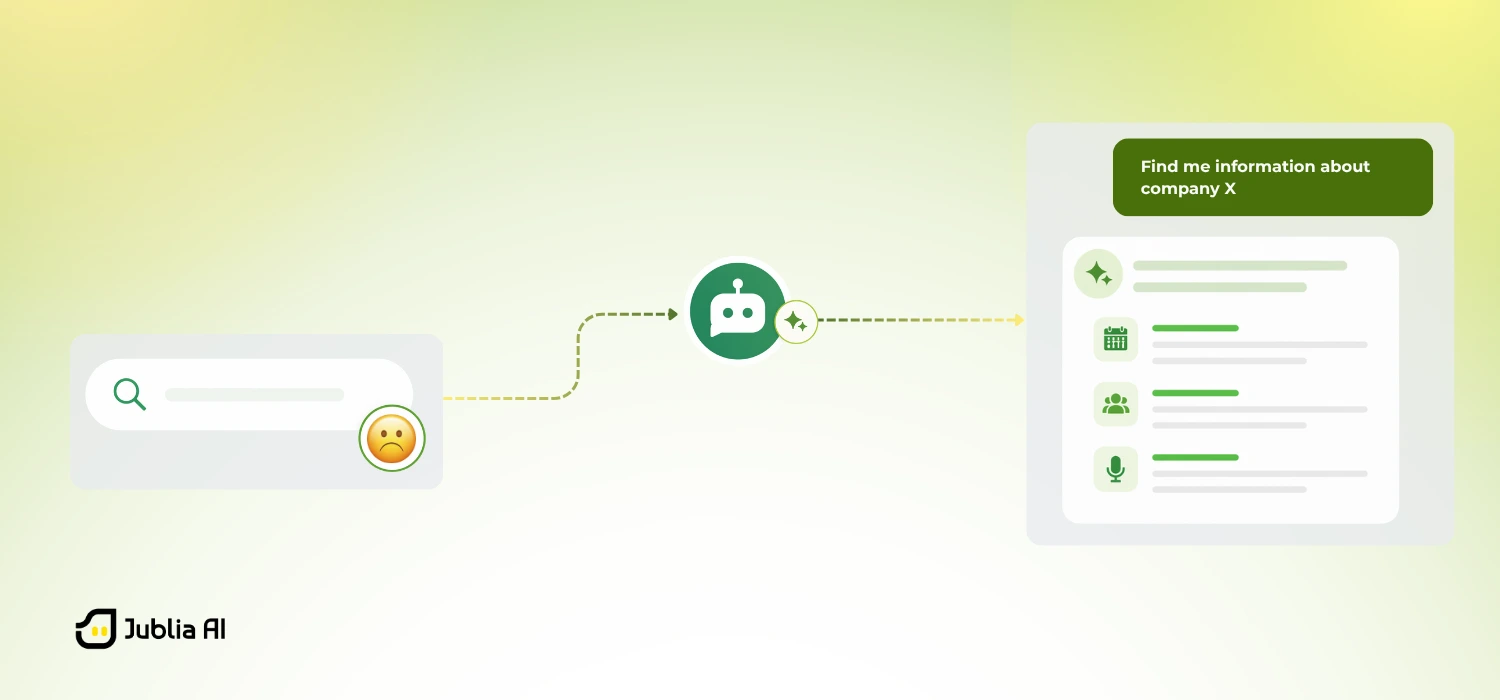
For years, the search bar has been the front door to every event platform. Type a keyword, get a list of results, find what you need — or don’t. It was a reasonable solution, and for a long time, it worked.
But something has shifted. Attendees today don’t just navigate event apps. They use AI assistants at work, conversational tools in their daily lives, and platforms that anticipate what they need before they finish typing. They arrive at your event having already been shaped by systems that understand them. Then they open your event app and find a search bar with a filter panel.
The gap isn’t dramatic. But it’s felt — and it’s growing.
Let’s be clear: keyword search was a genuine step forward for event platforms. It gave attendees agency and gave organizers a scalable way to surface content across hundreds of exhibitors, sessions, and speakers. At Jublia AI, search has been a foundational capability from the start. This is not a story about abandoning it.
But the context search was built for has changed. AI-native tools haven’t just made search faster — they’ve shifted a fundamental expectation. Attendees no longer expect to go looking for information. They expect information to come to them, shaped around what they actually need. The tool hasn’t moved. The expectation has.
Here’s what a traditional search bar silently asks of every user: know what you’re looking for, translate it into the right keyword, apply the right filters, scan the results, judge what’s relevant, and repeat until you find it — all while navigating a busy event floor with a goldfish-length attention window.
That’s not a design failure. It was the best technology could offer at the time. But when better technology exists, continuing to place that burden on the attendee becomes a choice. And it’s a choice the industry now has the tools to reconsider.
The data backs this up. According to Freeman, 44% of event attendees say technology that makes consuming the event easier is a top element for a positive event experience — making ease not a nice-to-have, but a direct driver of satisfaction. Yet the traditional search-and-filter model works against this by design.
Across 1,000+ conversational queries Jublia AI has handled since the start of the year, a consistent pattern emerges: attendees know what they’re looking for — they just don’t always know how to phrase it as a keyword. Showing that it’s not an attendee problem, but a search problem.
The shift isn’t search versus no search. It’s passive search versus search that understands.
A static search bar matches terms. A conversational search system understands what the attendee is actually trying to accomplish — and works toward that outcome.
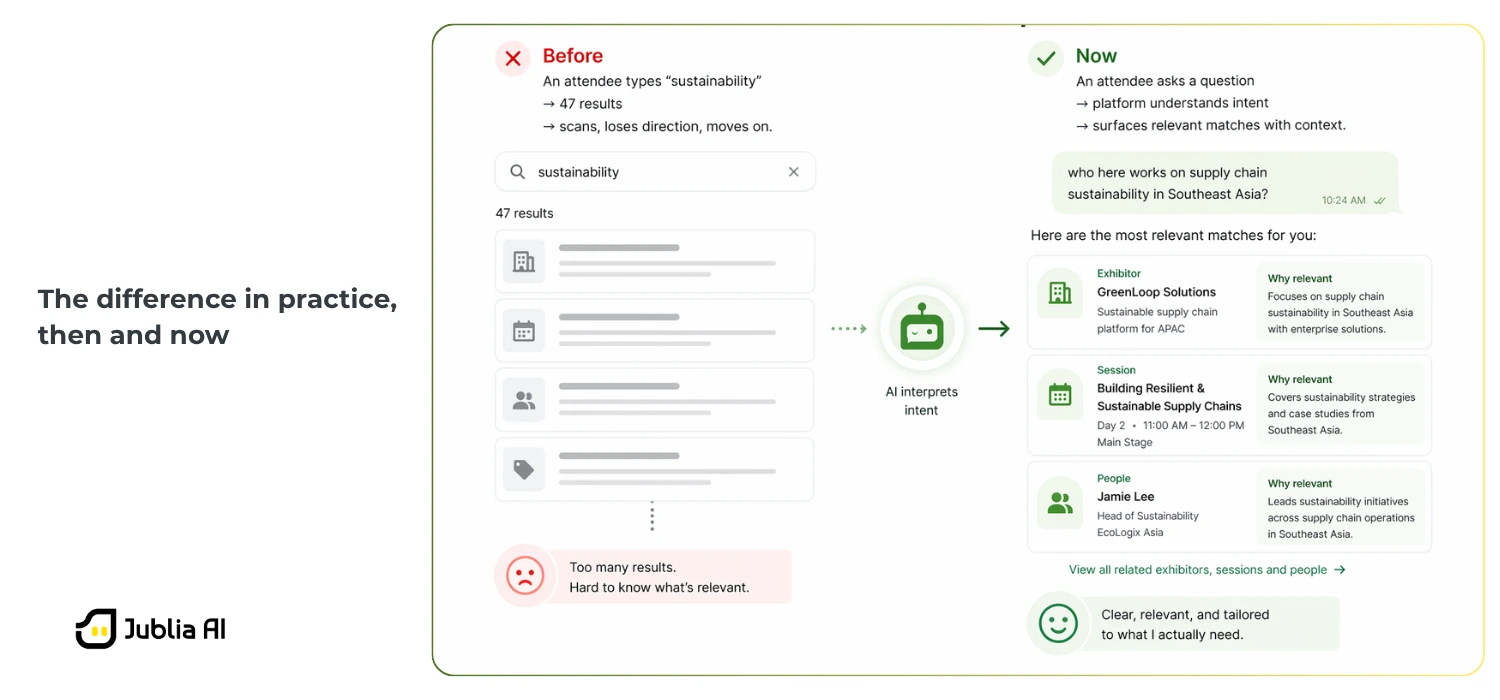
This is where our newly launched AI Overview comes in: it doesn’t just return results, it responds with understanding, giving attendees immediate clarity rather than a list to decode. And when the query is broad or exploratory, Deep Dive extends the journey, surfacing related content across the event rather than hitting a dead end.
The platform does the job it was hired to do, so attendees can focus on the reason they came.
Attendees are no longer benchmarking your event search against other event platforms. They're benchmarking it against every AI tool they use in their daily life.
That context gap is what makes standing still a strategic decision, even when it doesn’t feel like one. And the cost is measurable: Freeman’s 2025 End-of-Year Trends Recap found that 20% of attendees don't believe their objectives are being met at events. One in five people leaving without achieving what they came for — that’s not a content problem or a format problem. In many cases. It’s a discovery problem.
Evolving search isn’t about chasing a trend, it’s about closing that gap meeting attendees where they already are, with tools that work the way they now expect tools to work.
Jublia AI wasn’t retrofitted with conversational search as an add-on. It was built from the ground up with this at its core — which is why this evolution feels like a natural progression rather than a feature bolt-on.

The best events were never the ones with the most sessions or the biggest floors — they were the ones where people left having found exactly what they needed.
That’s what event success has always meant. What’s changing is what it takes to deliver it. When search understands context, when discovery is guided rather than manual, and when the platform carries the burden of navigation instead of the attendees — events get closer to that outcome, consistently and at scale.
Search isn’t going away. It’s finally becoming what it always should have been.
Ready to see it for your event? Let’s discuss and talk about how to make your event platform more understanding towards your attendees.


 Improving How Attendees Discover and Source at Events with More Context
Jublia AI’s upgraded semantics capabilities enable a more contextual discovery and sourcing experience
 Why Relevant Matches Get Overlooked When Recommendations Become Too Narrow
Recommendations help curate options at events, but what happens when they get too narrow and repetitive
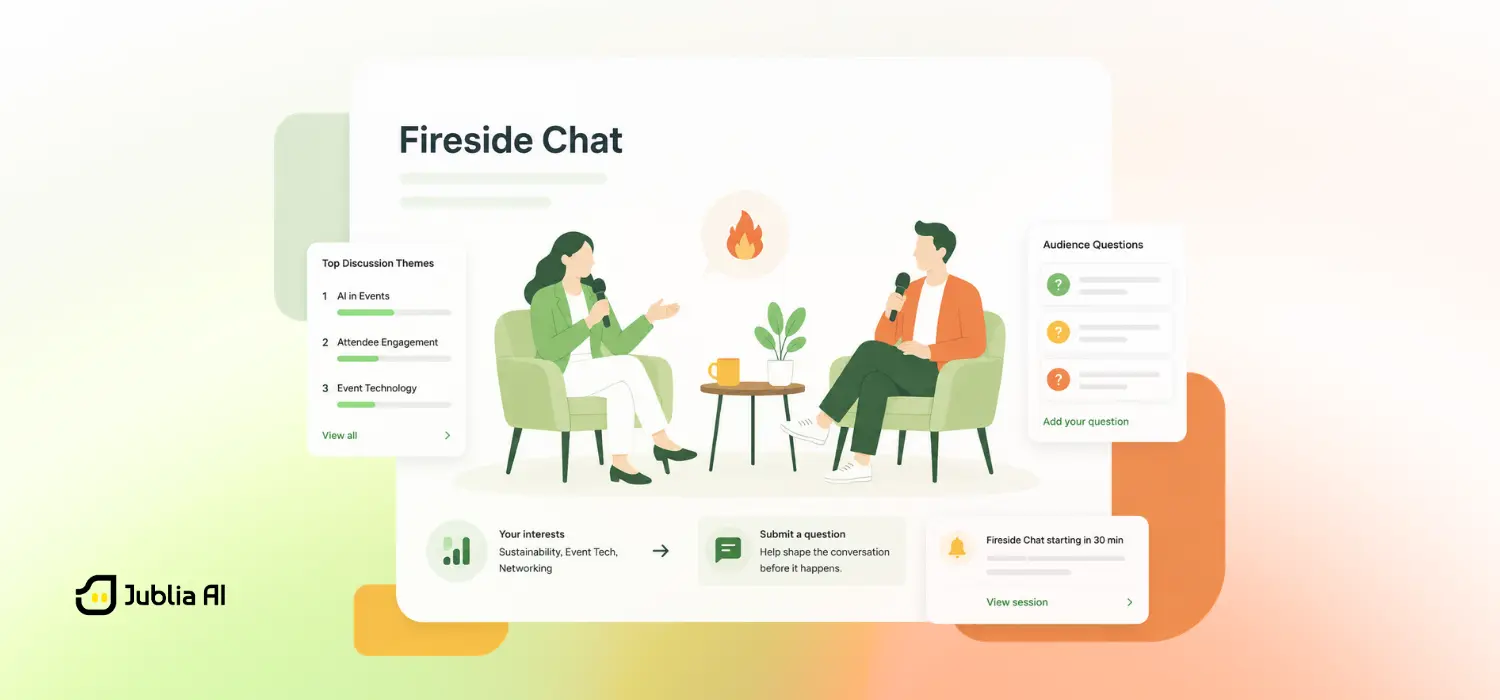 How to Drive Engagement at Business Events with Fireside Chats
A great fireside chat isn't just interactive, it responds to attendees’ burning questions about what matters most to them


.gif)
%201.png)
%201.png)
%201.png)
--p-2000.webp)
%20Black-Black%20Eyes.gif)


.png)