
DATASYNC — a key component to manage your event data
November 28, 2016
Actual article date: Nov 28, 2016
Hi, I am Andriano, Jublia’s lead developer. I am mostly responsible for backend projects and Sense. Today, I will be writing about a database management tools that has been used in-house to manage your event data. The tool itself is called DATASYNC. Leveraging technologies from Google Sheets, we have developed this with data integrity in mind.

Basic functionality
With a secure access to the tools, our Concierge has been using this tool to manage attendee data that you have given us. The resource to the system is secured with Oauth2.0 Authentication to prevent unwanted risks and each movement in the system is logged and monitored consistently.
The concierge can tailor the sheet according to your event’s capability and data given. It allows flexibility in assigning attributes to the sheet to ensure that your attendees get the most relevant leads in your event.
DATASYNC allows operational updates to the data itself. Any new attendees that are inserted will reflect in both the system and the database itself. The same goes for updates and deletes. After the event is launched, attendee’s data that are modified from the business matching system will be reflected back in the Google Sheets, thus allowing you, the event organizer to have a full bird’s eye view over your attendees. Coupled with Jublia SENSE, you will have the total overview of the event.
Incremental improvements are always applied to the system. As the API from Google is updated and deemed stable, we would update the system to fit the new API. And thus, we are always ahead of the game with the latest API.
What’s in it for you
Not only as an Internal tool, DATASYNC could also be used by you, the organizer. No longer you need to pass spreadsheets around when you can just work on one together with your team. No more rudimentary mistakes and pains just to update your attendee information. Everything is now consolidated within DATASYNC.
For a short demo on how this could help you more, contact your Jublia concierge.


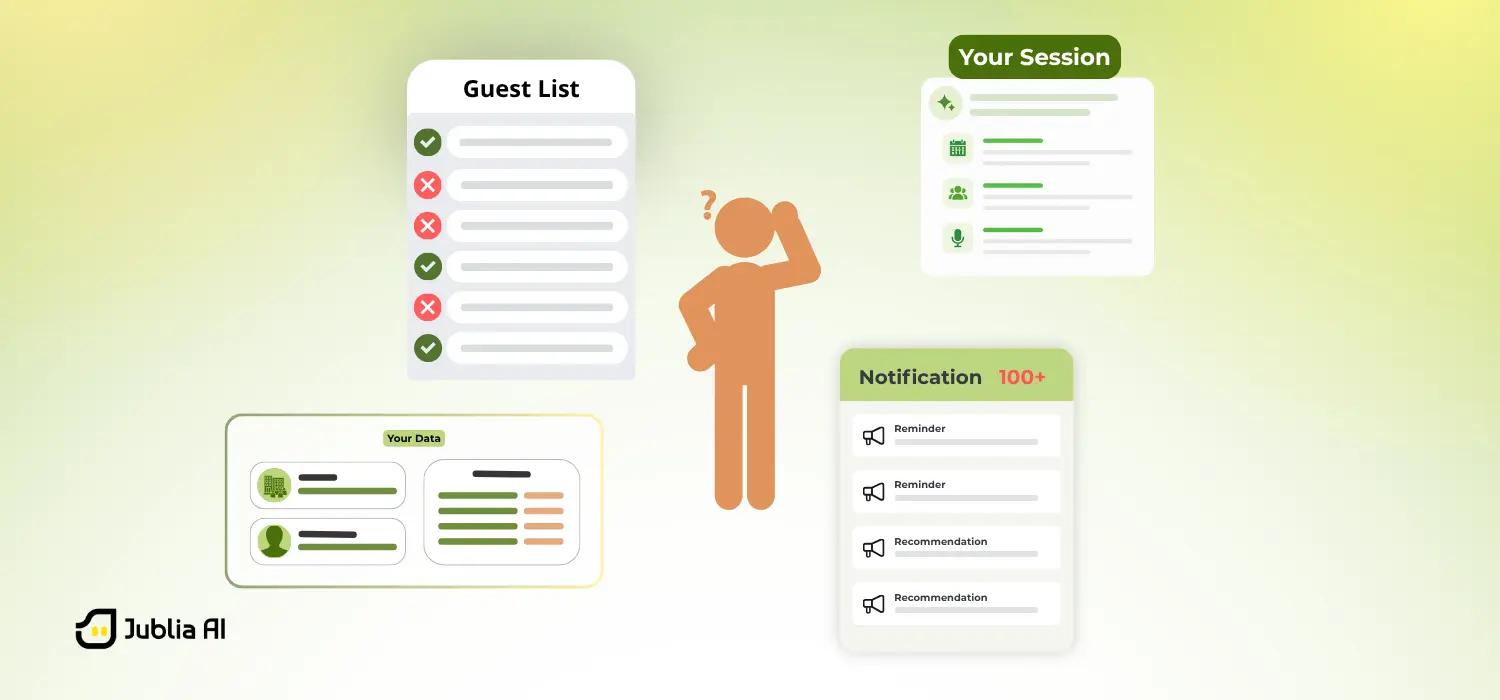 How Personalization Can Reintroduce Friction Instead of Curating Options
Why the data behind your recommendations decides whether they curate the event for attendees, or just relabel the same choice problem.
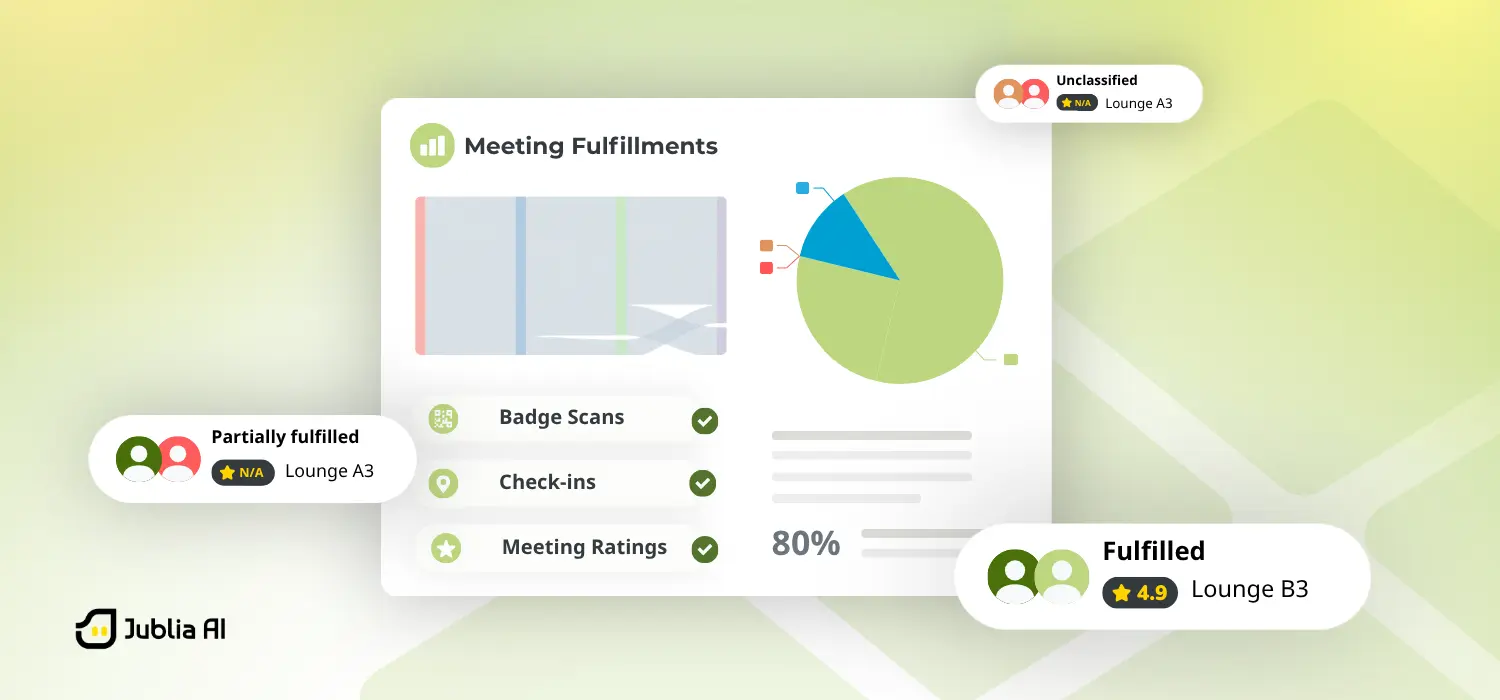 Why Meeting 'Fulfillment' is the Metric That Actually Matters From Your B2B Event
 Schedules tell whether meetings are planned; fulfillments show if they took place
 Anticipation, Immersion, Reflection: The Three Acts of Attendee Engagement
Why engagement should be built across the full event lifecycle — not just on the show floor.


.gif)
%201.png)
%201.png)
%201.png)
--p-2000.webp)
%20Black-Black%20Eyes.gif)


.png)