
Two technologies that will make you rethink your event tech strategy
June 8, 2016
Actual article date: Jun 8, 2016
The mid year is always a good time for us to refresh our minds and reflect on current processes as well as keep abreast with the larger technology world, and specifically, what you can look forward in event because of new technology developments.

Here’s a sum up of just two of the most interesting up and coming technologies that will bring a perspectives for us in the event technology sphere.
You might have tried mobile native apps in your event, and failed. Sometimes you might even be scratching your head thinking, what exactly happened and why did it fail. That is after numerous marketing and time spend making sure it is always promoted in the most obvious way you can. Take a look at the below:

The steps above shows the key challenge to native event apps, as the onboarding process is not simple. Dropoffs should be expected at every stage. This is when the increasingly “native-like” experience of progressive web apps shines. Web apps runs on any browsers, be it on mobile or desktop/laptop. They allow you to mimick the native experience in your mobile web application.
Progressive web apps are not going to replace all native web experience, but it will give one-time use event apps a run for their money.
Just check out the recently Google I/O conference website on your mobile phone. Try navigating on the ‘Schedule’ page. Isn’t the experience seamless?
Here’s the golden question: Why use a mobile native app, when a web app (which also serves as your website) is just a one click access to all the interactive information of your event?
Here’s Google’s introduction to Progressive Web Apps .By the way, the latter is capable of push notifications (traditionally a big plus for a native app).

With the massive amount of investment pouring into all forms of AI research and products, you might be interested to see how Artificial Intelligence can assist your event. At least from our opinion, AI is not quite there yet in event technology, but I am expecting the advent of AI in event technology to be in the form of smart assistants. Two areas of particular interests are:
1) Customer service
Having smart assistants that can support you by auto-magically replying to customers’ queries might not be that sci-fi after all. Read the news where a professor built a smart assistant to reply to his students queries?
2) Real-time surveillance and analytics
With the advances in Computer Vision, smart assistants can use on-site cameras to analyse traffic flow and get real-time feedback of optimising traffic flow so that you will be able to spread the footfall of participants more evenly across the booths. This is already a technology utilised at Web Summit: “In the ceilings of our venues you’ll find GoPros that allow us overlay what we observe manually with computer vision to help us constantly improve attendee movement and queuing at our gatherings”.
Another great idea is to track and measure the exact visitorship ROI for exhibitors, by tracking footfall at each booth. Below is a demo image from Placemeter, on what is already possible with computer vision tracking.

I am actually quite bullish that we will see the start of projects implementing AI within events in the near future.


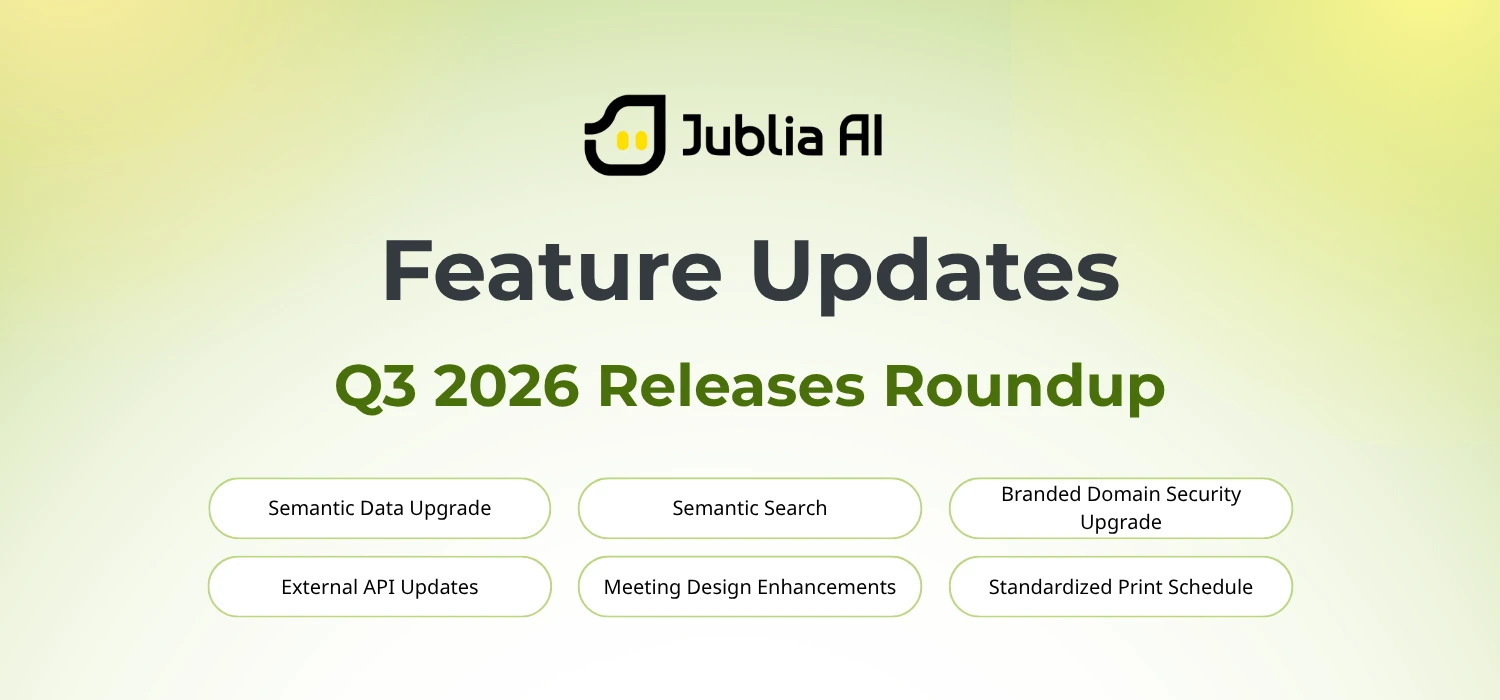 What’s new in Jublia AI: Q3 2026 Releases Roundup
All updates that are designed to give event teams more control, better discovery, and a stronger operational foundation.
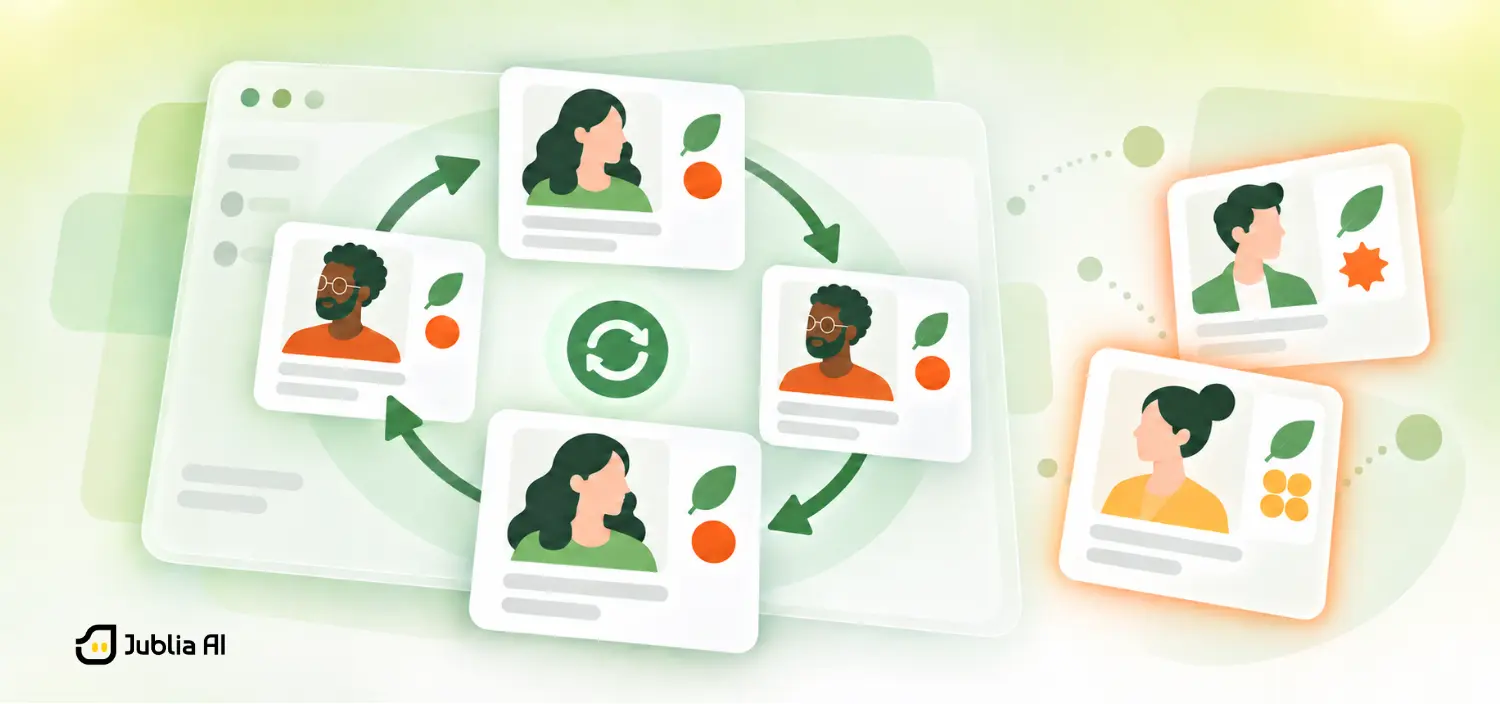 Why Relevant Matches Get Overlooked When Recommendations Become Too Narrow
Recommendations help curate options at events, but what happens when they get too narrow and repetitive
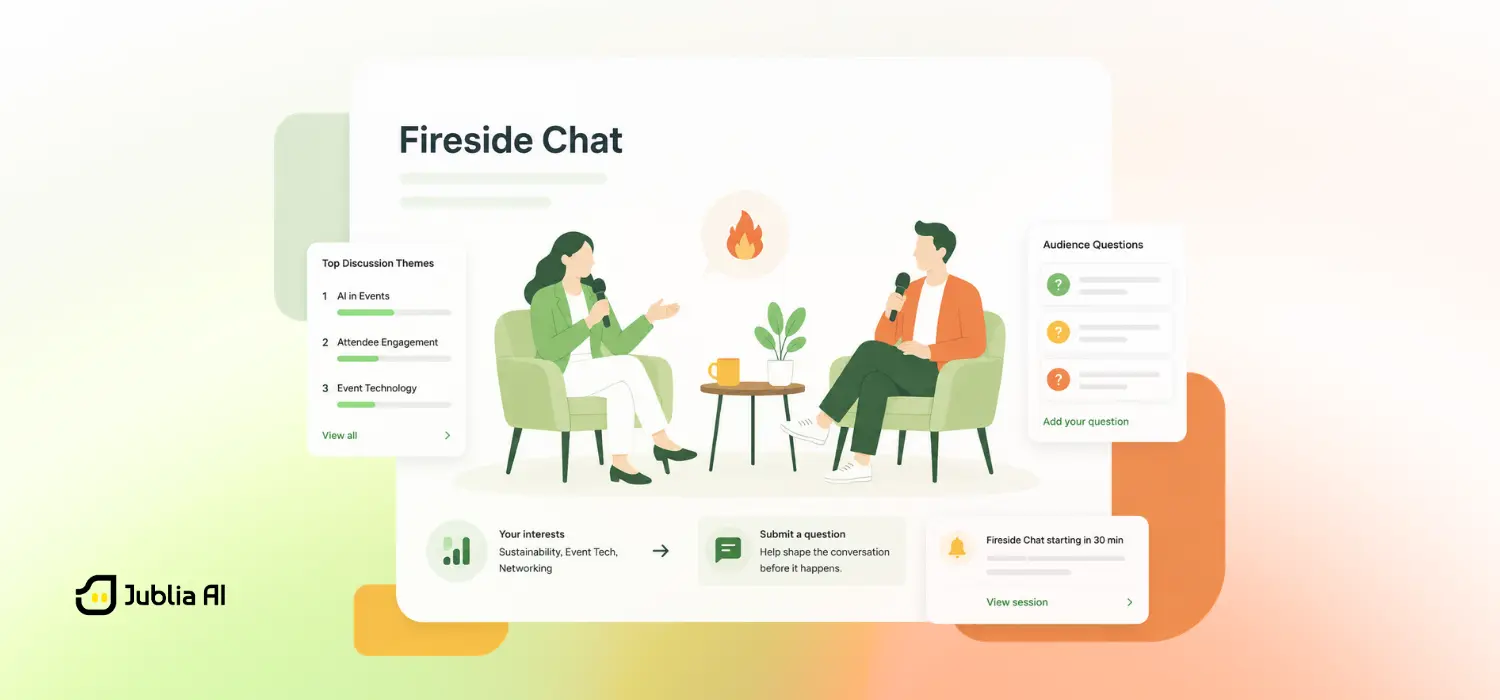 How to Drive Engagement at Business Events with Fireside Chats
A great fireside chat isn't just interactive, it responds to attendees’ burning questions about what matters most to them


.gif)
%201.png)
%201.png)
%201.png)
--p-2000.webp)
%20Black-Black%20Eyes.gif)


.png)