
The Pros and Cons of Onsite Business Matching
September 29, 2015
Actual article date: Sep 29, 2015
Recently, we had the opportunity to run Business Matching booths onsite at 3 events in Bangkok, Thailand. It was a great learning experience, and we received many insights from running the booths and getting direct feedback from our users. If you were wondering if this is something you should explore for your next event. we are happy to share a simple pros and cons list of offering Business Matching onsite.
1. Last minute walk-ins
All events will see their fair share of walk in visitors. This group of people will not have had the chance to pre-schedule their meetings via the networking platform that was launched to pre-registrants prior to the event. Here is when an onsite Business Matching will prove useful and helpful for these attendees to have a better idea of where to go and what to do at the event. The onsite Business Matching booth can even offer a means for these walk-in visitors to register on the spot for the online Business Matching platform.
2. Maximise visitor’s time
When used correctly, an onsite Business Matching service can also help visitors get the most out of their time at the event. Instead of roaming around rows and rows of exhibitor booths, an onsite Business Matching booth can immediately point attendees to the right direction or a selection of appropriate booths to visit once they share their networking interests.
3. Free exposure for Exhibitors
Onsite Business Matching can ultimately bring potential buyers to Exhibitors who might otherwise get missed out by visitors if they are located at an unfrequented area, or if visitors do not have enough time to go through all the booths. Event organizers can also help to boost a sponsor’s booth inflow by promoting their booths at the Business Matching booth as well.
1. Additional Manpower
Running a booth onsite a large event is no easy task, and would require a minimum team of 2 or more who have a basic understanding the event and how the networking tool can be used in real time for various situations. Some basic form of training would be useful to ensure that your visitors really benefit from the service at the event, which is the end goal in this case.
2. Extra material
Be sure to equip your Business Matching booth with extra material like pamphlets, a floor plan or map and even a printer for printing meetings and lists for your visitors. To encourage participation, you might even want to have a simple lucky draw to build atmosphere and attract visitors to stop by your booth to find out more about what it has to offer them.
3. Runs best with an online Business Matching system
An Onsite Business Matching service would run best with a coexisting online Business Matching system. Without an online system, the onsite service would be limited greatly in terms of knowledge to match and the longevity of the advice given.
Having the best of both worlds, each service can ultimately compliment each other depending on the needs of every visitor, with the common aim of increasing the overall number of networking meetings that take place at the event itself.
Hope you found this to be a useful read! If you are thinking of running a Business Matching system for your upcoming event, feel free to get in touch with us and we would be more than happy to share more insights with you.


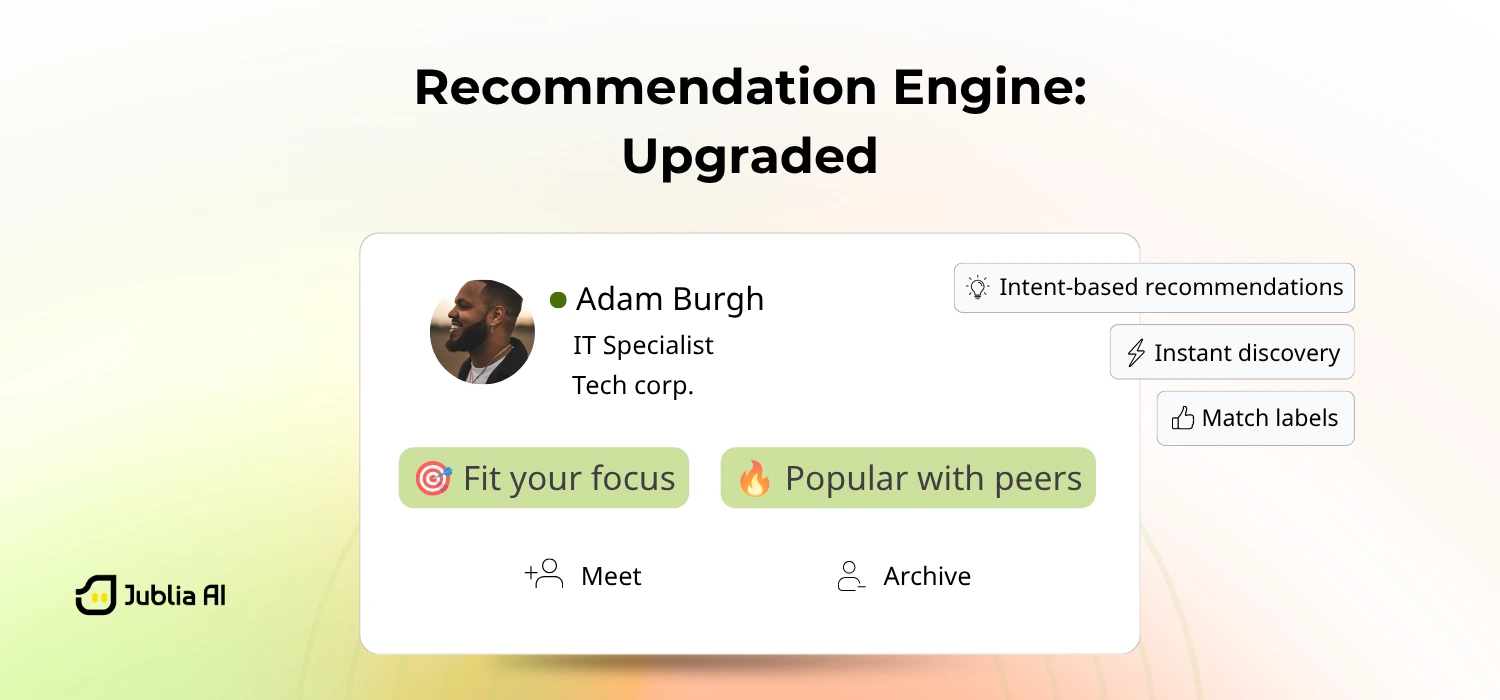 Meet a Better Way to Discover What Matters at Events
Jublia AI’s upgraded Recommendation Engine makes discovery more relevant, proactive, and contextual
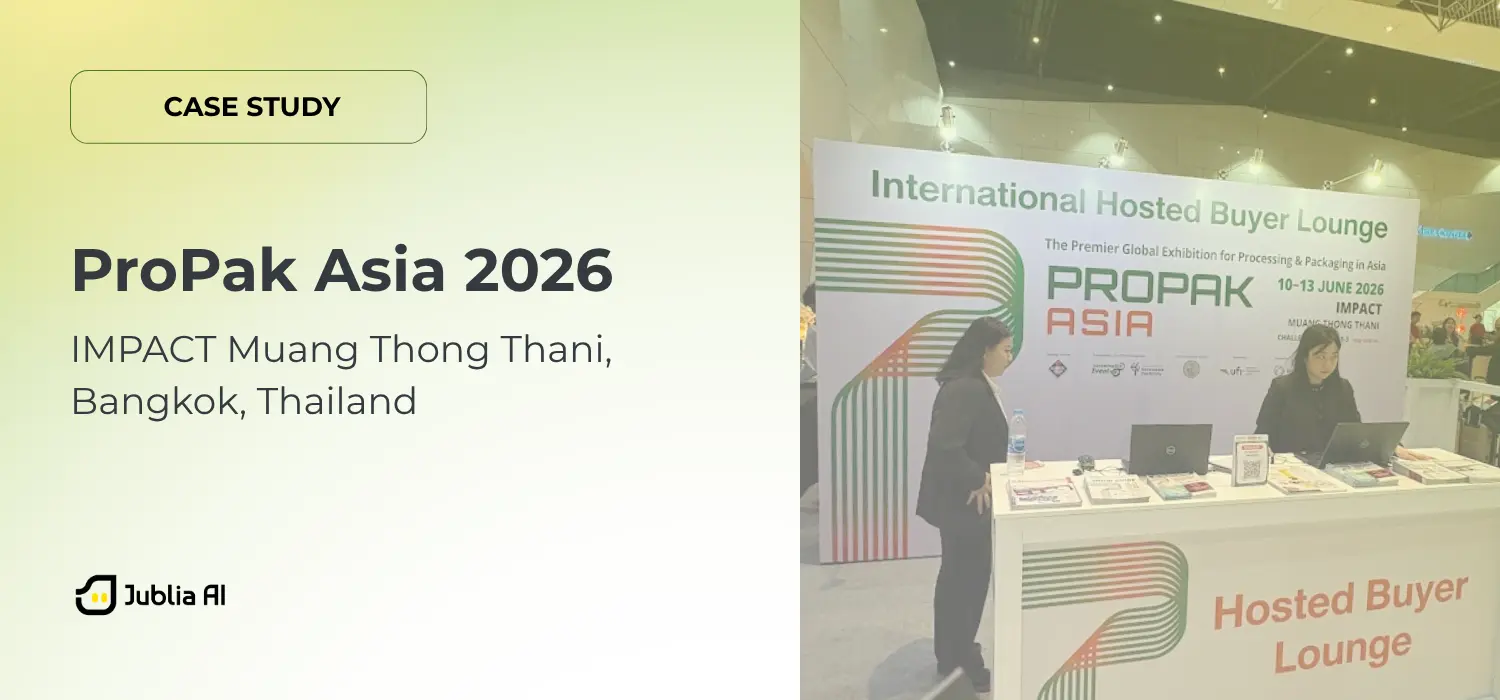 Turning Fulfillment Challenges Into Conversions at A Trade Show Through Proactive Adaptation
A Case Study on ProPak Asia 2026


.gif)
%201.png)
%201.png)
%201.png)
--p-2000.webp)
%20Black-Black%20Eyes.gif)




.png)