
Personal engagement and why it matters
December 8, 2015
Actual event date: Dec 8, 2015
In an abundance of event apps in the market, it has never been easier for organisers to use one for their event. Conversely, it’s never been more difficult to find one which works for you.
The answer to this problem lies in how far we can stretch technology on its own. Most apps I have used have a one-size-fit-all philosophy — many features to cater for all the different needs of users. Not only does this makes it difficult for the users to engage with the app but also loses the focus of the app. This generally results in low repeat usage of the app and a poor experience for those who are the adopters but find no one else on it.
This is why app developers need to focus on serving each user differently through apt communication.
Serving each user differently — You can achieve this by classifying your users. Using the classification, you tailor your product and services differently for say a first time user as compared to a daily active user or even for the early adopters in comparison to the laggards. Let’s take an example of Mike who is using a business matching app. The actions Mike would perform when he logs in to the app would vary based on his familiarity to the app, networking needs and the EDM which hooked him in. Capturing and utilising Mike’s ’action’ data for subsequent visits will make the experience of his first visit and his 10th very different, but still relevant for him.
Through apt communication — Personal engagement allows your app to dramatically improve the way it connects and serves the customer. How do you personally engage with each user? There are 3 factors you have to take into consideration — timing (What time is your user receiving the EDM — is it too early / too late? Can you automatically ‘check-in’ on a user if he/she shows no activity for a few days?), content (Are you sending out something generic to all users or specific to what each user is looking for? Is it an educational, call-for-action, transactional, or notification email? Can you cater for people speaking different languages?), channel (App notifications, Text emails, HTML emails, SMS, Physical mail, etc.).
The challenge here really is to achieve this at scale with as few resources as possible. At Jublia, we have built a scalable system to understand our users and engage with them personally. This allows us to deliver the best experience as they make quality meetings on our app. With the rising trend of Assistant as App services, Jublia Match Concierge acts as an Assistant to App service. We have designed our extremely personal and tailored concierge service based on the 3 factors (timing, content and channel) mentioned above. The service acts as a complement to the business matching app, Jublia Match, as it helps every user to maximise their meetings ROI for the event based on their networking requirements. So when Mike visits Match, we ‘rank’ the list of prospects based on his interests, the actions he performed on past visits and the interests of other users in his profile, and also tailor his experience based on the email link they clicked on. Since we have a large focus on engagement, we allow our users to get fine-grain control on the communication they receive through our app settings.

We are just scratching the surface of event engagement and there is a long way ahead for us to improve and learn. If you would like to know more about our engagement strategy, feel free to contact us or leave your comments below.


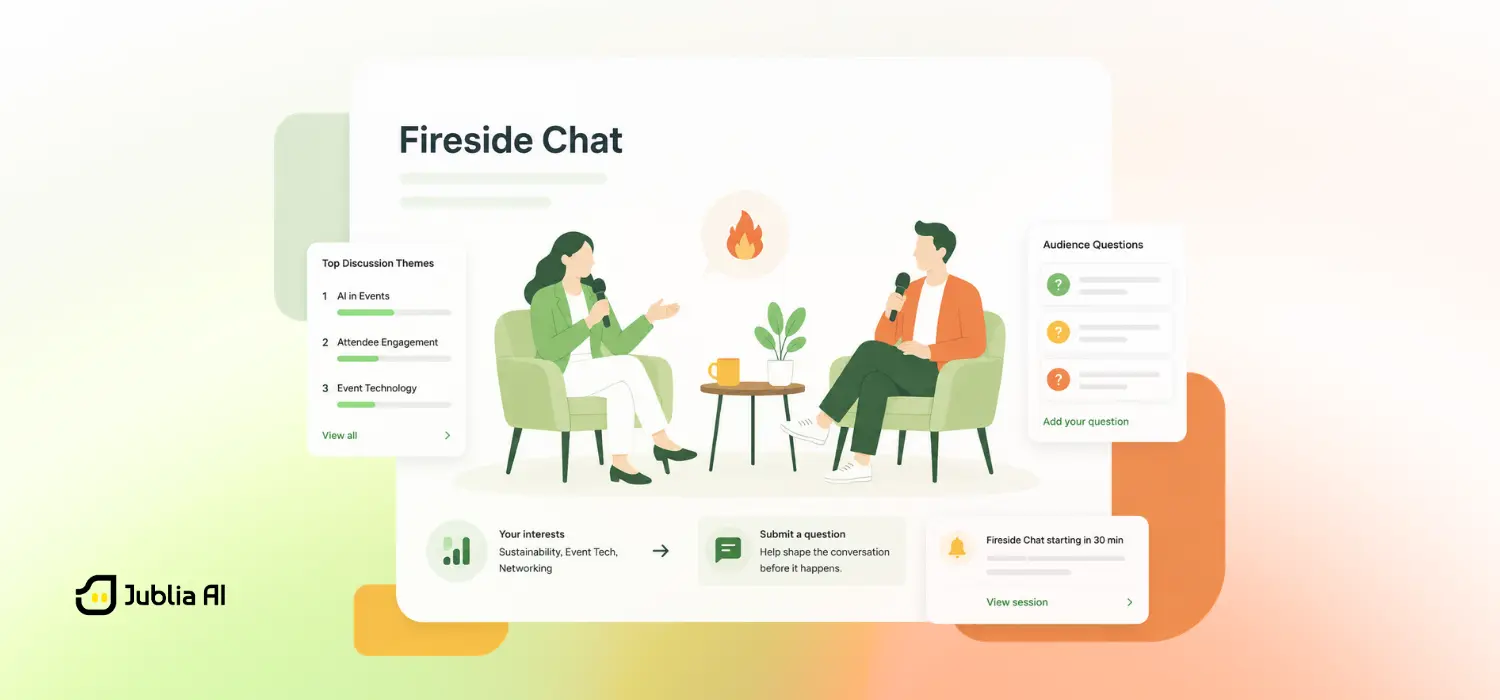 How to Drive Engagement at Business Events with Fireside Chats
A great fireside chat isn't just interactive, it responds to attendees’ burning questions about what matters most to them
 Micro-Events: How They Can Be the Next Addition for Your Event Strategy
There’s a growing demand for more intimate networking, but does it fit into your event portfolio?
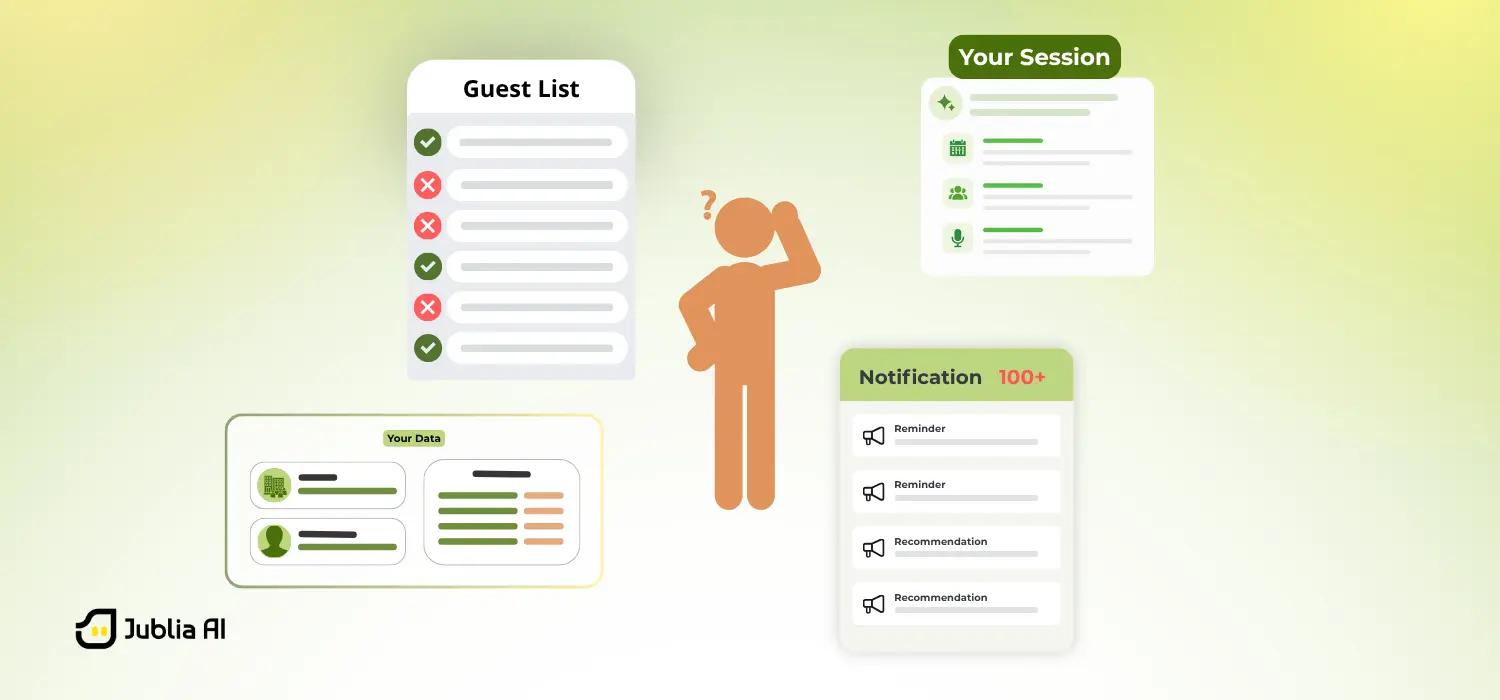 How Personalization Can Reintroduce Friction Instead of Curating Options
Why the data behind your recommendations decides whether they curate the event for attendees, or just relabel the same choice problem.


.gif)
%201.png)
%201.png)
%201.png)
--p-2000.webp)
%20Black-Black%20Eyes.gif)


.png)