
Measure up the performance of your event
March 11, 2015
Actual article date: Mar 11, 2015

Living in this data-driven period of the 21 century, it is no secret that measurement is the key to any success. Yet it is surprising how often it gets forgotten or is regarded as a chore to be done only post-event as part of housekeeping. “55% of event planners are not measuring their social media activities” — Event Manager Blog. The need to create a measurement strategy for your events has never been more imperative because it eliminates any assumptions or guessworks but provides you with a does of reality (good or bad) that you can use to improve subsequent projects.
These are 3 reasons why you have to start measuring today
How many times have you attended an event that over promises but under delivers? In the competitive landscape of the events industry, an ever-growing number of events organisers compete for a small and limited pool of customers who are finite in numbers base on their related industries. It is essential to not only market the value of your event through claims, but more so to demonstrate your offerings backed by data collection through measurements. “Recent research in the UK show 50% of executives question the value of meetings and events” — Event Manager Blog. By showing customers what their average ROI for attending your event could possibly be, with proof, you can be certain that the sales process for attracting show visitors, exhibitors and conference delegates would be much simpler. Data doesn’t lie.
Events strive to achieve consistent wins that fulfill the organisation’s long term goals of being a marketplace for a particular subject or industry. The objective isn’t about one event win but a consistent transference of value every year in accordance to the planned lifecycle and ovjectives of the event. If you do not measure the performance of each event, you will have no way of maximising the improvement event to event. Measuring creates a valuable process of evaluating your true effectiveness and value against set pre-defined criteria. Just remember to keep in mind, whatever you measure improves. Do you want to increase revenue? Then start measuring your costs, ticket sales, overheads and profit margins. Do you want to increase engagement? Then start measuring attendee interactions, number of meetings made and relevance of meetings attended.
Qualifying and quantifying the return of investment for attending an event has long moved past the post-event segment of the event. It is a daily, highly frequent activity that would allow both you and your customers to execute flexible responses to the current situation. Leaving the analysis only to post event tends to generate immediate discussion with little follow throughs. Analysing at each point during the whole life-cycle of your event allows you to have strategic information that you can use inform every decision you make. Using measurement as a real-time feedback mechanism gives you a huge advantage to make on-demand corrections and adjustment base on the dynamism of your event.


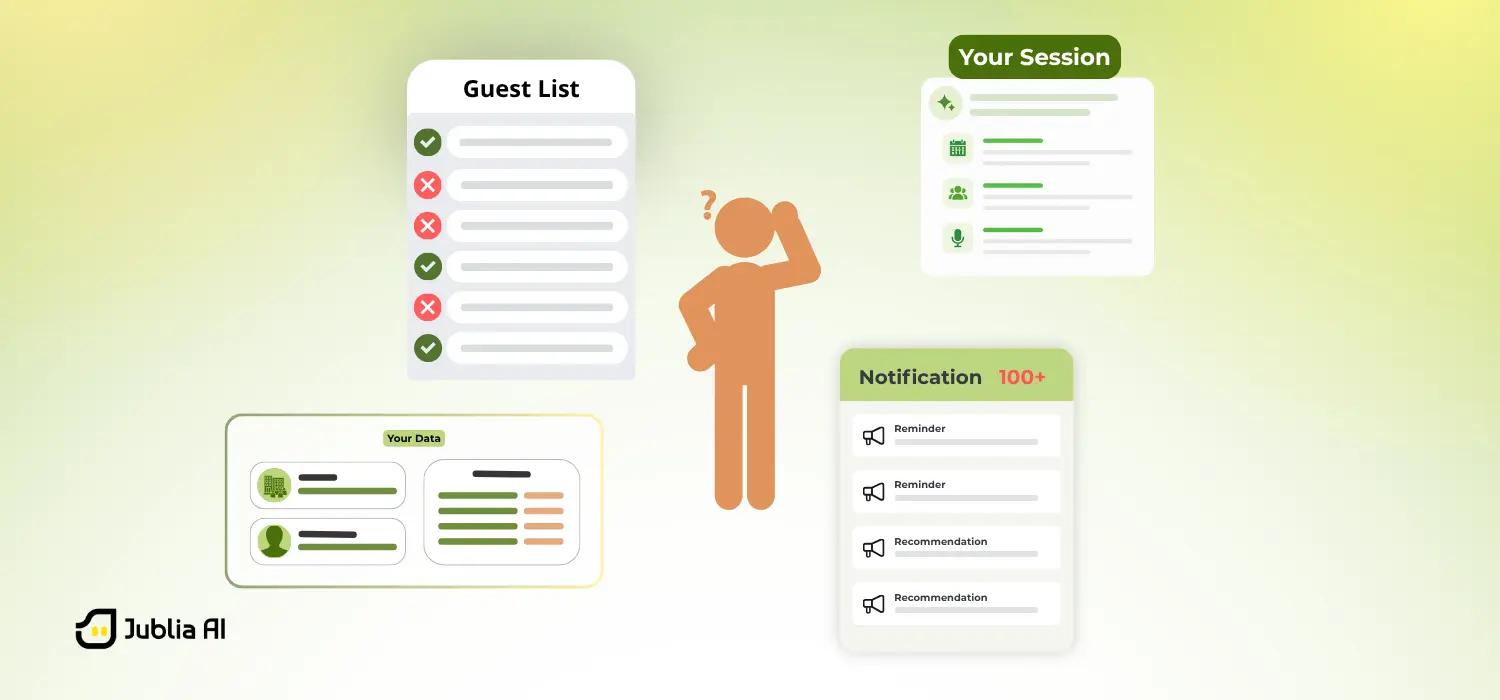 How Personalization Can Reintroduce Friction Instead of Curating Options
Why the data behind your recommendations decides whether they curate the event for attendees, or just relabel the same choice problem.
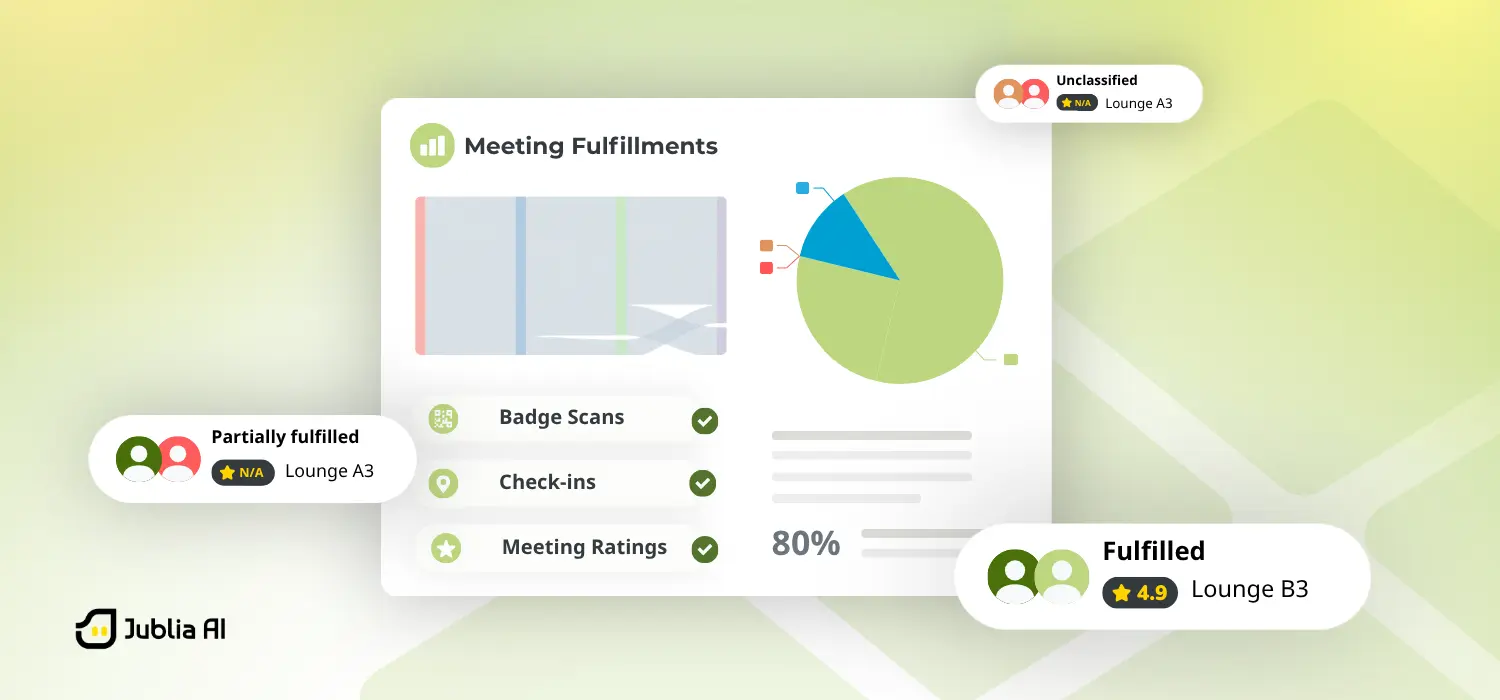 Why Meeting 'Fulfillment' is the Metric That Actually Matters From Your B2B Event
 Schedules tell whether meetings are planned; fulfillments show if they took place
 Anticipation, Immersion, Reflection: The Three Acts of Attendee Engagement
Why engagement should be built across the full event lifecycle — not just on the show floor.


.gif)
%201.png)
%201.png)
%201.png)
--p-2000.webp)
%20Black-Black%20Eyes.gif)


.png)