
How to destroy networking at your event in 3 steps
December 15, 2014
Actual article date: Dec 15, 2014
If you have followed our blog for awhile, you will have noticed that there are many articles like 3 Steps to Take your Business Events to the Next Stage and Importance of user engagement and service that looks at suggestions of how networking can be improved at your event. This time we will do it differently; I will be sharing in 3 steps, the mistakes that I have noticed some organisers made with regards to their event networking.

This might sound like an oxymoron appearing on the page of a company that builds networking software for events. However, we have seen many events, big or small, make the mistake of just simply purchasing a software or app for networking at their event.. and were left scratching their heads, thinking why no one actually utilised/downloaded the app, during the post-event review. Networking must be recognised as a highly personalised experience and it cannot simply be replaced by technology or a software. It requires a human touch to it. Technology can only facilitate networking and organisers still need to promote and service their customers networking need.
The service experience for your stakeholders is as important, if not more important than a software.
We have seen events that tries to restrict the possibilities of networking in the name of ‘control’. We have also seen appointment/networking systems that have numerous,and often complex, rules in their usage.
Imagine you are a customer at an event. You will definitely appreciate a networking process that simply allows you to effectively get to your relevant prospects.
Technology wise, there is also no good reasons to implement too many networking rules. Presently, technology can allow you to build the type of networking that is the most flexible in facilitating the most relevant networking for your customers while allowing you to retain control over the whole process.
We know that most customers attend events with two aims in mind: to learn “Content” as well as to meet relevant “Contacts”. Traditionally, we have seen events that solely emphasises on “Content” to attract ticket sales while leaving “Contacts”, event networking, to the Wild West. Because of the increasingly competitive “Content” landscape, many organisers are starting to realise that there is much more potential in boosting the equally important “Contacts” portion of their event — by bolstering the community effect — as a point of differentiation.
Unlike “Content”, many organisers may already realise that it is not easy to make the “Contacts” portion of an event successful. This is because most customers do not actually know how to get to relevant prospects easily. That is why they attend events in the hope of getting to them. This means that the organisers’ now plays the difficult role in carving out the easiest path for each customer to reach his/her destination.
This puts increasing stress upon the traditional form of event management. However, with the right networking platform/tool in place, “Contacts” can be engineered for the best performance for each customer’s ROI at a manageable level of stress.


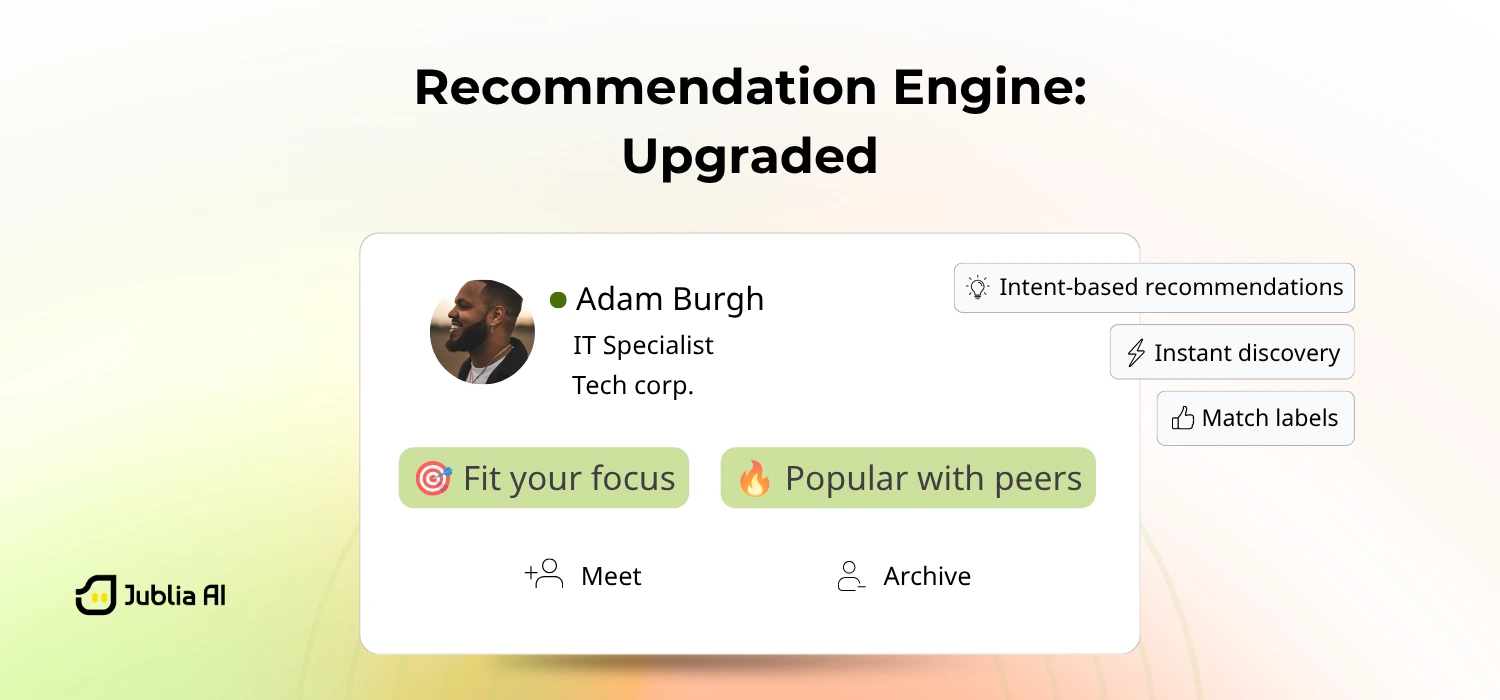 Meet a Better Way to Discover What Matters at Events
Jublia AI’s upgraded Recommendation Engine makes discovery more relevant, proactive, and contextual
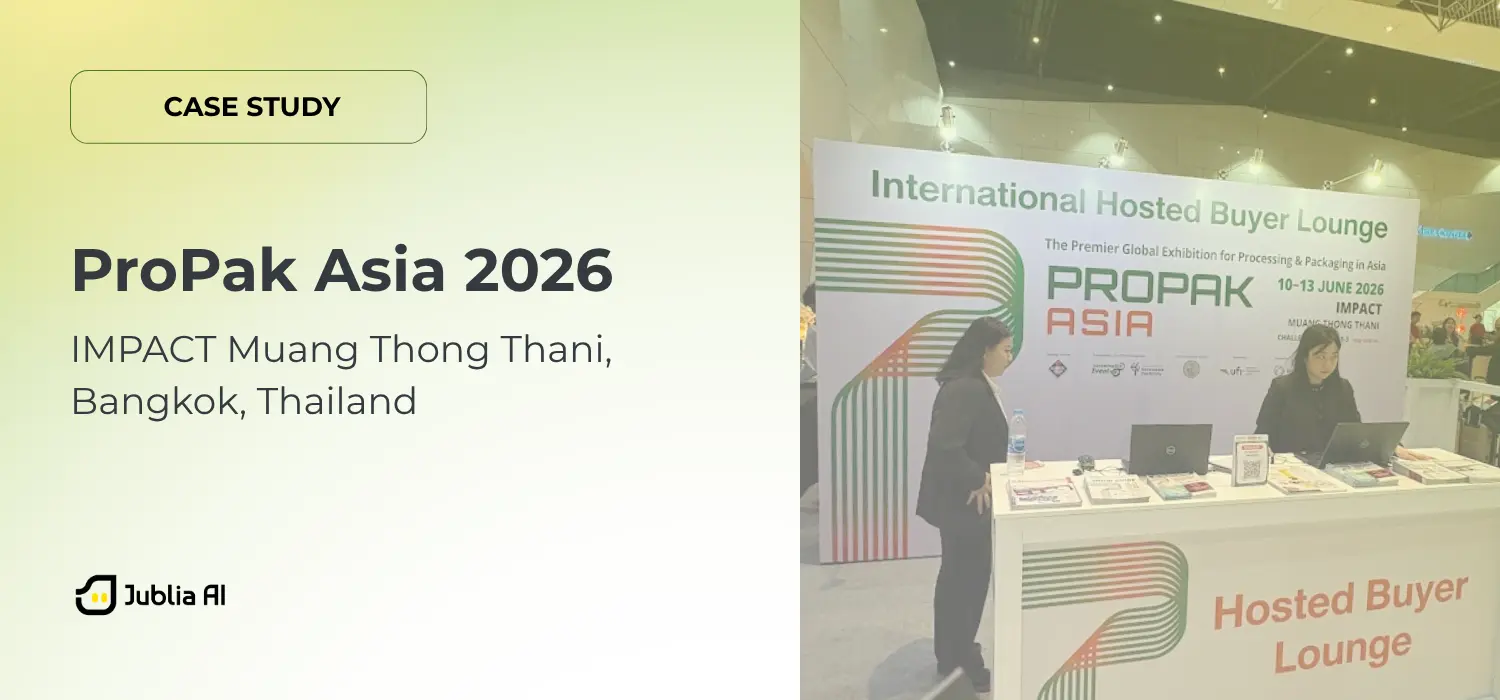 Turning Fulfillment Challenges Into Conversions at A Trade Show Through Proactive Adaptation
A Case Study on ProPak Asia 2026


.gif)
%201.png)
%201.png)
%201.png)
--p-2000.webp)
%20Black-Black%20Eyes.gif)




.png)