Actual event date: Jun 4, 2017
“Gamification” is a relatively nascent concept in the world of B2B events and based on personal conversations with event organisers, it has shown itself to be a double edged sword.
My personal skepticism came from a real life encounter: At a tradeshow in Asia which I was helping with the onsite arrangement, the organiser was pilot testing a lucky draw (free flight tickets and hotel stays to Europe!) for trade buyers who have shown themselves to be actively involved in the event business matching service. On initial thoughts, I was thinking that this will definitely be a sure sell, with buyers actively participating. What I noticed in reality though, was that the top buyers were more interested in their scheduled meetings while onsite and did not end up participating in the lucky draw anyway.
The lucky draw ended up attracting the not-too-genuine buyers; attendees who were basically racking up the required business meetings onsite so as to allow them to participate in the lucky draw.
I realised that one of the most popular way of gamifying an event is to “leaderboard” everything.
Who were the top networkers? Which booth was most popular? Who collected the most namecards? Who generated the most shares?
There is always a leaderboard for any measurable metric in a bid to boost event engagement.
In business to business events, which focus more on professional encounters, such leaderboards might be actually motivating the wrong crowd.
Do genuine business networking require a leaderboard to boost engagement? The answer is definitely a no.
Does it generate a higher quantity of networking? Maybe.
Does it generate higher quality of networking? I doubt so.
Gamification can end up generating vanity metrics which measure for quantity rather than quality.
So what about the other edge of the sword?
Instead of benchmark-ing gamification success upon numbers (e.g. how many questions have you asked?), we have seen that the best use of gamification in promoting genuine attendees contributions and validation/acknowledgement (e.g. What are the best questions that were upvoted by the audiences?).
I hope I haven’t lost you here but one of the best use of gamification I have seen is Quora itself.
As a Quora user describes:
Quora is “gamified” but is not a game. So I may not always win the most votes, but I never lose. Outside of votes, I now always receive something *far* more than I give — regardless if I’ve provided an answer myself or simply enjoyed someone else’s. In time, you’ll care less about receiving your most upvoted answer, and care more about simply providing your best one.
If you gamify your event right, it will assert “ownership” of your audiences in your event and thus increase the willingness of them to further engage. Free gifts and rewards are not really required if event gamification is done right!
Have you tried gamification in your event?
If yes, I would very much like to hear from you to understand what have worked/not worked for your event!


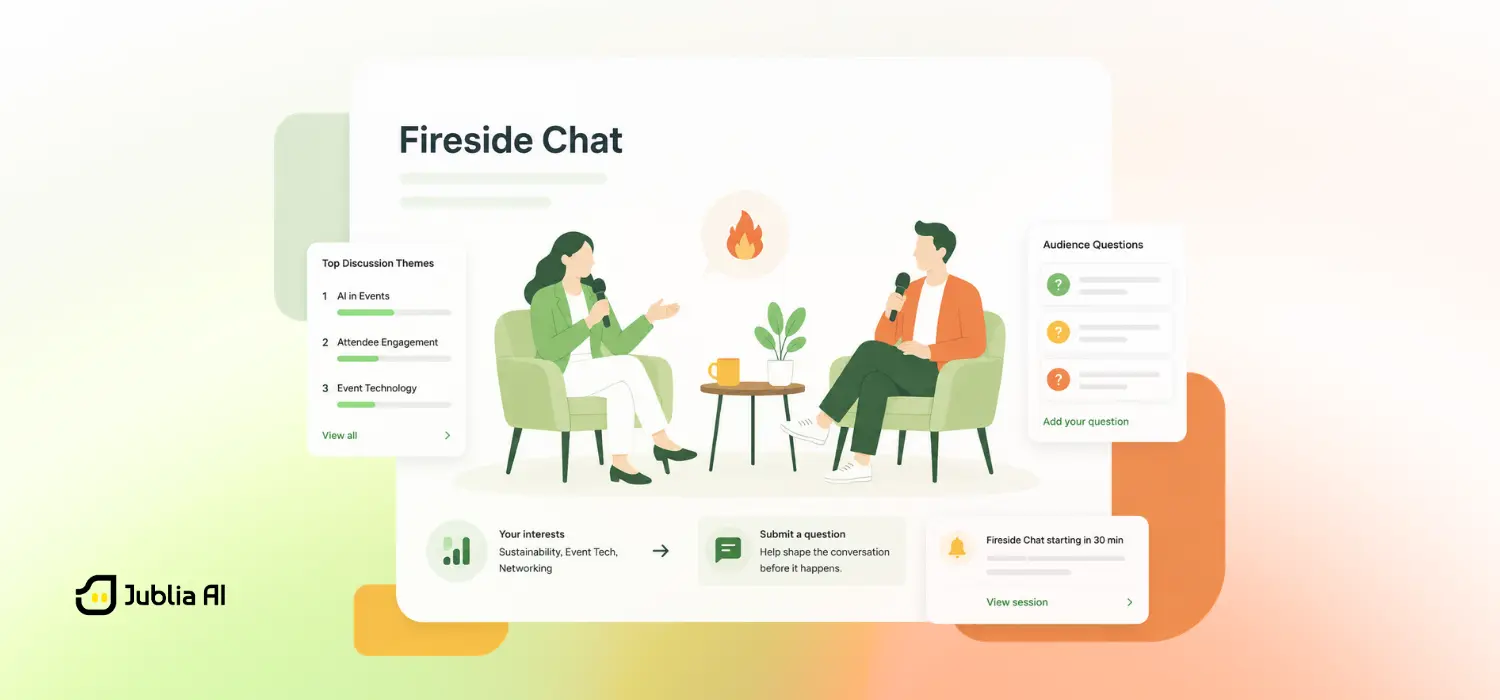 How to Drive Engagement at Business Events with Fireside Chats
A great fireside chat isn't just interactive, it responds to attendees’ burning questions about what matters most to them
 Micro-Events: How They Can Be the Next Addition for Your Event Strategy
There’s a growing demand for more intimate networking, but does it fit into your event portfolio?
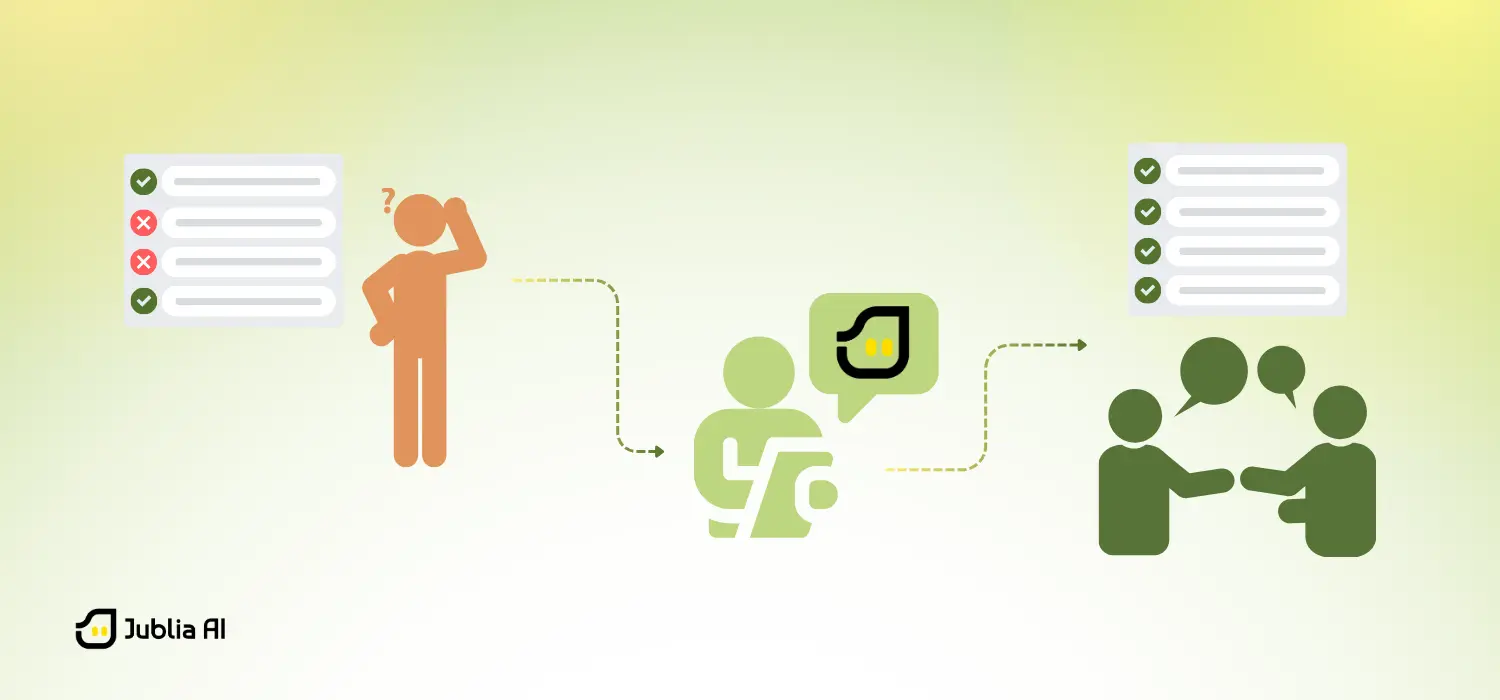 The Communication Engine: Orchestrating Event Engagement with Jublia AI’s Concierge Delivery
Engagement doesn’t happen on its own — it’s designed


.gif)
%201.png)
%201.png)
%201.png)
--p-2000.webp)
%20Black-Black%20Eyes.gif)


.png)