
The Science of Speed Networking and why it works in one diagram
March 3, 2014
Actual article date: Mar 3, 2014
Anyone who has been exposed to speed networking will have rave opinions for it. Why so? One simple diagram explains everything.

The above diagram comes from a recent scientific paper that looks at improving the state of conferences where it’s introduction of the paper could not have explained it better
Scientists have been going to conferences for more than 450 years, but the basic format of talks followed by questions–with regular breaks for informal interactions over a drink or a meal–has remained largely the same. It is possible to foresee many ways in which conferences may evolve in the years ahead, but the main attraction is likely to remain the opportunity for scientists to meet and network, to develop ideas and collaborations, and to drink large amounts of tea, coffee and alcohol.
Compared to their 16th century ancestors, modern conferences are more inclusive than they have ever been, with diverse selections of delegates and speakers from around the world. However, the Q & A sessions after talks offer only limited opportunities for meaningful speaker-audience dialogue, and the discussion is often dominated by the senior scientists among the delegates. Although coffee breaks provide more junior scientists with an opportunity to network, there is plenty of scope for improving the level of interactions between the senior and junior delegates.
Conferences can be made better by facilitating the right form of structured networking, with speed networking playing a big part in engaging delegates and driving collaboration.
However, the way the study was conducted requires quite some heavy lifting on the organisers side with pairing delegates for meetings. Furthermore, it may not be that realistic as the delegates provided good amount of survey data before the conference (any organisers will know that collecting surveys is a nightmare) and the model is not scalable for bigger conferences.
So how then can we recommend delegates to delegates in a better and more scalable way?
Curiously, we always get the question of how Jublia’s relevance/recommendation system works and the assumption that we are only doing keywords pairing/matching. The people to people recommendation field is quite a complex one and a keyword match will never work for as shown in the paper itself.
At Jublia, we simply obtain the unique preference of each delegate and exhaustively work at recommending, and then training the recommendation further based on different data points. This has allowed us to work with events as small as 150 delegates to over 5000 delegates and still deliver the right curation of delegates to each person at real-time.


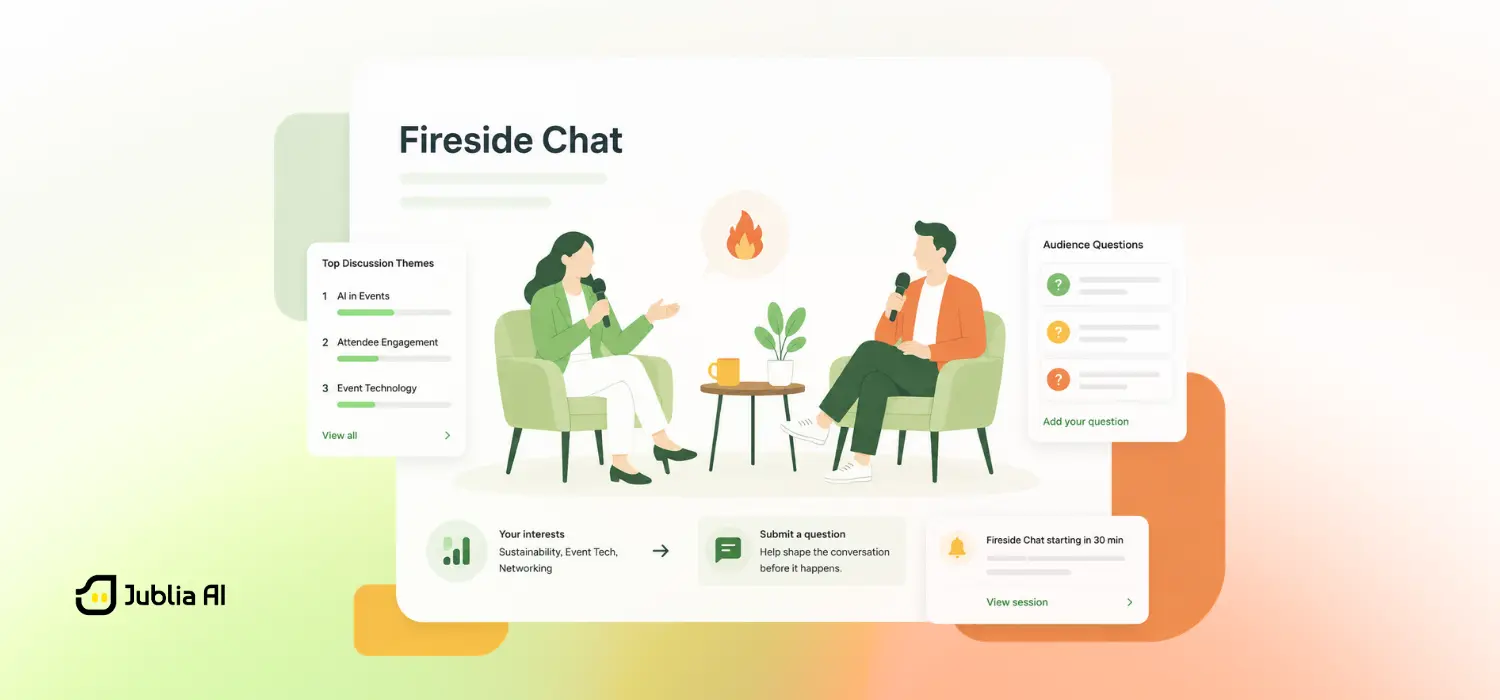 How to Drive Engagement at Business Events with Fireside Chats
A great fireside chat isn't just interactive, it responds to attendees’ burning questions about what matters most to them
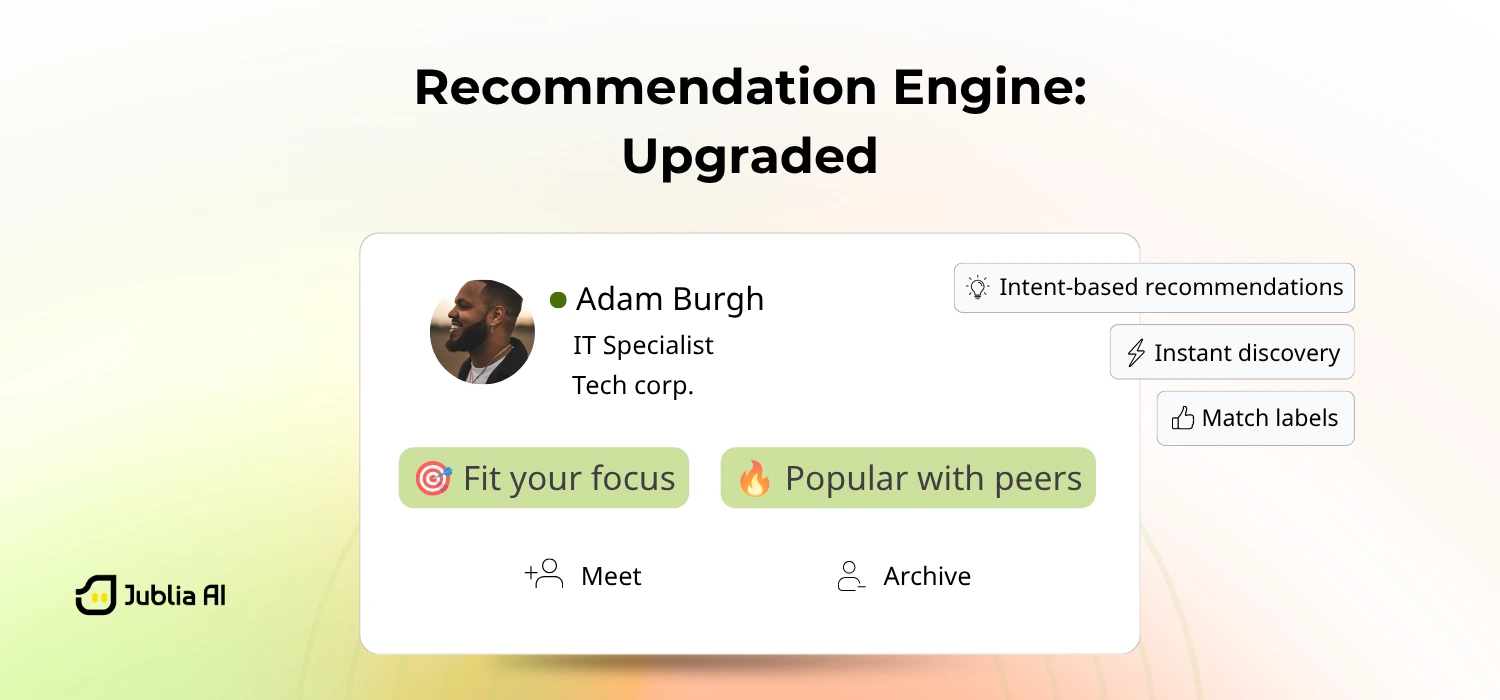 Meet a Better Way to Discover What Matters at Events
Jublia AI’s upgraded Recommendation Engine makes discovery more relevant, proactive, and contextual


.gif)
%201.png)
%201.png)
%201.png)
--p-2000.webp)
%20Black-Black%20Eyes.gif)




.png)