
Jublia AI Experiences at Singapore Airshow 2026: The 10th Edition
Supporting navigation, discovery, and high-volume meeting coordination at a large international B2B exhibition
In:
Case StudiesMarch 16, 2026

This snapshot highlights digital engagement patterns observed during Singapore Airshow 2026, a multi-day exhibition bringing together the aerospace, aviation, and advanced defense sectors. The event featured aircraft demonstrations, technology showcases, and a packed schedule of business meetings spanning indoor halls and outdoor displays. Thousands of attendees moved between booths, sessions, and meeting areas, creating a dynamic environment for industry discovery and collaboration.
Exploring Exhibits and Technologies Across the Exhibition Floor
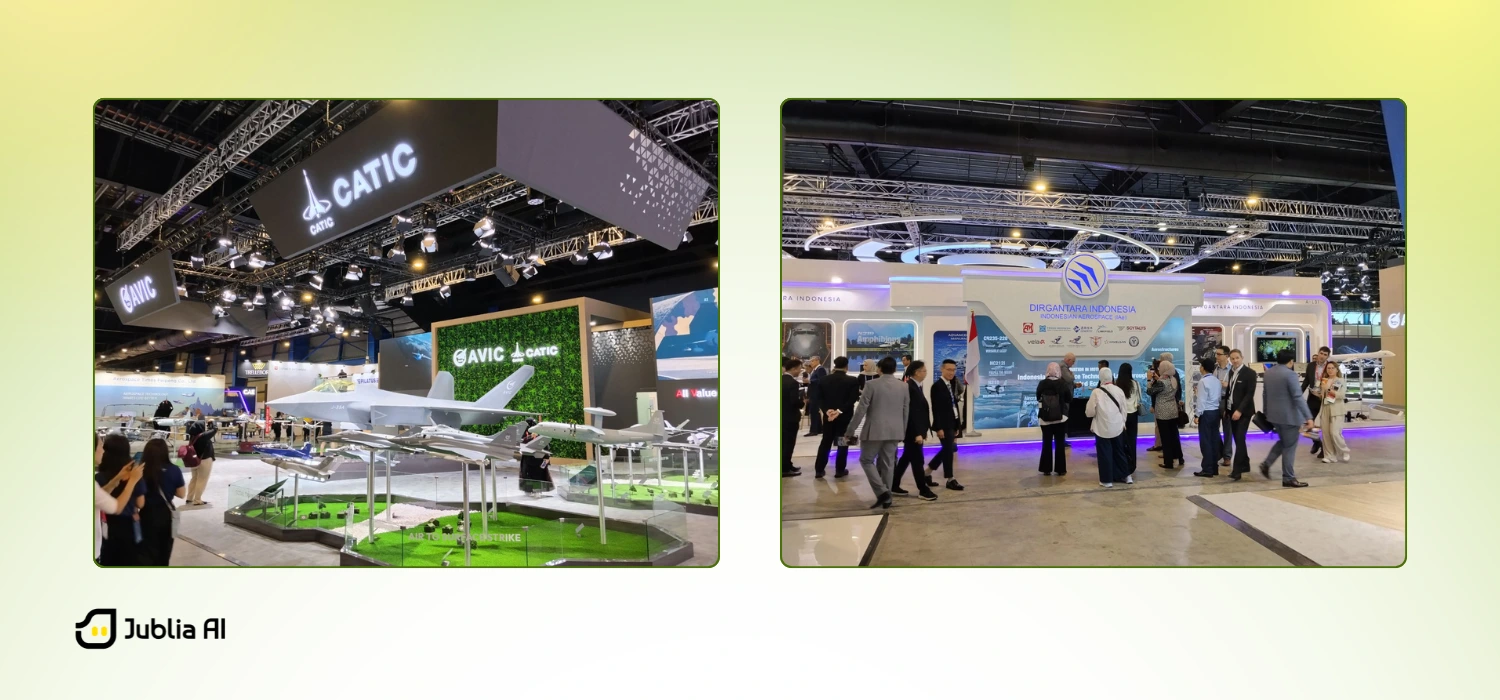
Walking through the exhibition spaces, attendees encountered a mix of defense primes and smaller specialized technology companies. Large aircraft models, propulsion systems, and advanced defense technologies were displayed in expansive booths that highlighted both scale and technical capability.

Drone and counter-drone technologies were particularly prominent this year, with companies showcasing diverse approaches to aerial detection, monitoring, and defense. The event app helped attendees sift through this wide range of solutions, identify companies of interest, and plan a personal agenda for their visit.
Business Meetings in Motion
Business discussions were constant throughout the exhibition. Dedicated meeting areas allowed attendees to transition smoothly between scheduled appointments and spontaneous conversations sparked at booths.
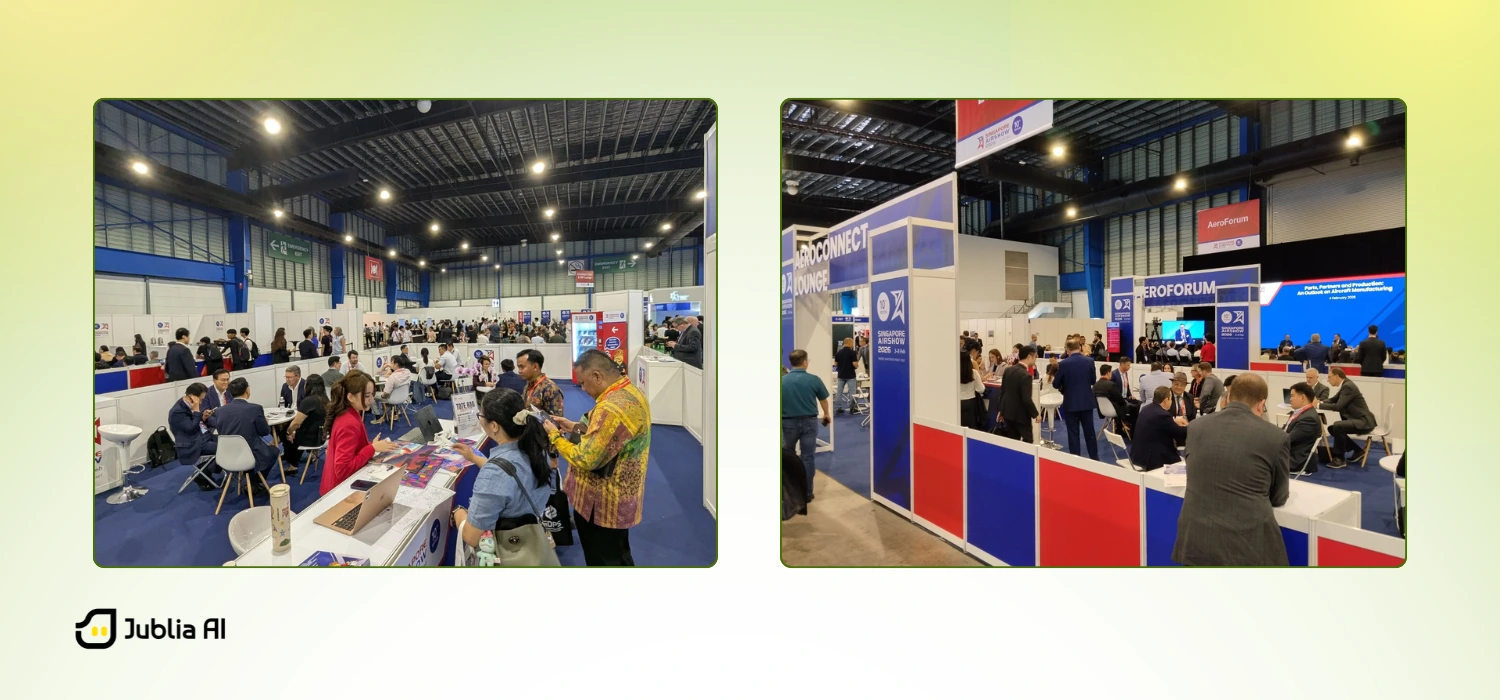
Many relied on the event app to track upcoming discussions while navigating the bustling venue. Meanwhile, the onsite concierge team provided real-time guidance, helping visitors locate meeting spaces, follow schedules, and connect seamlessly.
The combination of digital tools and human support allowed participants to focus on meaningful conversations—from supplier introductions and technology briefings to partnership and procurement discussions.
Discovery Beyond the Booth
Outdoor aircraft displays and live technology demonstrations offered an additional layer of engagement.
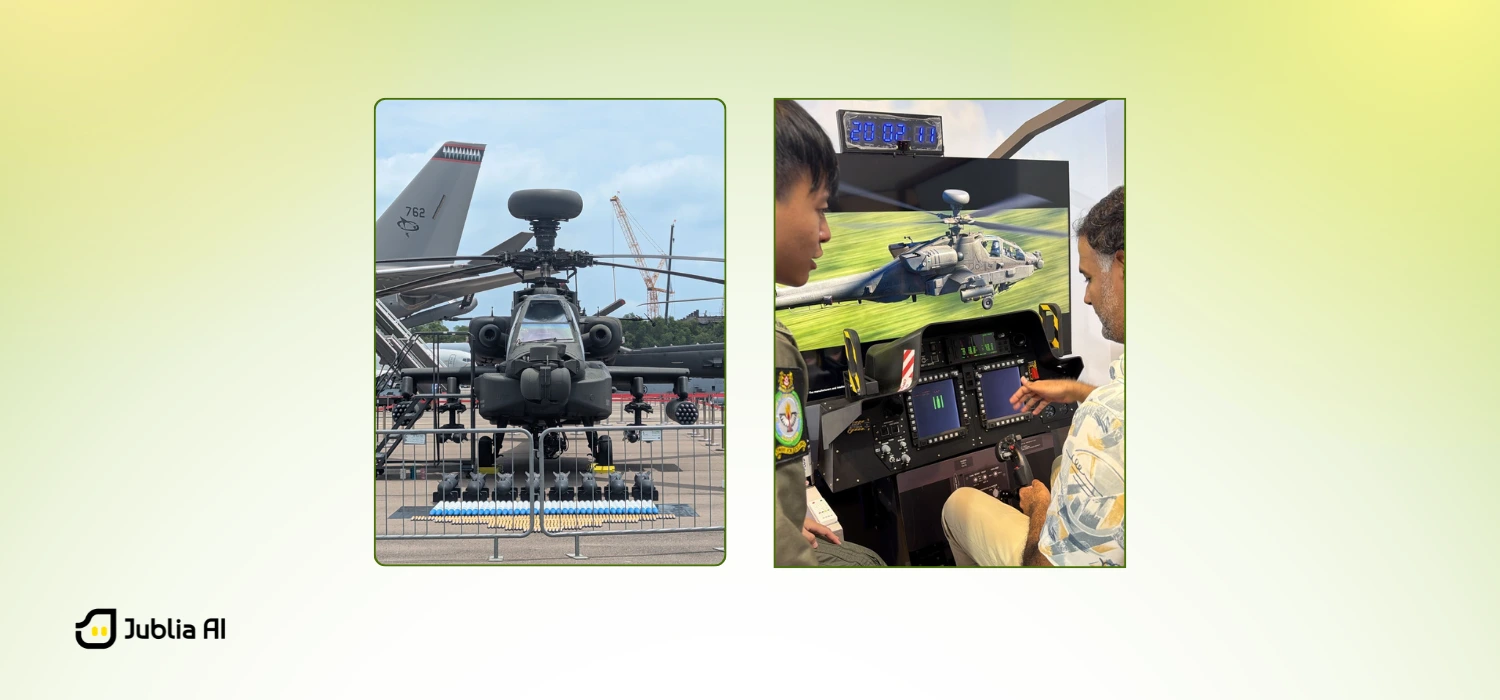
Attendees could examine aircraft systems firsthand, observe cockpit interfaces, and understand how these technologies operate in real-world scenarios. These experiences complemented the interactions inside the exhibition halls.
With multiple halls, outdoor displays, and meeting areas throughout the venue, clear orientation was essential. Attendees explored exhibitor listings, checked schedules, and located booths or sessions while moving between areas.
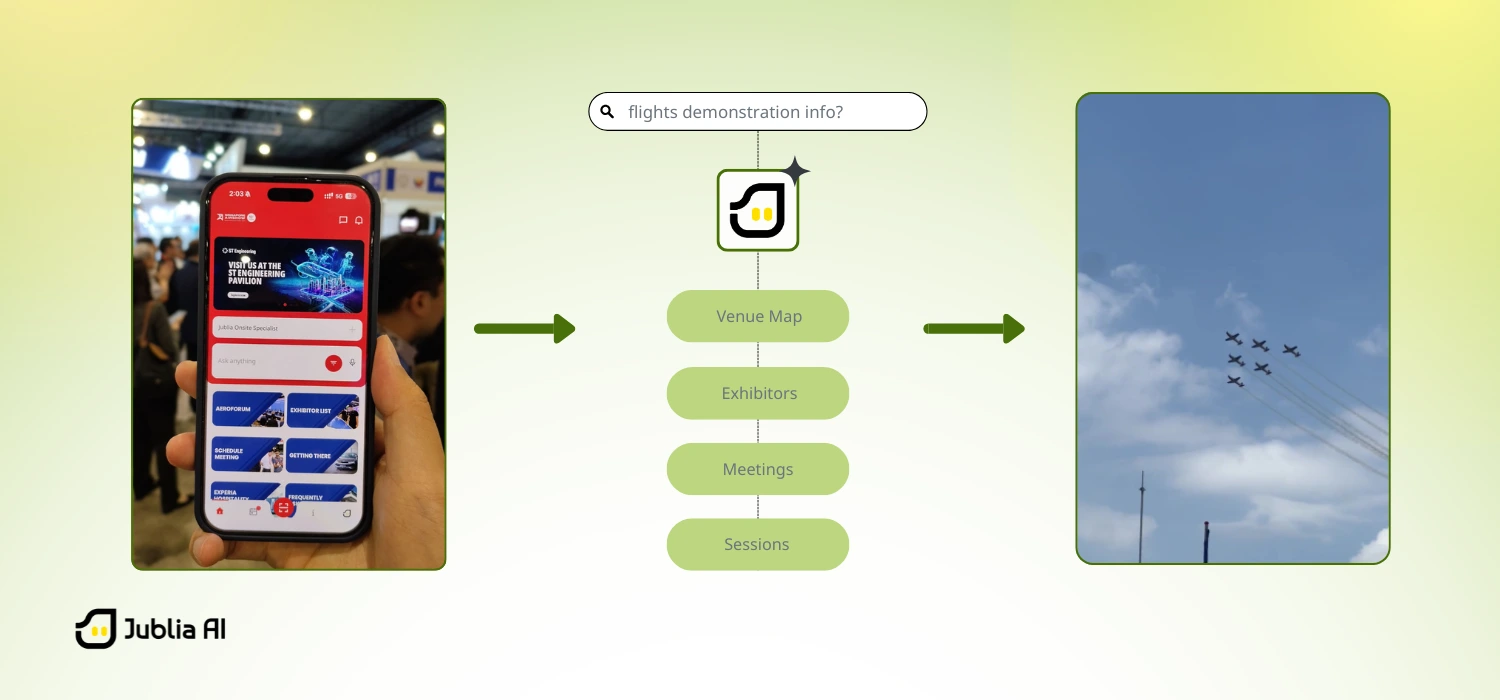
The app, powered by AI and grounded in structured event information—including exhibitor listings, product details, meeting schedules, session programs, and venue layouts—enabled attendees to ask questions via text or voice.
Whether planning ahead like requesting shuttle links or profile recommendations, or navigating the exhibition, participants could get immediate answers about booth locations, session timings, or relevant exhibitors.
By connecting queries to real-time event data, the app allowed attendees to access essential information without slowing down their experience.
On the exhibition floor, introductions often evolved into in-depth discussions about technologies, partnerships, and procurement needs. With steady visitor traffic, exhibitors needed efficient ways to capture these interactions.
Using the event platform’s Scan feature, exhibitors could instantly record attendee information by scanning a badge or QR code, creating a structured log of each interaction for easy follow-up.
A representative of Robin Radar Systems, one of the most active scanners during the exhibition, shared their experience:
Insights and Reflections
Large exhibitions like Singapore Airshow 2026 involve significant operational complexity. Attendees must navigate extensive exhibitor listings, coordinate meetings, explore sessions, and move efficiently within a sprawling venue.
The combination of digital tools and onsite support proved essential in managing this complexity. The AI-powered app gave participants instant access to structured event information, while the concierge team offered real-time guidance for locating meeting spaces, following schedules, and connecting with the right people.
These experiences demonstrate how embedding structured event information within a digital platform, complemented by onsite human assistance, can enhance discovery, coordination, and navigation. By simplifying access to information and tracking interactions, attendees were able to focus on meaningful conversations, exploration, and building connections throughout the exhibition.
The information presented reflects general observations from Singapore Airshow 2026. Metrics and experiences are summarized for informational purposes only. Mentions of events, exhibitors, or content do not imply endorsement or formal partnership.


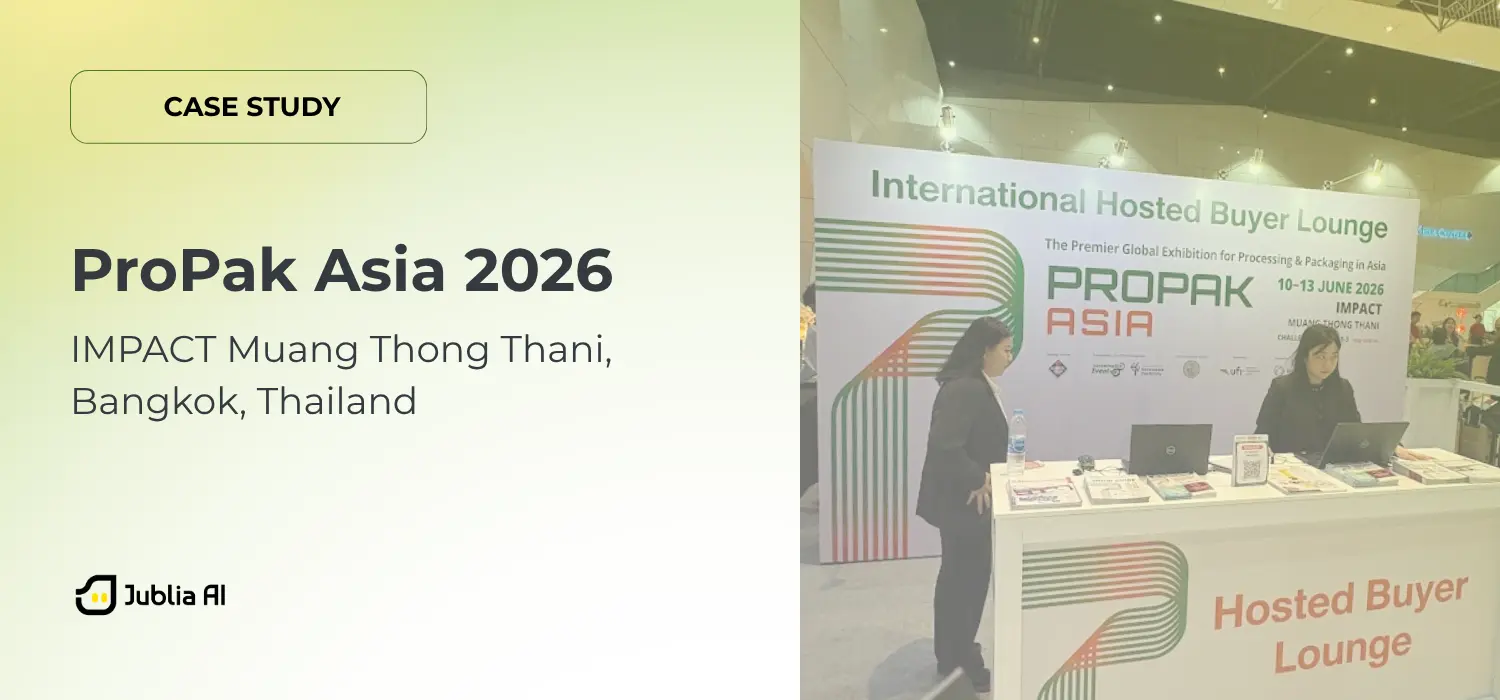 Turning Fulfillment Challenges Into Conversions at A Trade Show Through Proactive Adaptation
A Case Study on ProPak Asia 2026
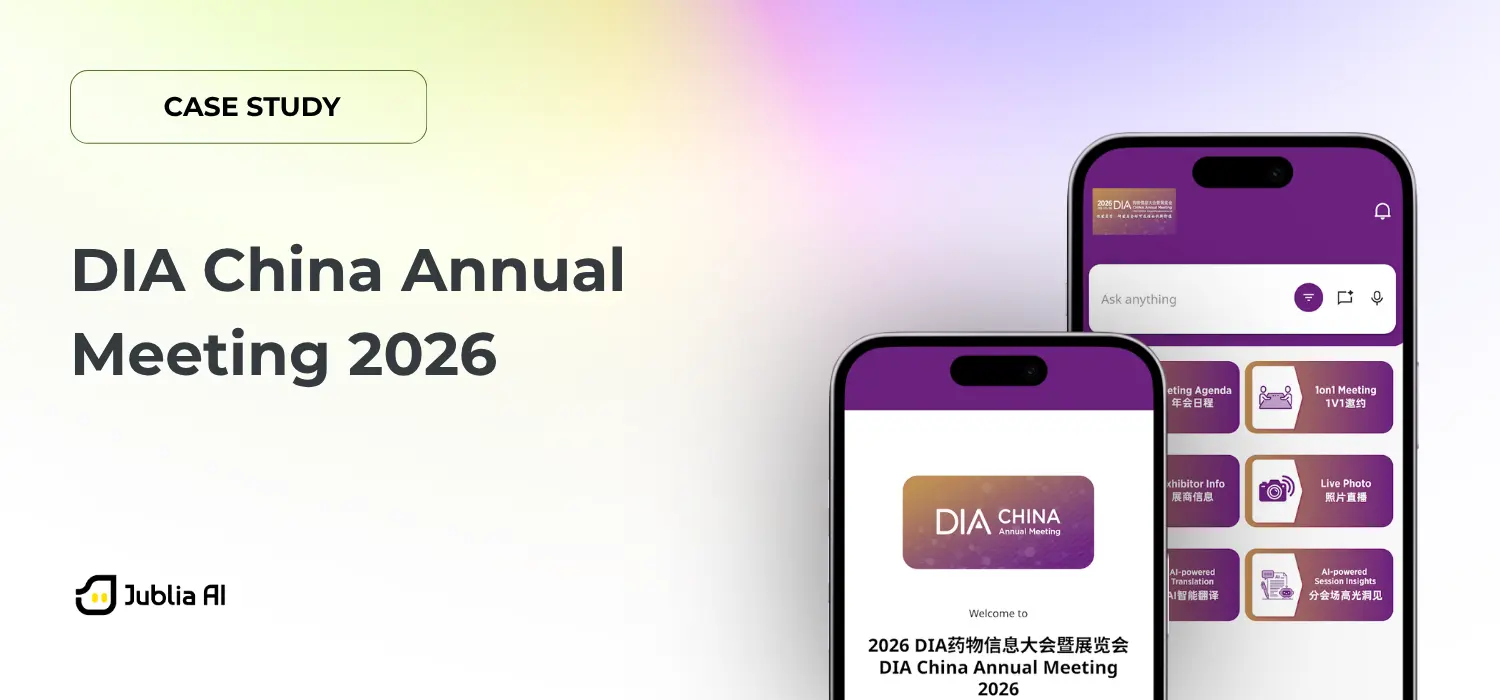 Enhancing Connection and Engagement at DIA China Annual Meeting 2026
A case study on how DIA China and Jublia AI delivered a connected, localized, and secure event experience.
 What’s new in Jublia AI: March 2026 Releases
Smarter Support, Faster Access, and Improved Data Visibility


.gif)
%201.png)
%201.png)
%201.png)
--p-2000.webp)
%20Black-Black%20Eyes.gif)


.png)