
Data Protection Acts — How does it affect you?
November 18, 2014
Actual article date: Nov 18, 2014

Let’s talk about personal data protection. The personal data protection of all the attendees at your event.
Personal data is any information that identifies a person. The challenge with data protection is sharing data while protecting personally identifiable information of your customers.
Recently, the Data Protection Act 2012 (PDPA), which governs the collection, use, and disclosure of personal data, has become a hot topic with Singaporean companies. However it must be understood that such laws have already been in place in many locations such as the EU, UK, Canada, Hong Kong, Australia and New Zealand, for many years.
Although Personal Data Protection Acts in different regions might make operations involving data a challenge, these regulations mostly adopt a pragmatic approach that aim to achieve appropriate balance between the need to protect individuals and the need for organisations to collect, use, or disclose data.
What implications does this have for us in the events industry? Well, no more sending the full attendee lists to your delegates, exhibitors, sponsors or any stakeholders unless prior consent from the individuals have been given. While that may seem easy, more often than not, these individuals do not want to share their personal data with people they do not know.
This results in event stakeholders not obtaining the relevant, quality contacts they seek efficiently. Attendees will have to attend events and exchange business cards with many more people to secure the same number, or even less, relevant ones. With these attendees going to events to procure relevant business contacts to meet their event ROI, event organisers will lose a big opportunity to provide this value proposition.
In short, any event tool you use should not:
With the evolving landscape of data protection, organisers have to move away from simply providing a list of delegates in exchange for sponsorship/exhibiting and instead, set up the best platform for these stakeholders to achieve their ROIs at your event. To facilitate the latter, organisers can create specialised meetings sessions to allow the stakeholders to meet relevant prospects at your event.
One of the best way is of course to implement a business matching platform and service at your event. This specifically address the need for scheduling meetings at your event without the need to reveal private information. With the correct elements that fulfill the criteria of Data Protection Acts, organisers can continue to provide value to their attendees via quality networking. Here are some elements of what you need to look for in a business matching platform to meet the requirements of data protection.
Your business matching platform should:


 How Personalization Can Reintroduce Friction Instead of Curating Options
Why the data behind your recommendations decides whether they curate the event for attendees, or just relabel the same choice problem.
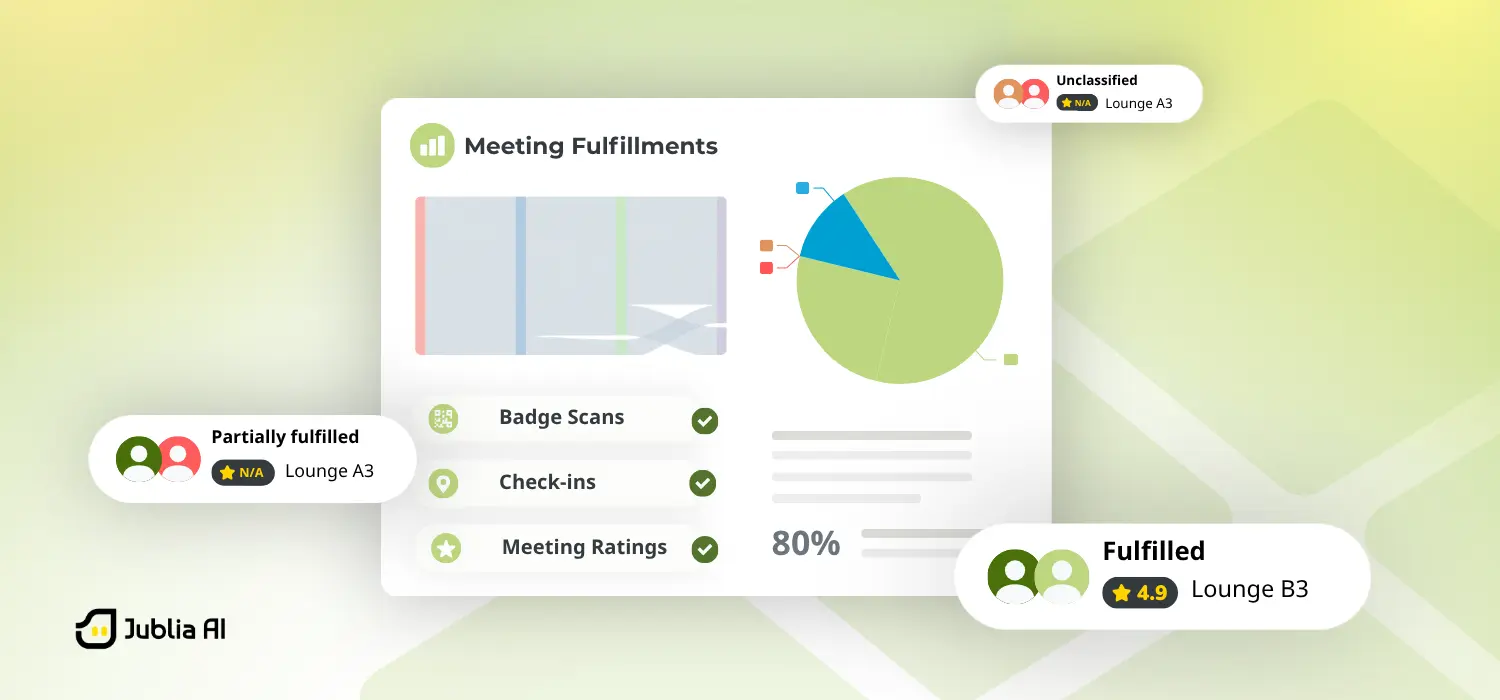 Why Meeting 'Fulfillment' is the Metric That Actually Matters From Your B2B Event
 Schedules tell whether meetings are planned; fulfillments show if they took place
 Anticipation, Immersion, Reflection: The Three Acts of Attendee Engagement
Why engagement should be built across the full event lifecycle — not just on the show floor.


.gif)
%201.png)
%201.png)
%201.png)
--p-2000.webp)
%20Black-Black%20Eyes.gif)


.png)