
What Business Matchmaking at events is NOT?
February 21, 2018
Article actual date: Feb 21, 2018
At Jublia, we have recently seen a marked increase in interest in business matching at events. Because of that, we are also seeing the event technology market (being the opportunists as we always are ;) )trying to market every ‘networking’ features as business matching capabilities.

On the organisers side, it is universally acknowledged that technology implementation should be simple and seamless. However, being simple should not mean being simplistic for the sole aim of having seamless experience. As the saying goes…
Simplicity before understanding is simplistic.
Simplicity after understanding is simple.
On this note, I hope this article can be beneficial for you to better understand that simplistic networking features cannot simply be termed ‘business matchmaking’.
Chat is probably the most popular networking feature that seems to be marketed as the solution to solve all business matchmaking needs at any business event. It is an easy pitch to any organisers due the familiar use of Telegram, Wechat, Whatsapp, LINE, Kakao and more, nowadays.
Just a Chat function could not be further off from a true business matchmaking function. To start, it is without a core basic component that defines matchmaking: a scheduler.
More importantly we need to look beyond the surface and determine how beneficial is a Chat to the attendees needs. Here are 3 pointers to consider:
While this is the basic that any business matching technology should provide, it is really only a subset of the entire picture. The key here though is really not the technology. It is having the concept of a comprehensive business matchmaking process that matters to your event attendees. A comprehensive process definitely doesn’t just stop at enable scheduling of meetings. In fact, the ability to schedule meetings is just the start. Other key parts includes:
Curious on how should a true an end-to-end business matching process enabled by technology, looks like with the above key parts? Speak to us! Drop me an email at info@jublia.com.
Just because it works human relationships doesn’t mean it will work in the business context. Beyond the fun swipe left/right interface, the underlying concept of Tinder, proximity matching and blind affirmation, is the total opposite of what is required in a business event.
I believe business delegates value direct, professional and relevant handshakes to initial and setup a mutual connection.
Furthermore, you are not likely to be swiping through thousands of people just to find the relevant attendees that you can meet at an event and hope that they swiped on you too, right?
As always, we will greatly appreciate if you could share your comments, thoughts and experience with ‘business matching’ technologies!


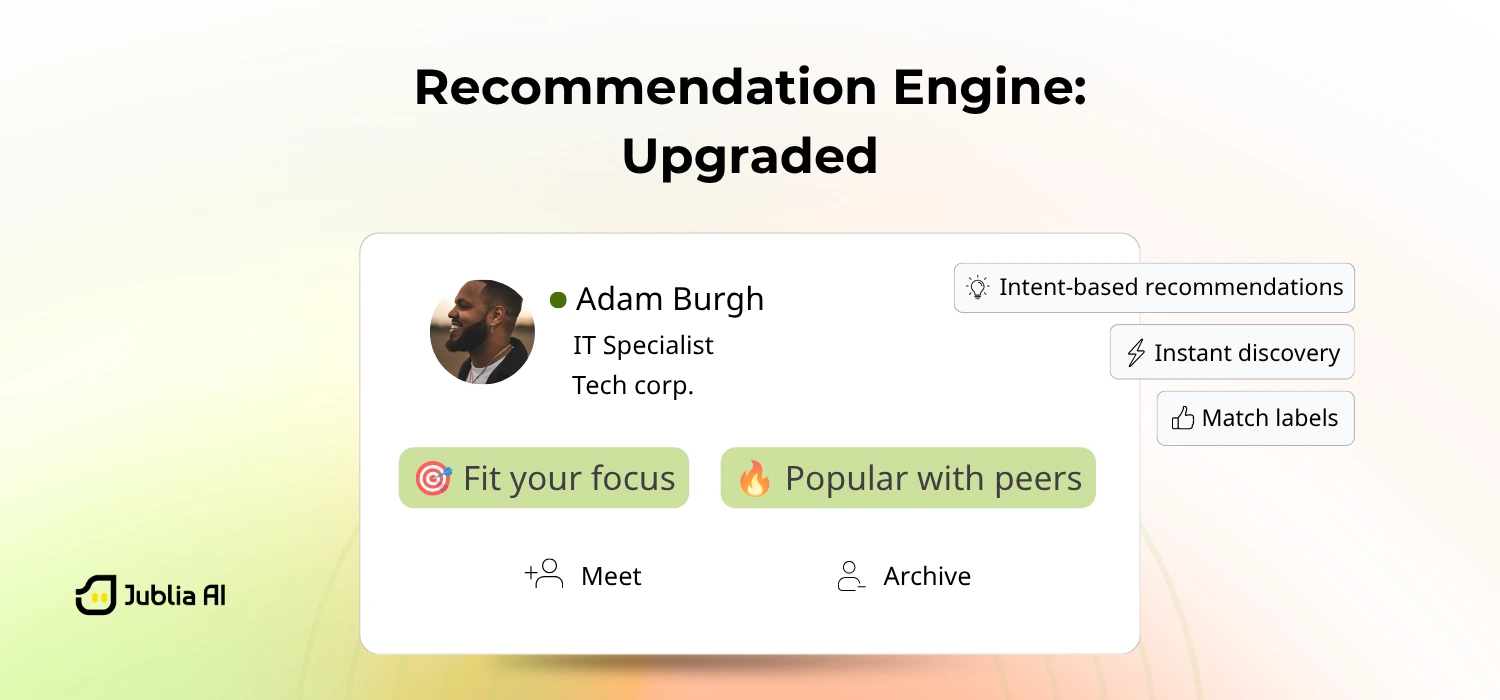 Meet a Better Way to Discover What Matters at Events
Jublia AI’s upgraded Recommendation Engine makes discovery more relevant, proactive, and contextual
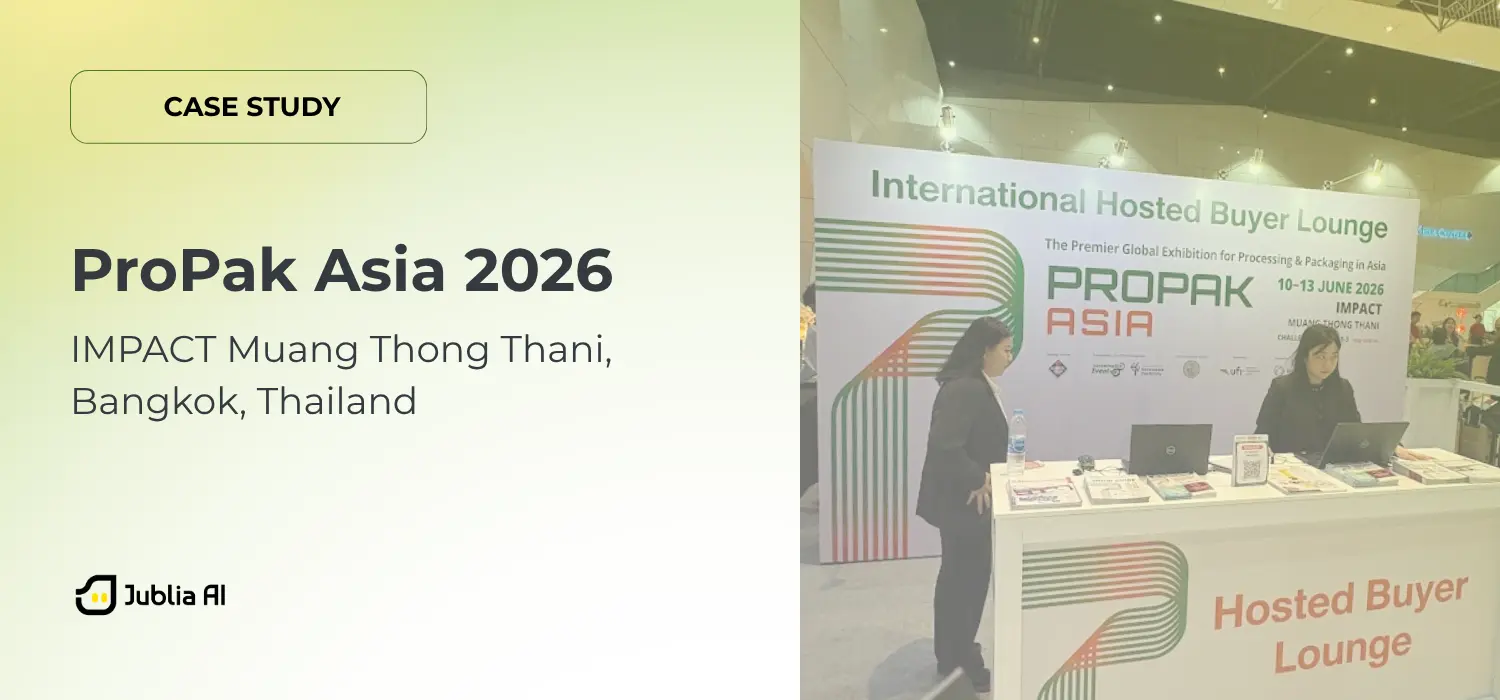 Turning Fulfillment Challenges Into Conversions at A Trade Show Through Proactive Adaptation
A Case Study on ProPak Asia 2026


.gif)
%201.png)
%201.png)
%201.png)
--p-2000.webp)
%20Black-Black%20Eyes.gif)




.png)