
Jublia AI: Why We Evolved and What Stays the Same
From AI features to intelligence built into the platform.
January 21, 2026

How many times have you wrapped up an event knowing exactly what should have worked better, only to start the next one from a clean slate? The same exhibitor concerns about lead quality. The same effort to interpret attendee intent after the fact. The same feeling that valuable learning gets left behind once the doors close.
At the same time, AI has become an expectation in event technology, not a novelty. Nearly every platform now claims to be “AI-powered.” Yet the role AI plays varies widely. In some cases, it enhances isolated features. In others, it quietly shapes how systems learn, adapt, and improve.
This raises a practical question for organizers: what does AI actually mean behind the scenes? Does it simply automate tasks within an event, or does it allow insights, intelligence, and improvements to carry forward from one event to the next?
This question sits at the center of why Jublia evolved into Jublia AI.
AI has always been part of Jublia’s foundation. From early on, intelligence was built into core capabilities such as matchmaking, recommendations, and insights. These capabilities helped events surface more relevant connections and reduce noise.
The shift became necessary as the events we supported grew larger, more complex, and more commercially demanding. Organizers were no longer running single-track programs with simple networking needs. They were managing multi-day events with thousands of participants, layered agendas, diverse exhibitor goals, and increasing pressure to demonstrate tangible outcomes.
At that scale, a pattern emerged. While AI-powered features worked within an event, the learning stopped at the event boundary. Insights improved local experiences, but they didn’t accumulate. Each new event required recalibration, manual adjustments, and fresh interpretation.
That was the moment it became clear that AI could no longer operate as a core capability alone. It needed to become a central foundation across the platform.
Jublia AI represents this next stage of evolution. AI now shapes how the platform is built, how it improves, and how it scales. Learning is no longer confined to individual features or single events. Instead, intelligence compounds over time, allowing the system to become more informed and more effective with continued use.
This evolution wasn’t about adding more AI. It was about placing intelligence where it could create lasting value, not just short-term optimization.
The difference between AI features and an AI posture is not cosmetic. It’s architectural. The shift to Jublia AI required changing how the platform itself is designed and improved.
Previously, AI supported key moments in the Jublia experience: Matchmaking logic here, recommendation engines there. These systems worked, but they were largely self-contained. Instead of being added after features are defined, intelligence is now considered at the start of design. When new capabilities are planned, we ask how the system should learn from usage, what signals matter, and how those learnings can influence future behavior across the platform.
The second change was how learning is captured. The platform now learns from real usage and behavior. Attendee interactions, meeting outcomes, and engagement patterns are treated as feedback loops that continuously refine how recommendations and insights are generated.
The third change was how improvements persist. In the past, optimization largely ended when an event ended. With Jublia AI, learning carries forward. Insights gained from one event inform future events, allowing the platform to become more accurate and more relevant over time without requiring organizers to rebuild logic from scratch.
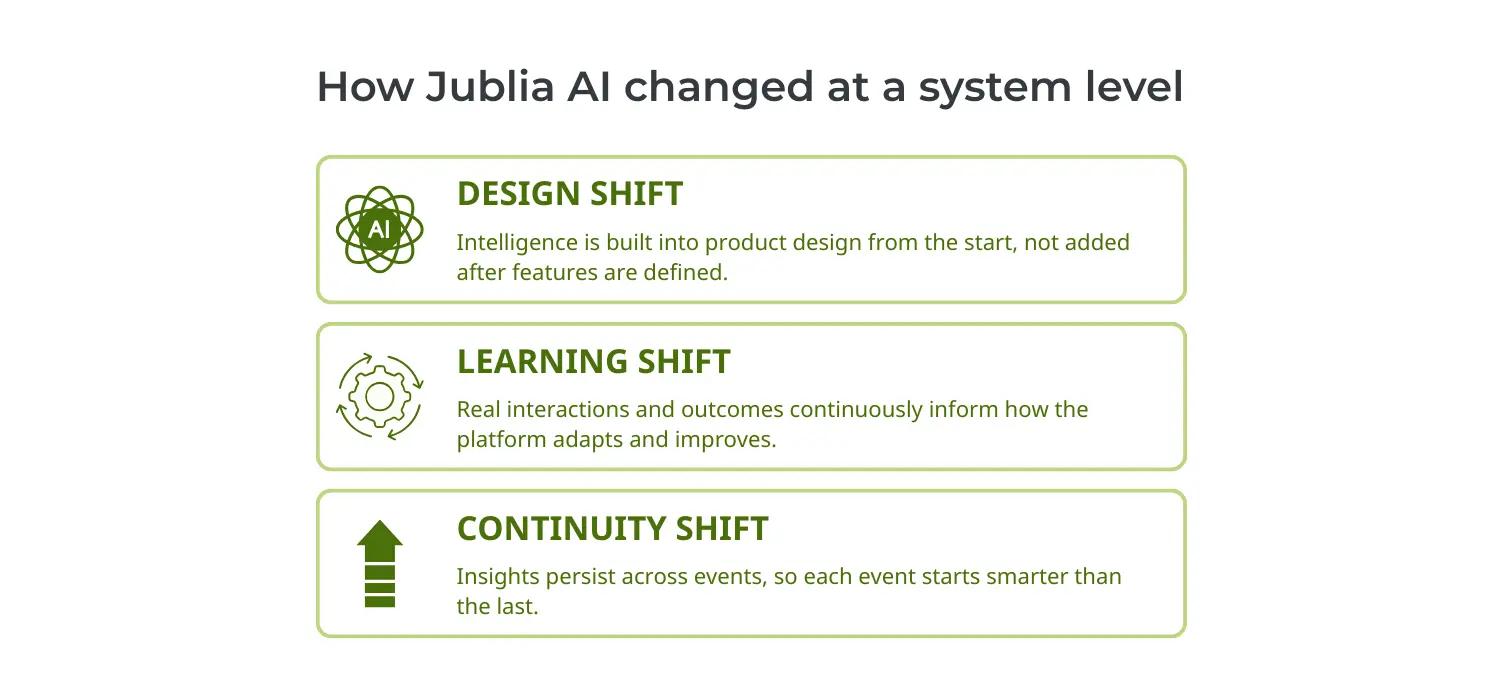
Together, these changes represent a shift from AI as a set of features to AI as a posture. Intelligence no longer optimizes isolated functions. It shapes how the system evolves as a whole.
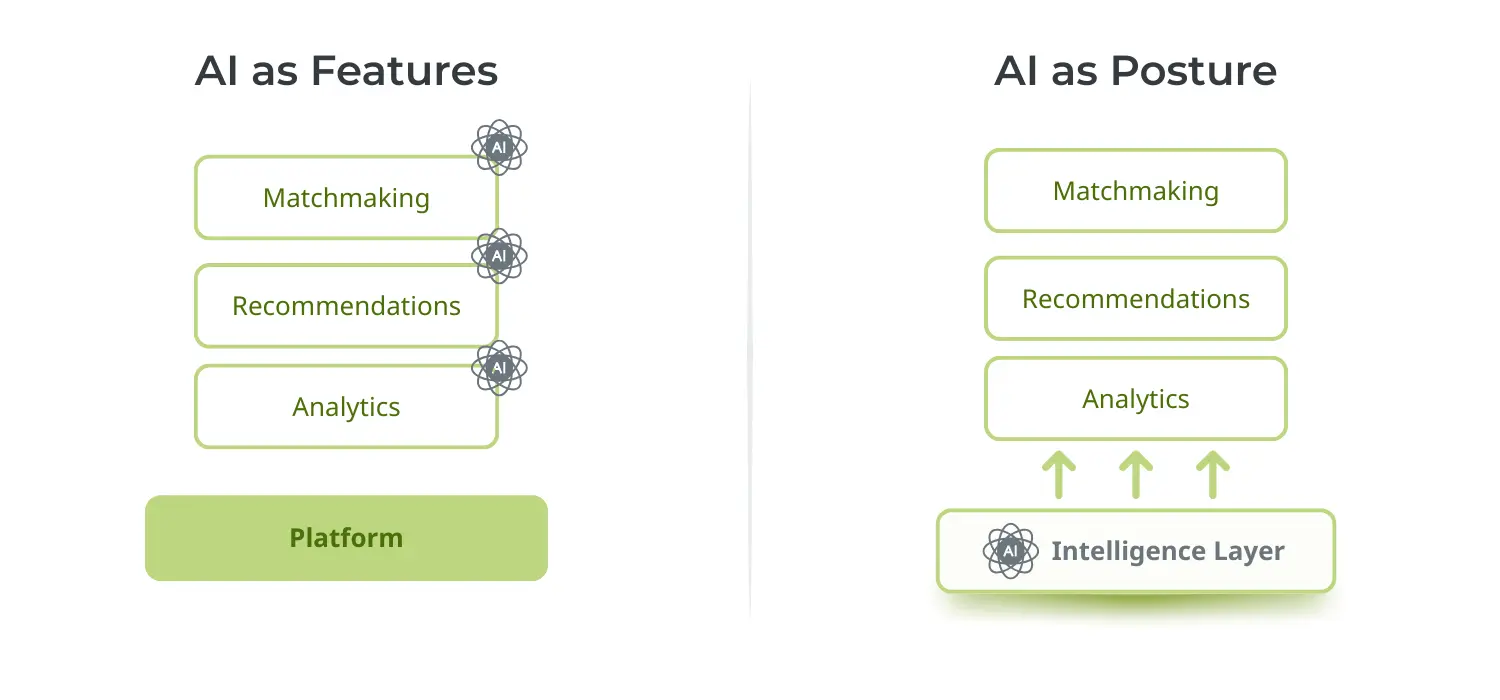
For organizers, this doesn’t introduce additional complexity. It reduces it. The platform becomes more responsive, more consistent, and better aligned with real-world event dynamics as it is used.
In simple terms:
While the technology evolved, several principles remain non-negotiable.
Jublia’s mission to enable meaningful business connections has not changed. Success is still measured in outcomes and ROI, not vanity engagement metrics.
Technology remains a support system for human interaction, not a replacement for it. Events are fundamentally about people meeting people, and Jublia AI is designed to amplify that essence, not automate it away.
Equally important is our commitment to personal, human advisory and support. Every client continues to work with a real team that understands their event goals, context, and constraints. AI strengthens our ability to advise and anticipate needs, but it does not replace the partnership.
This long-term mindset with organizers remains central. We build alongside events, not just for them.
This evolution is not a rebrand. It is closer to a reinvention, and that’s not a bad thing.
We now live in a moment where event technology can move beyond automation into understanding. Understanding attendee intent. Understanding exhibitor outcomes. Understanding what actually drives meaningful engagement, not just activity.
Jublia AI enables the platform to learn across events, refine its intelligence, and apply those learnings in ways that are practical and grounded. Most importantly, this evolution is not meant to replace the essence of events. It’s meant to amplify it.
By building smarter systems that respect human context, Jublia AI helps organizers focus less on managing tools and more on designing experiences that matter. That is the future we’re committing to. Smarter, more human-centered event technology that grows with every event it supports.


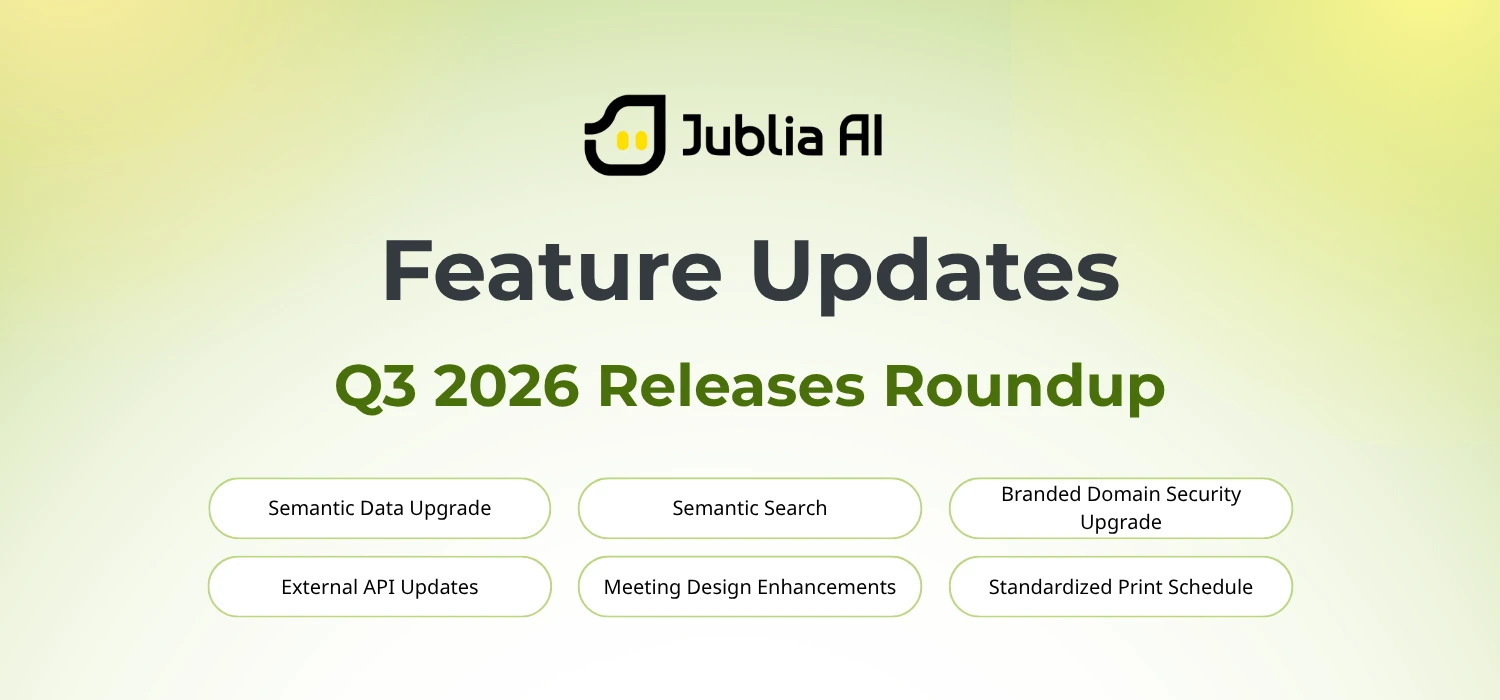 What’s new in Jublia AI: Q3 2026 Releases Roundup
All updates that are designed to give event teams more control, better discovery, and a stronger operational foundation.
 Jublia AI Partners with EXPOPASS to Deliver More Connected Event Experiences in Thailand
Jublia AI x EXPOPASS Partnership Announcement
 From Search to Discovery: How Jublia AI Transforms Event Exploration
Redefining search in events through a connected experience


.gif)
%201.png)
%201.png)
%201.png)
--p-2000.webp)
%20Black-Black%20Eyes.gif)


.png)