
Data Ethics vs. Data Privacy: What’s the Difference?
August 12, 2021
Article actual date: Aug 12, 2021

In last month’s opinion piece, we touched on the concept of data ethics and its increasingly important role in the world of business events. The article ended on a seemingly ambiguous note, where the next best defense against data infringement was to ‘educate yourself’. You reading this article may agree and ask: So what exactly do I have to do to protect my data?
The answer lies within data privacy. While it sounds all too familiar alongside the other data ethics, security, protection, regulation and so on, data privacy stands out amongst the others as it has the ability to completely shut off any potential threats. The trade off, however, involves placing all responsibility on you; every single decision you make in the virtual space will significantly hold more weight in determining the safety of you and your data.
To further illustrate the idea, we’ll use Panoptykon Foundation’s 3 layers of digital identity. Extrapolating it into our business event context:

1. The first layer is derived from what your attendees divulge about themselves. From their names to their specific area of expertise, the information that they provide builds up their online personas that is visible to you and other attendees alike.

2. The second layer is derived from what your attendees do. These actions share information that can be;
These sources of information further augment their profile, adding more character and preferences to their online personas. Not all changes are visible to other attendees though, as several of them are mainly aggregated in the back-end for analytical purposes in the next layer.

3. The third and final layer assumes what your attendees want to do. The data from the first two layers are put through AI algorithms that connect what they are to what they seek. This forms the core idea of various data-driven solutions, such as business matching, targeted recommendations and user interface optimisations.
So, how does all of this relate to data privacy, and where does it come into play?
The first two mentioned layers are entirely constructed by the users themselves. They are also the exact elements that empower individuals to absolutise their data privacy rights; by scrutinising the information and actions that your attendees want to show, providers will be able to access only the selected data and shape the truest virtual forms of your attendees.

However, some provided actions are implicit and beyond the control of the user. Total meeting duration, for instance, is obtained as a byproduct of the attendee’s interaction with the event platform. In these cases, data ethics re-enter the stage once more as platform providers would have to thoroughly consider various aspects before collecting the data, which include:
Reviewing these points, we can conclude that more data does not mean better. Attendees must consider every bit of information that they share as every data point would hold a level of consequence. Similarly, tech providers should thoroughly review the types of data that they’re requesting; is it truly relevant to the context at hand?
The starking difference between data privacy and data ethics thus lies in their main influencers:
All in all, the notions of data privacy and data ethics symbolise the working relationship between tech providers and your attendees: we do our due diligence in asking only for the necessary information, while attendees would continue to upgrade and be ready to protect themselves from data crime in a hybrid future.
It is important to gather only the appropriate type and quantity of data, and it is what we exactly do here at Jublia. We deploy strict data handling procedures and only garner relevant information that contributes to the event that you are attending. All implicit and explicit user data are solely used for event purposes only and will be disposed of once it ends.
Have any burning thoughts on the data ethics-privacy relationship? Need to consult someone on how you can safely operate in a hybrid environment? Reach out to any Jubilan you know, message us on LinkedIn or contact us at info@jublia.com!
P.S. Che


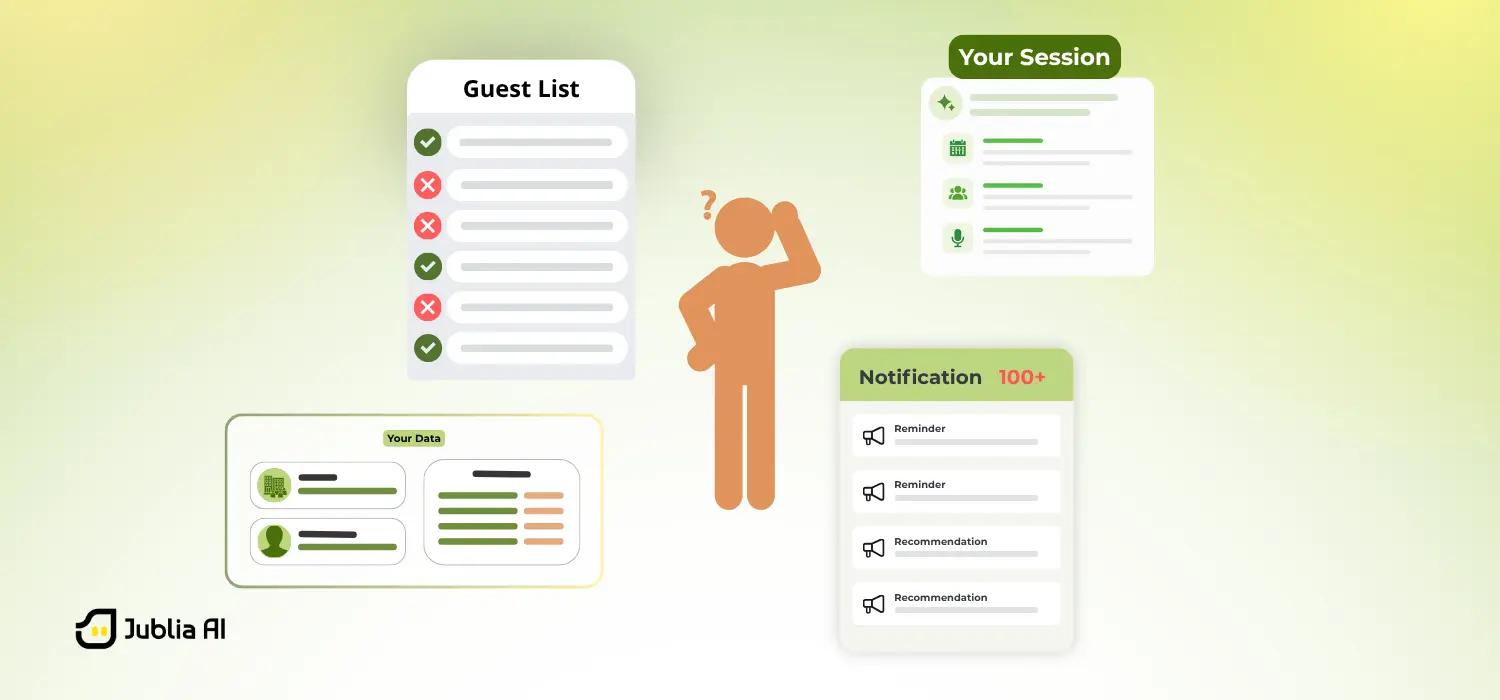 How Personalization Can Reintroduce Friction Instead of Curating Options
Why the data behind your recommendations decides whether they curate the event for attendees, or just relabel the same choice problem.
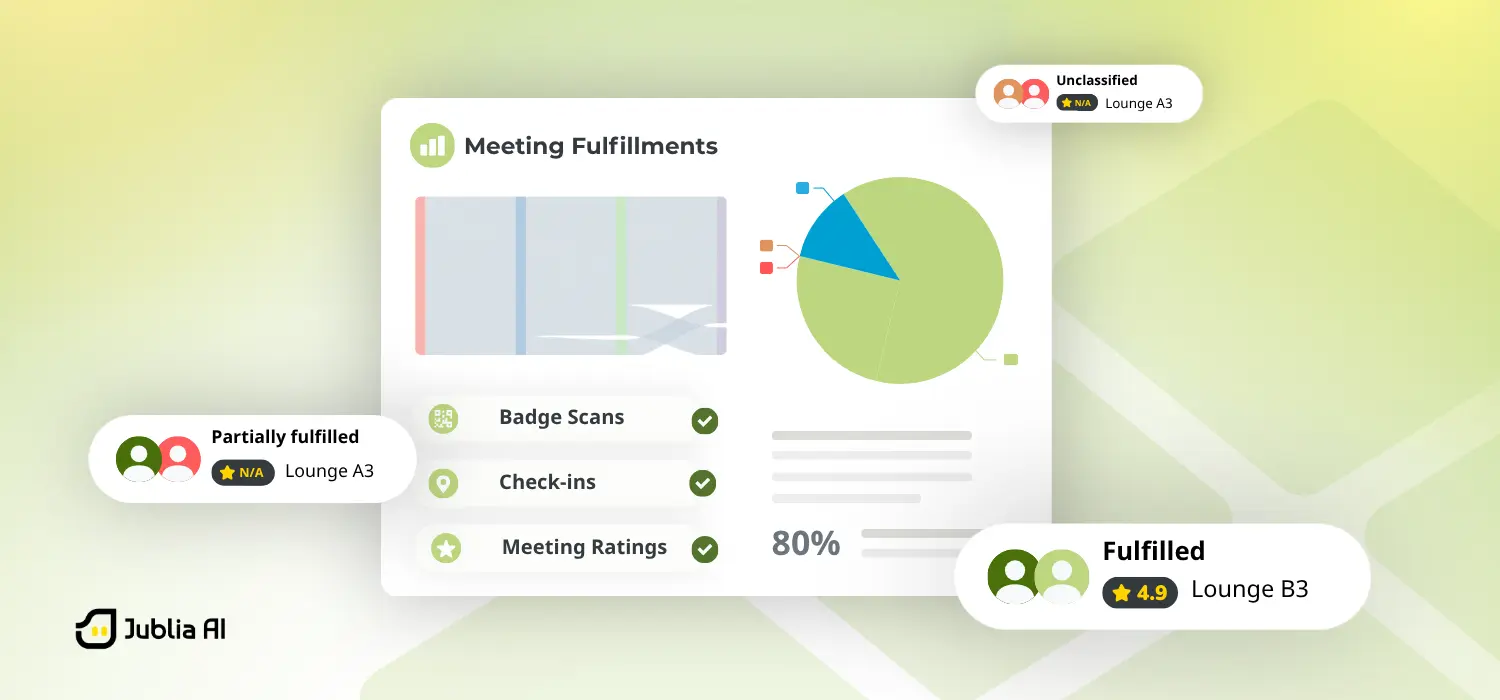 Why Meeting 'Fulfillment' is the Metric That Actually Matters From Your B2B Event
 Schedules tell whether meetings are planned; fulfillments show if they took place
 Anticipation, Immersion, Reflection: The Three Acts of Attendee Engagement
Why engagement should be built across the full event lifecycle — not just on the show floor.


.gif)
%201.png)
%201.png)
%201.png)
--p-2000.webp)
%20Black-Black%20Eyes.gif)


.png)